The Korean no-makeup makeup look works best when the skin already looks healthy underneath. Instead of relying on heavy coverage to hide problems, the routine focuses on skincare habits that make makeup look lighter, smoother, and more natural in the first place.
A lot of people chase natural-looking makeup by changing foundations, buying new concealers, or copying makeup tutorials step by step. But I think many of them are trying to solve a skincare problem with more cosmetics.
That becomes obvious when makeup starts looking heavy no matter how carefully it is applied. Dry patches become more visible, foundation separates around irritated areas, and thick coverage ends up drawing attention to the texture it was supposed to hide.
Korean beauty culture approaches the problem from the opposite direction. The idea is that makeup should enhance healthy-looking skin, not replace it.
Takeaways
- Korean beauty routines treat skincare as the foundation for natural-looking makeup.
- Healthier skin usually requires less cosmetic coverage overall.
- Hydration and skin texture affect how makeup sits on the face.
- The no-makeup makeup look depends more on skin condition than advanced makeup techniques.
Heavy Makeup Often Starts as a Way to Hide Skin Problems
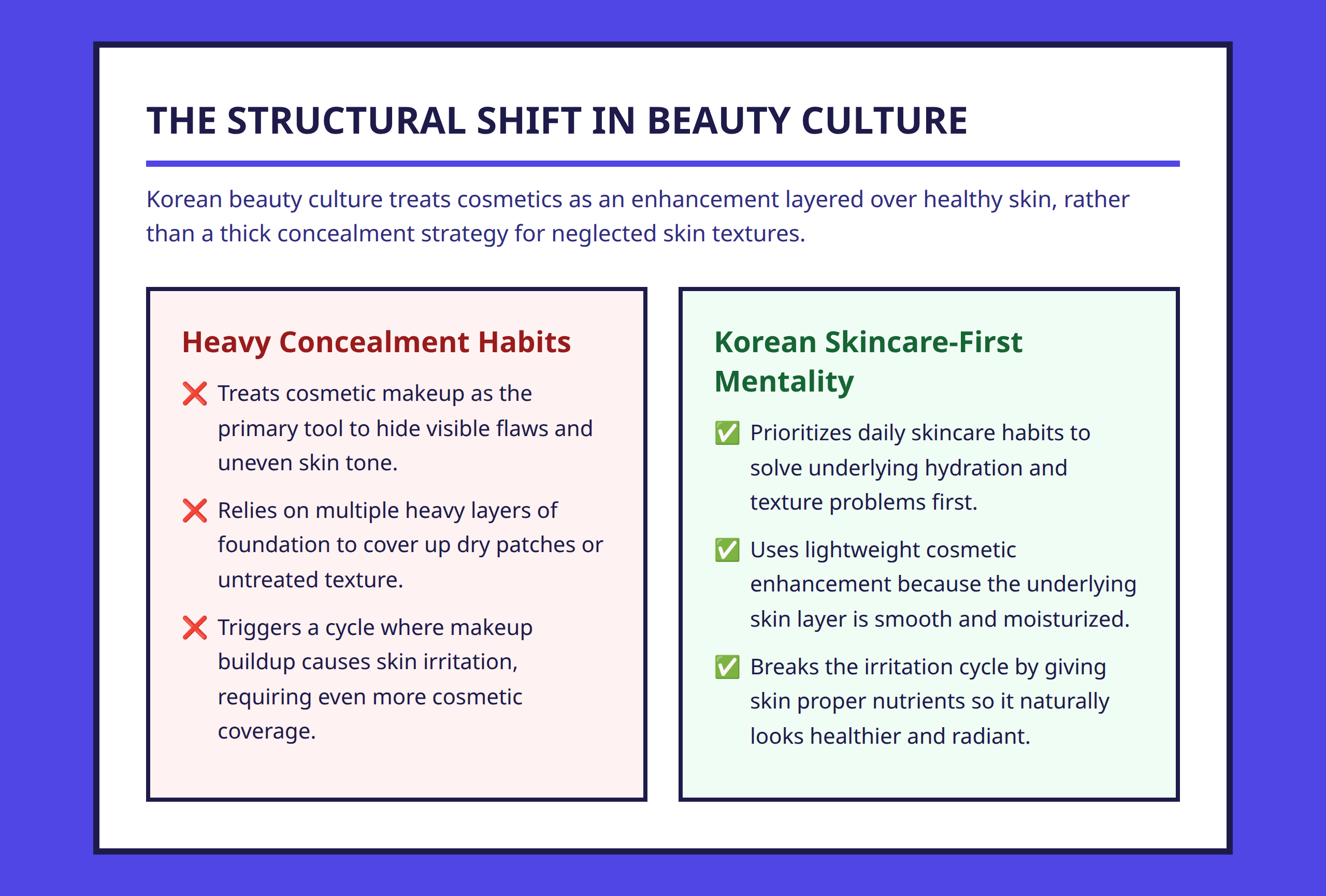
One of the more interesting shifts in Korean beauty culture is the difference between concealment and enhancement.
Many people first learn makeup as a correction tool. Acne gets covered with thicker foundation. Redness disappears under layers of concealer. Uneven texture gets hidden under powder and contouring.
I understand why that happens because the pressure to look polished can feel immediate. Someone dealing with breakouts before work or school usually wants fast visible improvement, not a long-term skincare strategy.
The problem is that heavy correction often creates its own visual problems.
Thick coverage can settle into dry areas, emphasize texture, or create a flat appearance that no longer looks like real skin. A person may keep adding more products trying to “fix” the finish, only to make the makeup feel heavier throughout the day.
You can picture a common situation where someone spends twenty extra minutes layering concealer over irritated skin before leaving home. By midday, the makeup starts separating around dry patches, so they reapply powder again. The routine becomes maintenance for the makeup itself.
Korean beauty culture tends to reduce that cycle by focusing more attention on the skin underneath first.
Healthy Skin Changes How Makeup Looks Automatically
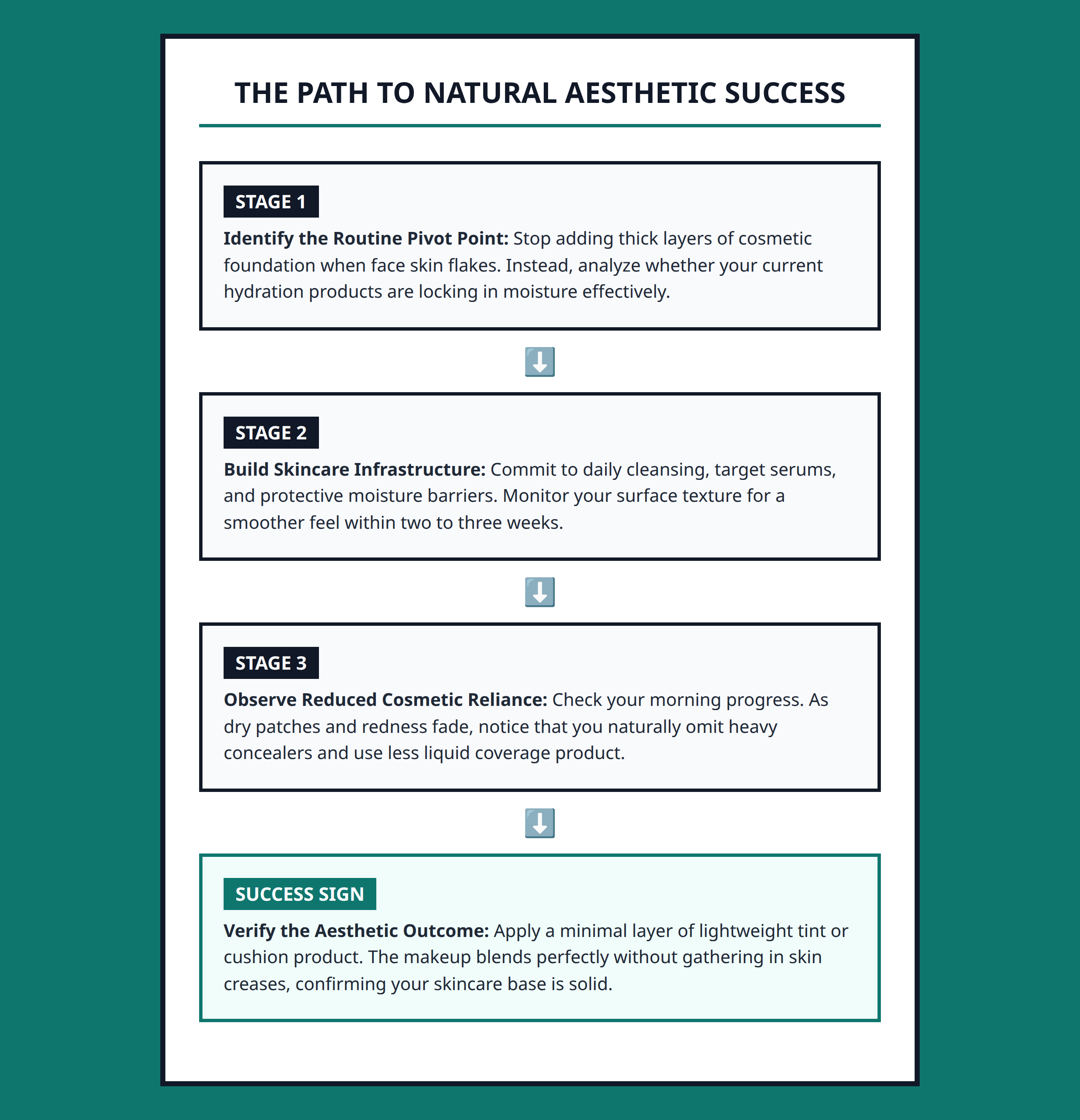
Once the skin becomes calmer, smoother, and more hydrated, makeup usually behaves differently without dramatic cosmetic changes.
I think this is the point many people underestimate.
The no-makeup makeup look is not only about using lighter foundation or softer colors. It depends heavily on how the skin surface interacts with the makeup.
Skin that is hydrated and balanced tends to:
- Hold makeup more evenly
- Show less flaky texture
- Need less heavy concealer
- Reflect light more naturally
- Require fewer correction layers overall
That is why Korean skincare routines often emphasize gentle cleansing, hydration, and skin barrier support long before makeup enters the conversation.
If the skin already looks relatively healthy, the makeup can stay lighter because it is no longer trying to compensate for as many visible issues.
Why Korean Beauty Separates Skin Care From Concealment
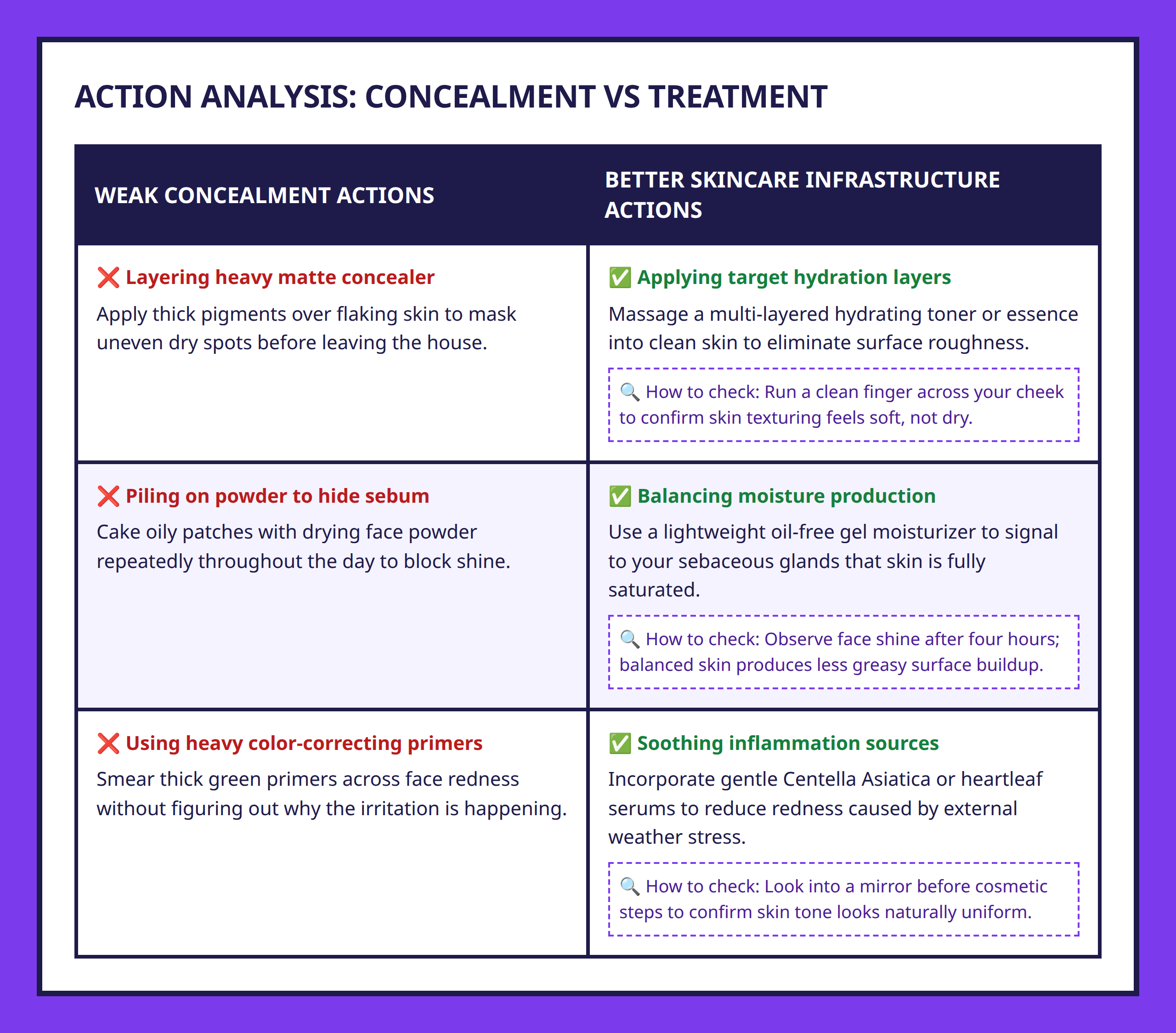
I notice a major philosophical difference here.
In many beauty routines, skincare and makeup blur together because makeup becomes responsible for solving every visible problem immediately.
Korean beauty culture separates those roles more clearly.
Skincare is expected to improve the condition of the skin gradually over time. Makeup is expected to enhance appearance without completely masking the face underneath.
That distinction changes product choices too.
Someone focused mainly on concealment may prioritize maximum coverage first. Someone focused on enhancement may care more about finish, texture, hydration, and how natural the skin still looks afterward.
I would pay attention anytime a makeup routine becomes increasingly heavy while the skin underneath keeps feeling irritated or unstable. That often signals the routine is compensating cosmetically instead of addressing the underlying skin condition.
Hydration Matters More Than Many Makeup Users Realize
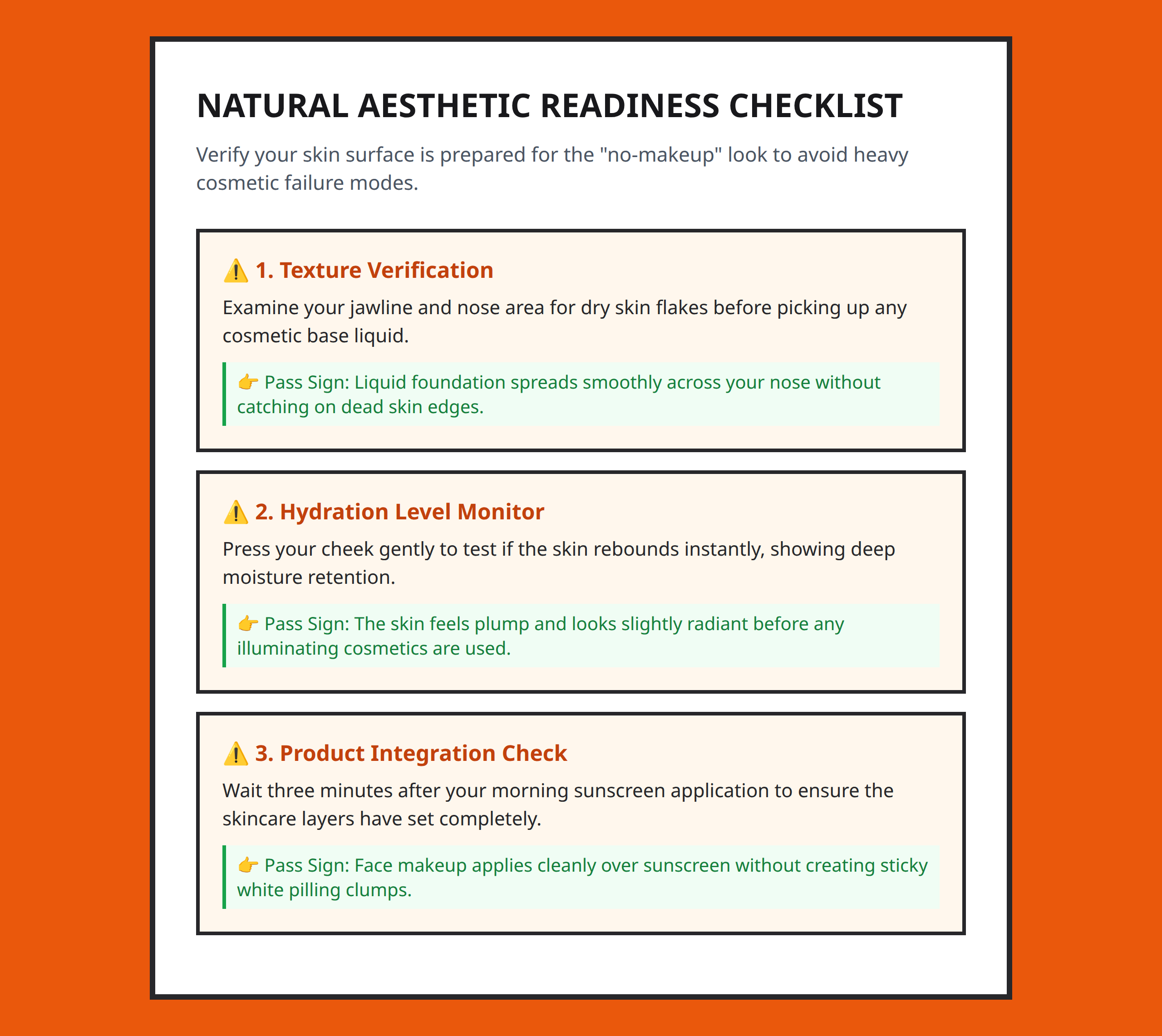
Hydration appears repeatedly in Korean skincare because it affects appearance directly, not just skin comfort.
Makeup generally sits better on skin that feels balanced underneath. When the skin is dehydrated, foundation often clings unevenly or starts looking dull quickly.
I think many people misread this problem as a makeup issue alone.
Someone may keep searching for a “better” foundation when the larger issue is that the skin barrier is dry, irritated, or over-cleansed before makeup application even begins.
You can see this during seasonal weather changes. A person whose makeup normally looks smooth may suddenly notice patchiness during winter after indoor heating dries the skin more aggressively. The foundation did not necessarily change. The skin underneath did.
That is one reason Korean beauty routines often invest heavily in hydration before makeup rather than relying on coverage afterward.
The Goal Is Usually Skin That Still Looks Like Skin
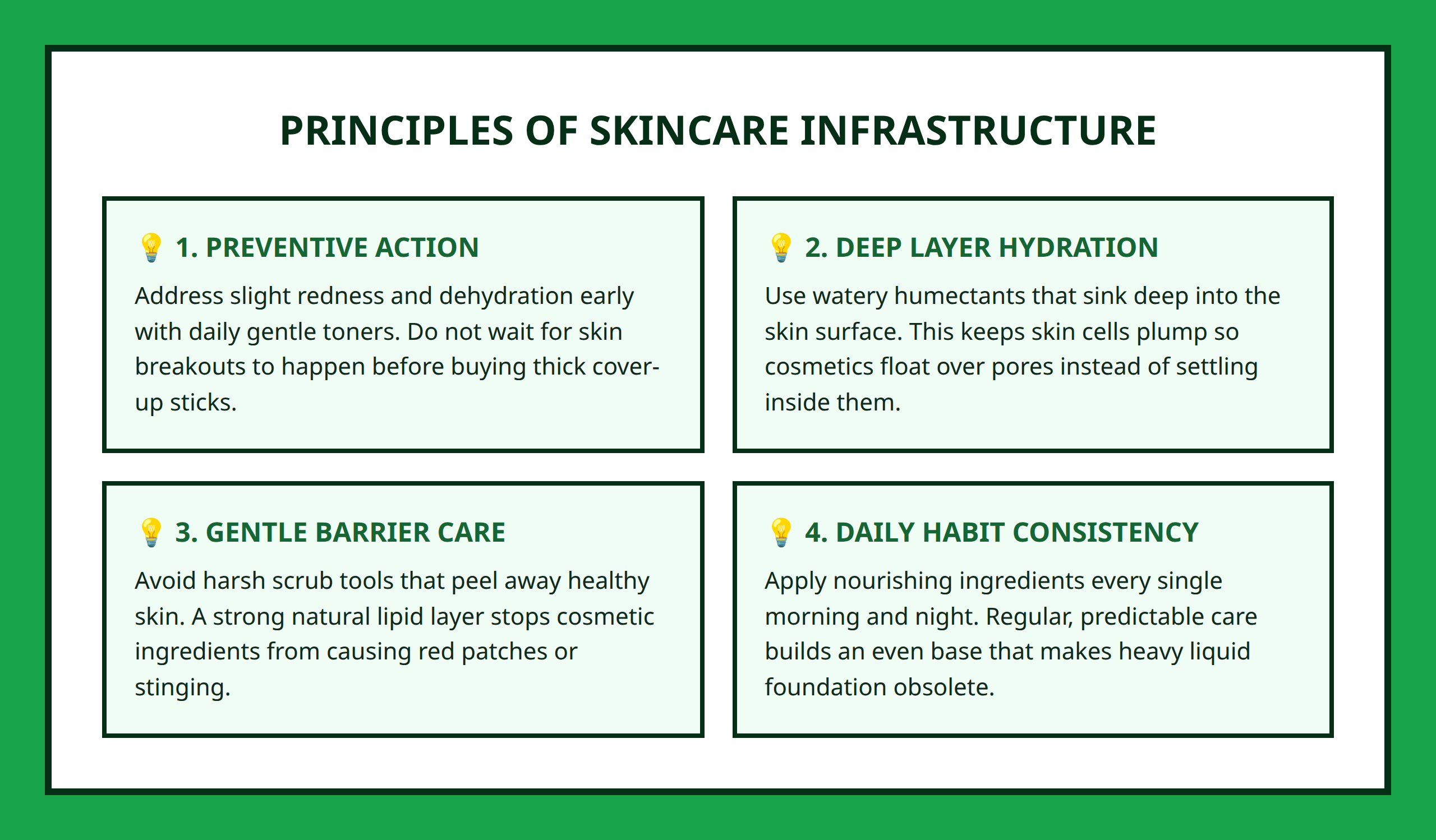
One thing I appreciate about the no-makeup makeup philosophy is that it treats visible skin texture as normal.
The goal is not usually complete perfection under thick coverage.
Instead, the routine tries to create skin that looks healthy, comfortable, and believable in natural light.
That changes how people evaluate beauty routines. A small amount of redness or natural texture becomes less important when the overall skin looks balanced and alive.
I think this is why Korean beauty culture often values glow, hydration, and softness more than completely matte, fully concealed finishes.
The skin is still allowed to resemble real skin.
Why the Skin-First Approach Usually Feels More Sustainable
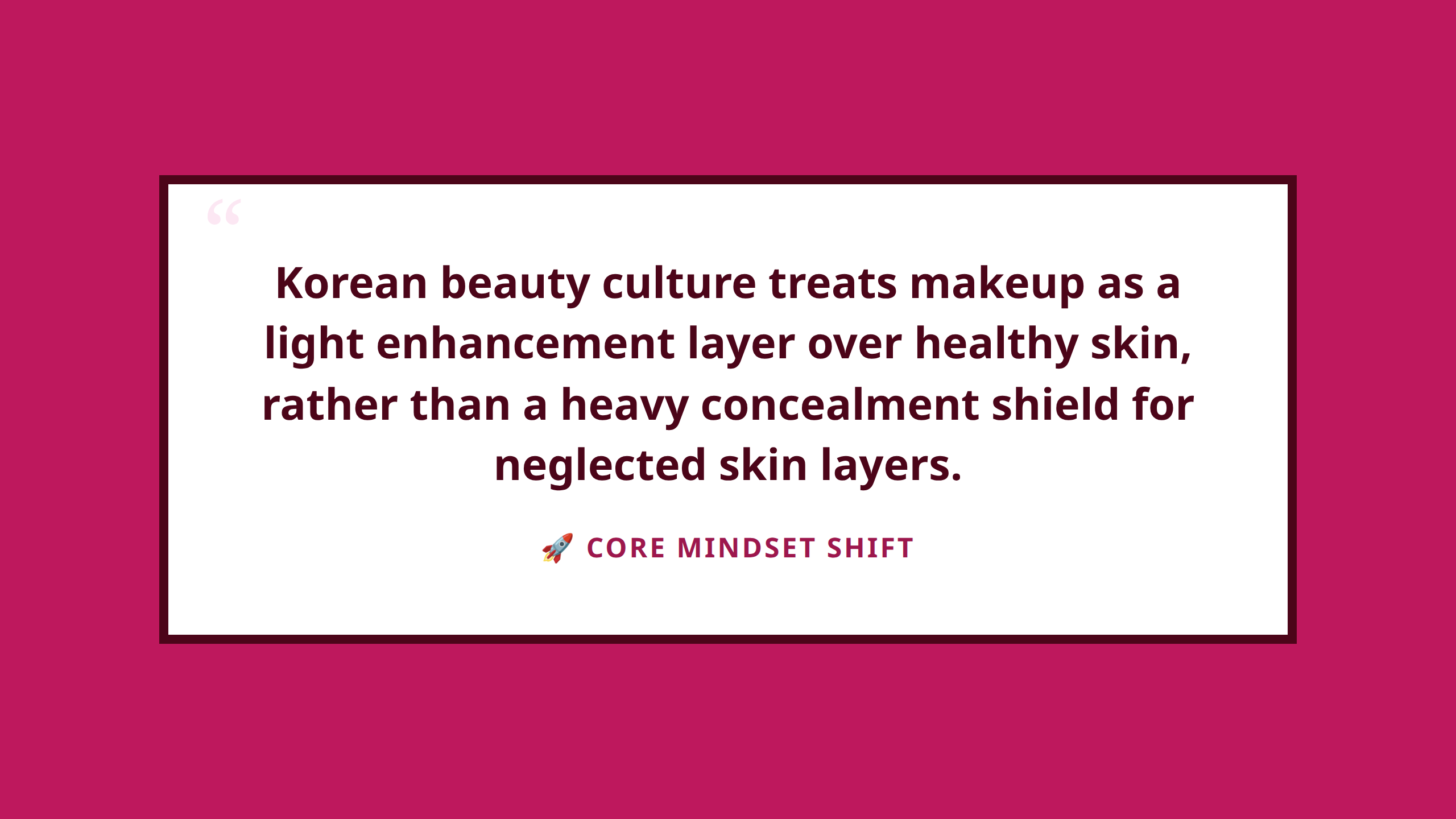
Heavy correction routines can become exhausting over time.
If makeup constantly needs to cover irritation, dryness, or uneven texture aggressively, the person may end up trapped in a cycle where the makeup routine becomes more complicated every month.
The skin-first philosophy changes the long-term workload.
Consistent skincare usually reduces how much correction feels necessary later. Makeup becomes lighter because it is enhancing healthier-looking skin instead of constantly fighting visible imbalance underneath.
I would not interpret this as “makeup is bad” or that people should stop wearing coverage products entirely. Korean beauty culture still values cosmetics.
The difference is that skincare builds the foundation first.
Once that foundation improves, the no-makeup makeup look stops feeling like a difficult illusion and starts looking much more natural almost automatically.
- No-makeup makeup: A makeup style designed to enhance natural features while appearing lightweight and minimally visible.
- Skin barrier: The outer protective layer of the skin that helps retain moisture and reduce irritation.
- Hydration: Water content within the skin that helps maintain smoothness, flexibility, and comfort.
- Concealer: A cosmetic product used to cover discoloration, acne, redness, or dark circles on the skin.
- K-beauty: A term commonly used for Korean beauty and skincare products, routines, and beauty culture.
References:
- https://www.youtube.com/watch?v=wKlGY3eg1nY
- https://www.youtube.com/watch?v=9BLhksaed28
- https://www.reddit.com/r/bitcheswithtaste/comments/1jdrbmh/bwt_whats_your_routine_for_your_best_face_without/
- https://www.reddit.com/r/bitcheswithtaste/comments/1jdrbmh/bwt_whats_your_routine_for_your_best_face_without/mid2sew/
- https://www.reddit.com/r/bitcheswithtaste/comments/1jdrbmh/bwt_whats_your_routine_for_your_best_face_without/mid0ag3/
- https://capsulenz.com/covet/beauty/no-makeup-makeup-look/
- https://www.clinique.com.au/skin-school-blog/minimal-makeup-here-stay-heres-only-natural-foundation-you-need
- https://www.reddit.com/r/beauty/comments/1b3fwsc/whats_the_best_way_to_look_put_together_or_great/
- https://www.reddit.com/r/beauty/comments/1b3fwsc/whats_the_best_way_to_look_put_together_or_great/kssox9e/
- https://www.reddit.com/r/beauty/comments/1fhte5p/what_is_your_everyday_or_no_makeup_makeup_routine/
- https://www.reddit.com/r/AsianBeauty/comments/9qsq3t/does_anyone_have_a_daily_skin_routine_without/
- https://www.revitalash.com/blogs/routines/the-perfect-routine-for-a-no-makeup-makeup-look
- https://www.wellpeople.com/blogs/articles/no-makeup-makeup-look
- https://www.lisaeldridge.com/blogs/videos/no-makeup-makeup-2-0
- https://www.reddit.com/r/bitcheswithtaste/comments/1jdrbmh/bwt_whats_your_routine_for_your_best_face_without/mid01av/
