Korean skincare routines layer products because different products handle different jobs. Instead of expecting one cream to repair everything at once, the routine builds skin health through smaller, targeted steps that work together over time.
A lot of people look at Korean skincare routines and immediately focus on the number of products. The assumption is usually that the routine is excessive, trendy, or unnecessarily complicated.
I used to see it that way too. If one moisturizer works, why would anyone need multiple layers? But the logic becomes clearer once you stop thinking about skincare as one dramatic correction and start thinking about it as a system.
Takeaways
- Korean skincare layers products because each step has a different function.
- The routine separates preparation, hydration, treatment, and protection instead of forcing one product to do everything.
- Layering focuses on skin balance and absorption, not maximum product strength.
- Consistency and sequencing matter more than chasing one “miracle” cream.
The “Miracle Cream” Mindset Creates Unrealistic Expectations
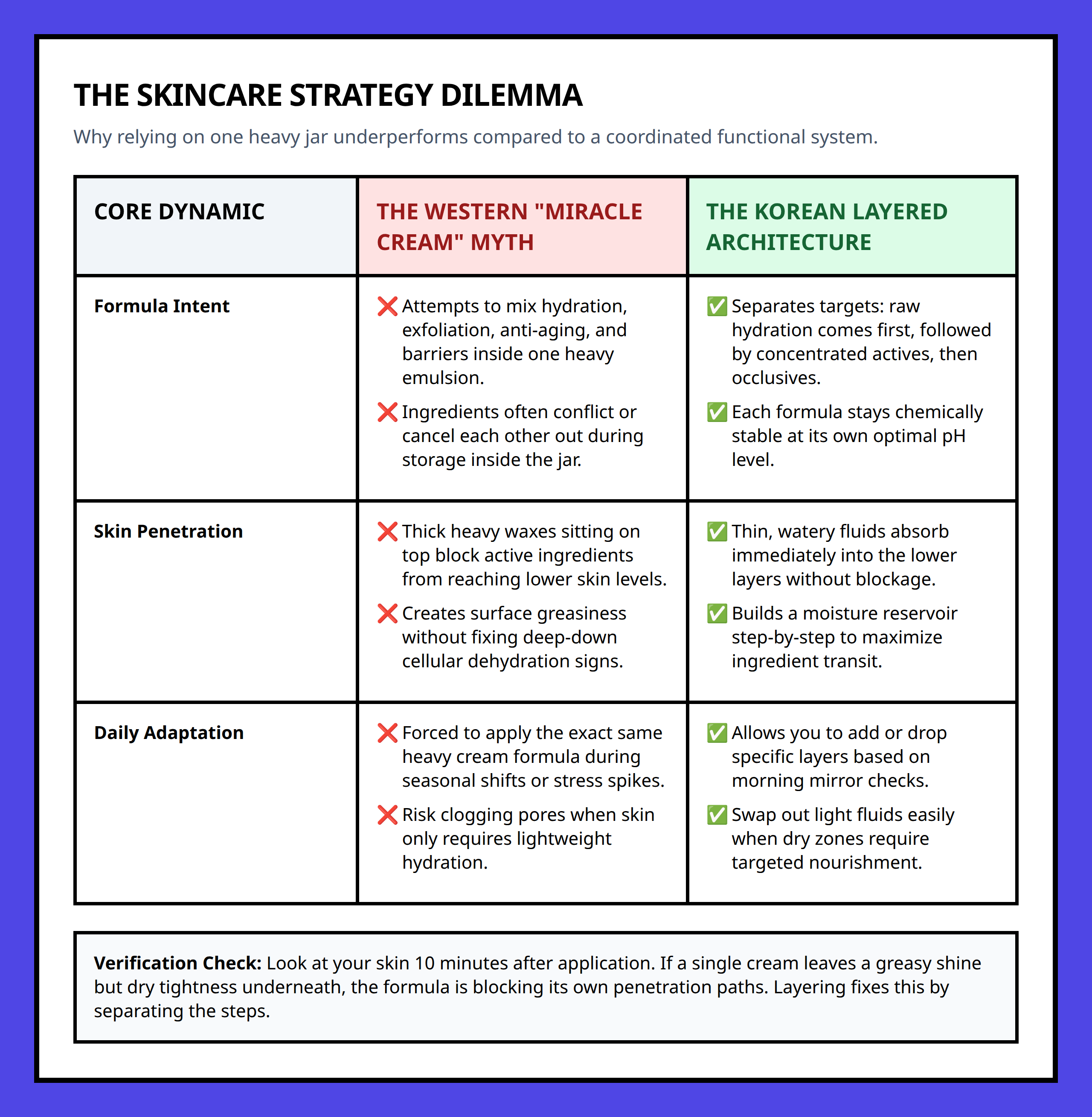
A lot of skincare marketing revolves around the idea that one product can solve every problem quickly.
The promise usually sounds familiar:
- Erase wrinkles
- Fix acne
- Brighten skin
- Repair dryness
- Tighten texture
- Reverse damage
All from one jar.
I understand why that approach appeals to people. It feels simpler, cheaper, and emotionally satisfying. If one product can fix everything, then skincare becomes easy.
But skin problems usually do not come from one single issue.
Dryness, irritation, breakouts, uneven texture, and sensitivity often involve different processes happening at the same time. A single heavy product may help one area while creating problems somewhere else.
That is why the Korean layering approach separates skincare into smaller functions instead of expecting one product to carry the entire routine.
The goal is not to overwhelm the skin with products. The goal is to give each product a more focused role.
Layering Works Because Different Products Do Different Jobs
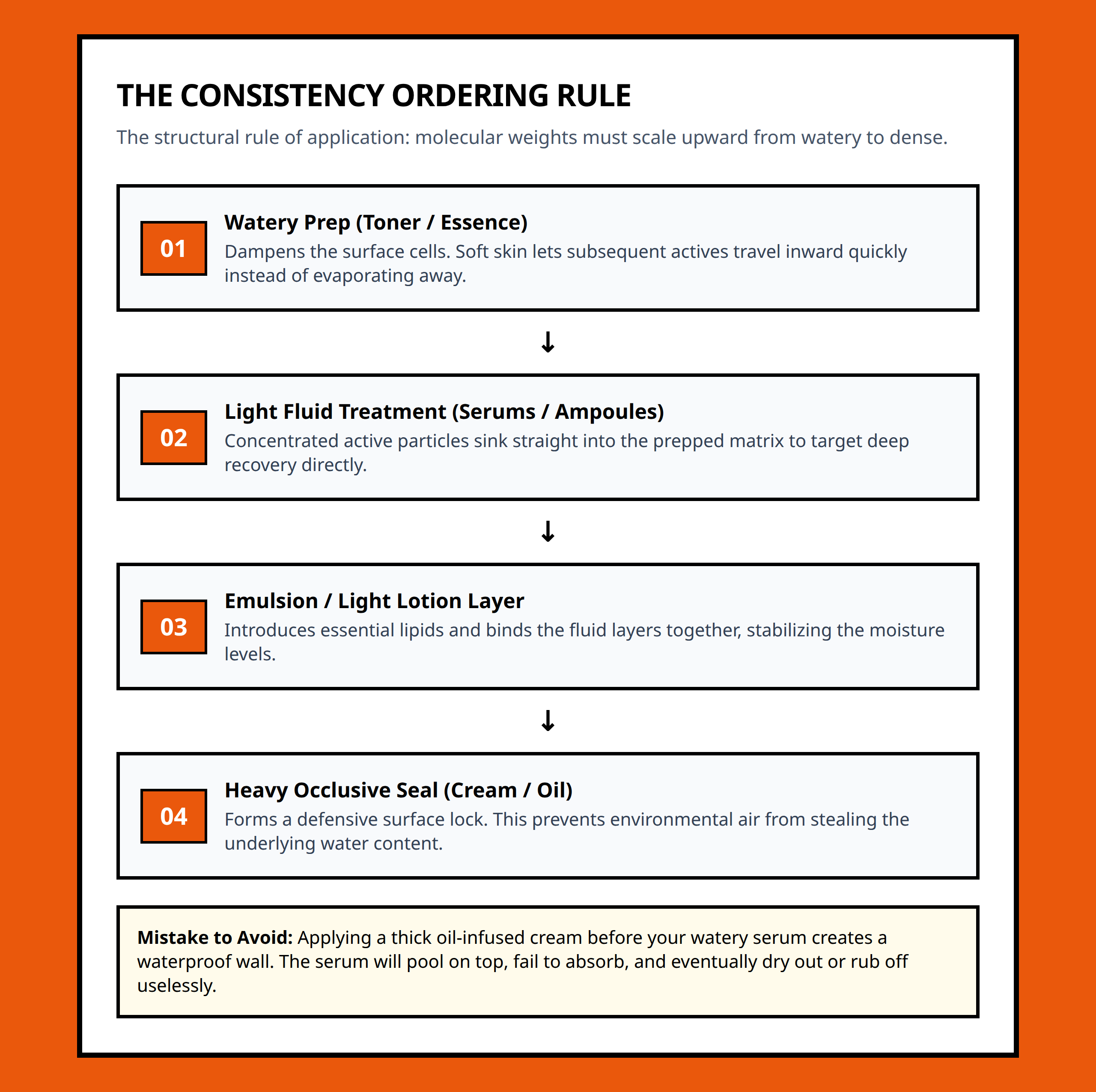
Once I started looking at layered skincare as a functional system, the structure made much more sense.
Each step supports a different part of skin maintenance.
| Function | Purpose |
|---|---|
| Preparation | Helps the skin receive later products more comfortably |
| Hydration | Adds water and moisture support to the skin |
| Treatment | Targets specific concerns carefully |
| Protection | Helps defend the skin from environmental stress |
That division changes how products are used.
Instead of searching for the strongest all-purpose cream available, the routine spreads the workload across lighter, more specialized layers.
I think this is one reason many Korean skincare routines feel gentler overall. No single product has to be aggressive enough to force dramatic change alone.
Why Product Order Matters in Korean Skin Care
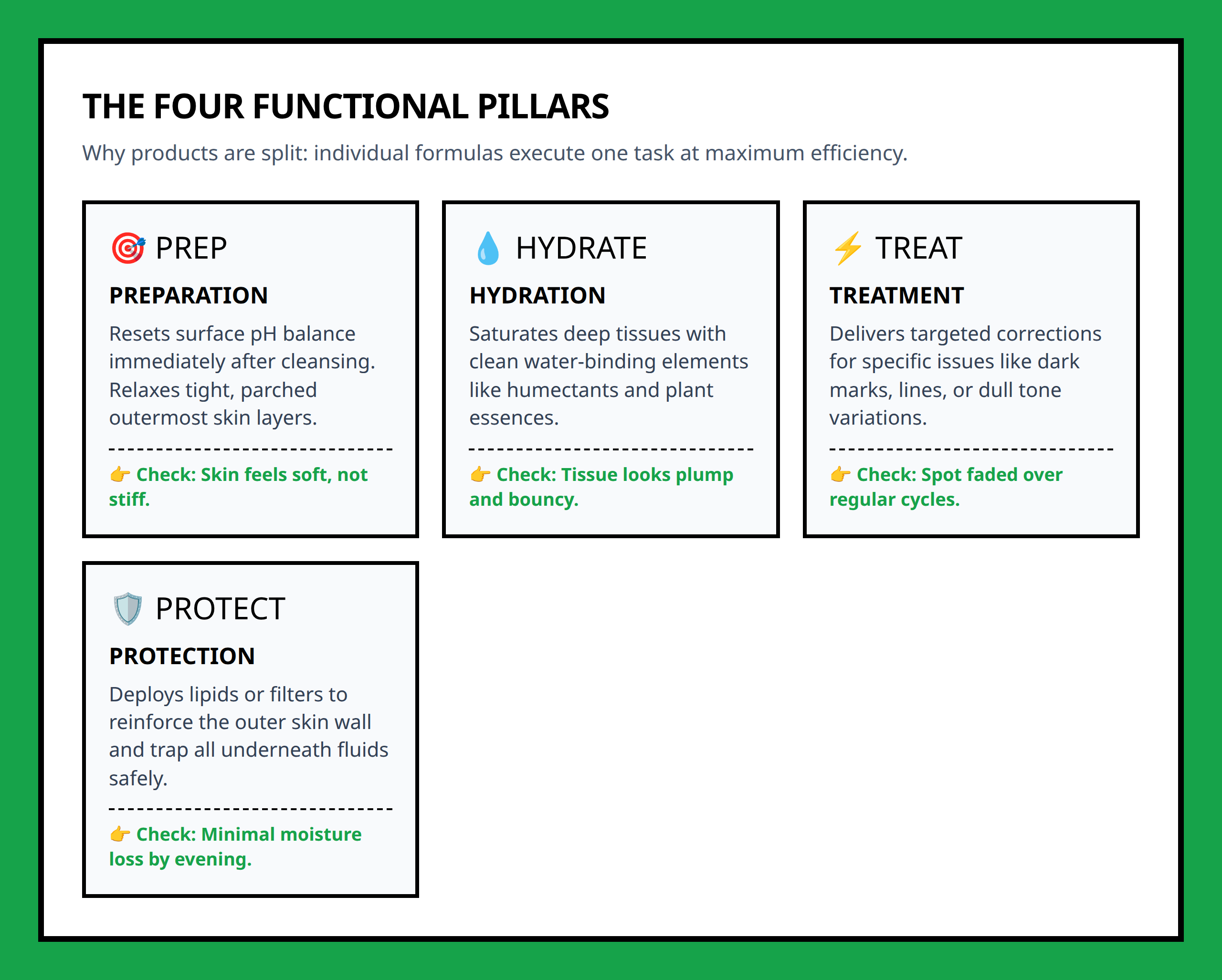
The sequence is not random.
Korean skincare routines usually move from thinner, lighter products toward thicker, more protective ones. The layering order is designed to help products absorb more comfortably without creating unnecessary heaviness early in the routine.
This is where many beginners get confused. They often assume layering means applying large amounts of product repeatedly.
In practice, many steps use relatively small amounts.
An essence, for example, is often lightweight and hydration-focused. It prepares the skin differently than a heavier cream would.
I would think about it like clothing layers during changing weather. A thin base layer handles a different job than a heavy outer jacket. Trying to replace every layer with one oversized item usually creates a worse fit overall.
The same principle appears in skincare layering. Preparation, hydration, treatment, and protection are separated because they behave differently on the skin.
Layering Also Changes How Skin Feels During the Routine
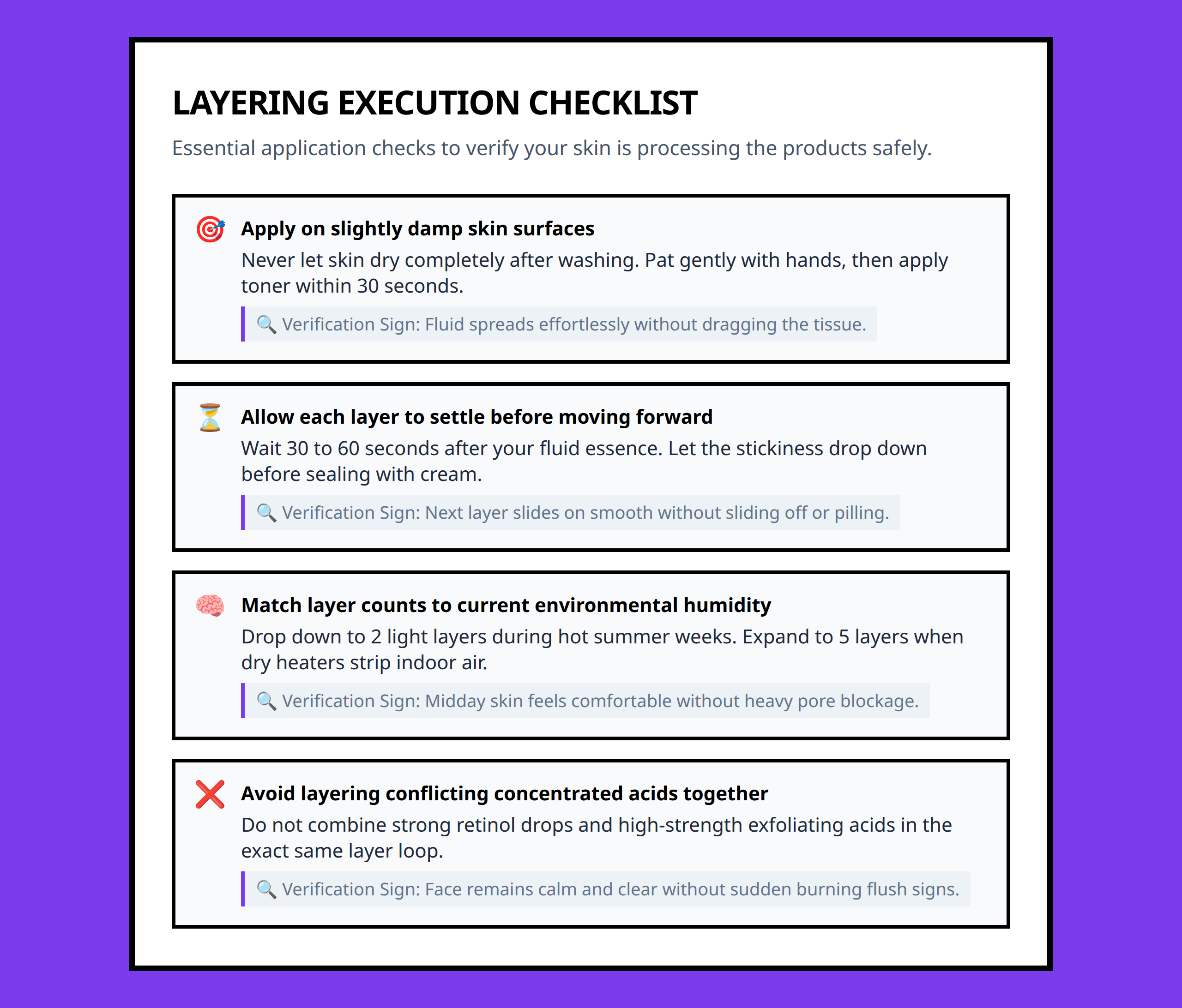
One detail that often gets overlooked is comfort.
A lot of aggressive skincare routines feel physically stressful. Strong treatments may sting, heavy creams can feel suffocating, and harsh products often create the impression that discomfort equals effectiveness.
Layered Korean skincare routines usually approach application differently.
Products are often pressed gently into the skin instead of rubbed aggressively. Lightweight hydration layers reduce friction. The routine becomes slower and more controlled.
I think this matters because irritated skin usually becomes harder to manage over time.
You can picture someone using a strong acne treatment alongside a thick corrective cream that promises fast repair. The skin becomes dry underneath, oily on the surface, and sensitive around active areas. Every new product starts causing more stinging.
A layered system often avoids some of that instability because the routine builds gradually instead of forcing correction all at once.
Why Korean Skin Care Separates Hydration From Heavy Moisture
This distinction is easy to miss if someone is used to simple moisturizer-only routines.
Hydration and moisture are related, but they are not exactly the same thing.
Many Korean routines use lightweight hydrating layers first, then seal that support with creams or protective products later.
I think this explains why some layered routines can actually feel lighter than a single thick cream.
Someone with dehydrated skin may keep applying heavier moisturizer because the skin still feels uncomfortable underneath. The problem is not always the amount of cream. Sometimes the skin lacks water-based hydration before the heavier layer arrives.
The layering system tries to solve that imbalance by separating the steps more carefully.
Consistency Matters More Than Product Quantity
One thing I would caution readers against is treating Korean skincare like a competition over how many products fit on a bathroom shelf.
The real point of layering is functional balance, not maximum complexity.
Many people misunderstand Korean skincare because social media often turns routines into visual performance. Ten visible bottles look impressive online, but the underlying philosophy is actually much more practical.
Each layer should have a reason to exist.
If a step does not support the skin meaningfully, there is no benefit in adding it just for the appearance of a “full routine.”
I think the most useful lesson from layered skincare is not the exact number of products. It is the idea that skin care works better when products are allowed to specialize instead of pretending one cream can solve every problem alone.
That shift in thinking usually leads to calmer expectations, gentler routines, and more stable skin over time.
- Essence: A lightweight skincare product commonly used in Korean skincare routines to add hydration and prepare the skin for later steps.
- Layering: Applying skincare products in a sequence where each product serves a different function.
- Skin barrier: The outer protective layer of the skin that helps retain moisture and reduce irritation.
- Hydration: Water support within the skin that helps maintain comfort, smoothness, and balance.
- Moisturizer: A product designed to help seal hydration into the skin and reduce moisture loss.
References:
- https://www.sciencefocus.com/science/korean-skincare-truth
- https://www.reddit.com/r/koreanskincare/comments/1ou5kjr/actually_there_is_no_korean_products_that_can/
- https://www.reddit.com/r/SkincareAddiction/comments/obc7r7/miscellaneous_is_it_me_or_korean_10step_skincare/
- https://www.reddit.com/r/AsianBeauty/comments/5w0k20/discussion_why_do_you_like_asian_skin_care/
- https://www.straitstimes.com/asia/east-asia/beauty-is-pain-experts-weigh-in-on-slapping-technique-seen-in-south-korean-skincare
- https://rbjello.wordpress.com/2017/08/18/korean-beauty-believer/
- https://www.kins-clinic.com/blogs/the-korean-skincare-routine-for-lasting-glowing-skin
- https://unicornmedispa.com/the-3-second-rule-in-skincare-the-fast-track-to-radiant-hydrated-skin/
- https://koreanskincare.nl/blogs/skintalks/the-7-skin-method-your-ultimate-guide-to-hydrated-skin
