Korean skincare routines are usually built around how the skin behaves right now — dryness, sensitivity, breakouts, dehydration, weather changes, or irritation — instead of relying mainly on age labels like “anti-aging” or “for your 30s.”
A lot of skincare advice starts with age. People are told they need certain products in their twenties, stronger products in their thirties, and “repair” products later on. The assumption is that age automatically tells you what your skin needs.
I think this approach creates confusion because people the same age often have completely different skin conditions. One person may struggle with dehydration and sensitivity at twenty-five, while another person in their forties may mainly need lightweight hydration and sunscreen consistency.
Takeaways
- Korean skincare routines are adjusted around skin behavior, not strict age categories.
- Skin condition changes constantly based on weather, stress, hormones, and habits.
- Observation and adaptation matter more than following fixed “anti-aging” timelines.
- Many Korean skincare consumers switch products quickly if something stops working well.
Age Does Not Automatically Explain What Your Skin Needs
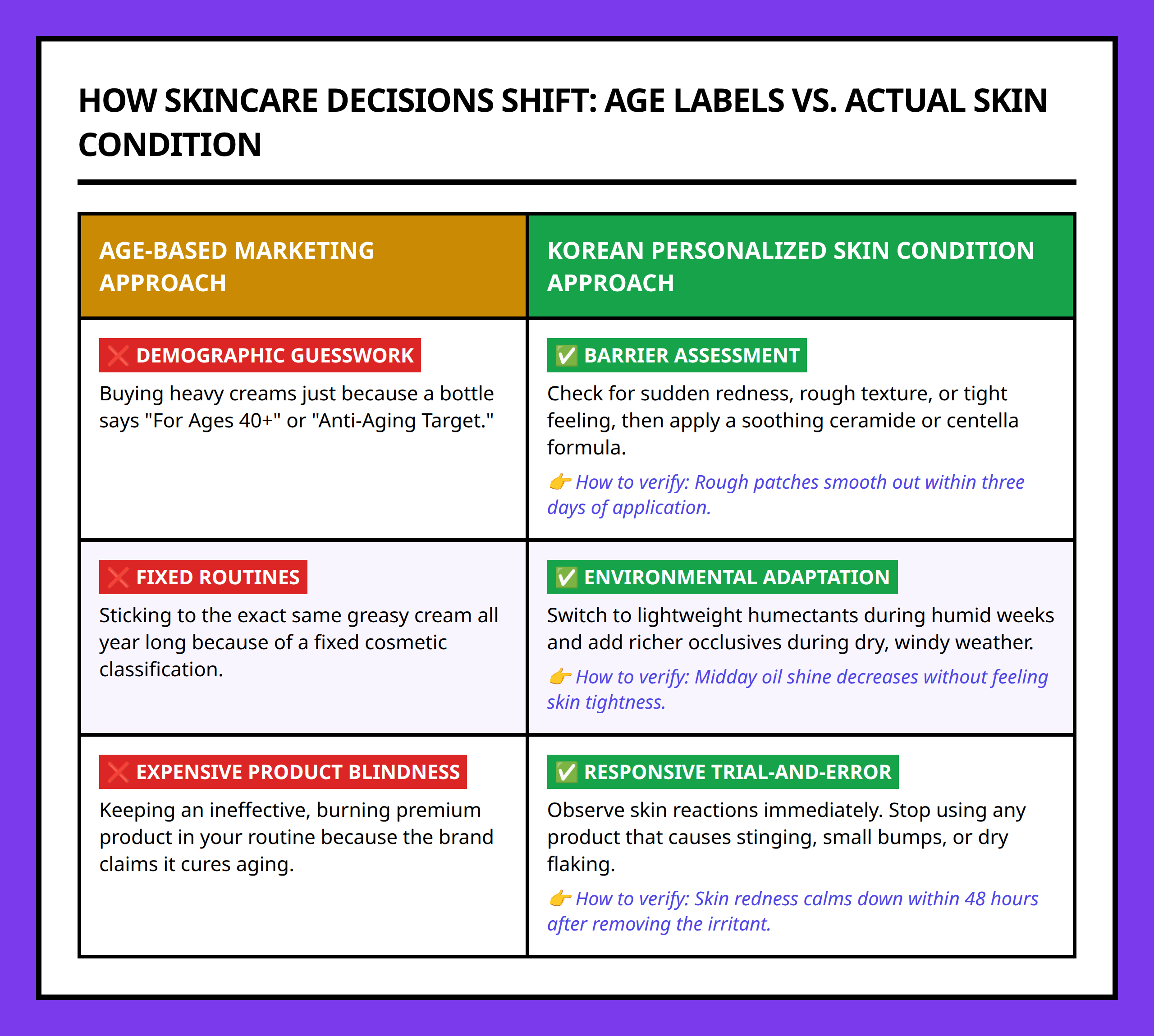
One of the biggest problems with age-based skincare is that it assumes skin changes in predictable ways for everyone.
Real skin does not behave that neatly.
Some younger people experience dryness, irritation, and sensitivity very early. Some older adults still deal with acne or oiliness. Stress, sleep, weather, hormones, indoor heating, air conditioning, and cleansing habits can all affect the skin differently.
I would be careful anytime skincare advice sounds overly rigid, especially when it treats age like the only meaningful variable.
You can see how limiting that mindset becomes in everyday situations. A person in their late twenties may buy a heavy “anti-aging” cream because marketing tells them they should start preventing wrinkles early. But their actual problem may be dehydration from over-cleansing and long hours in air-conditioned spaces.
The product category matches their age. It may not match their skin.
Korean Skin Care Pays Closer Attention to Skin Condition
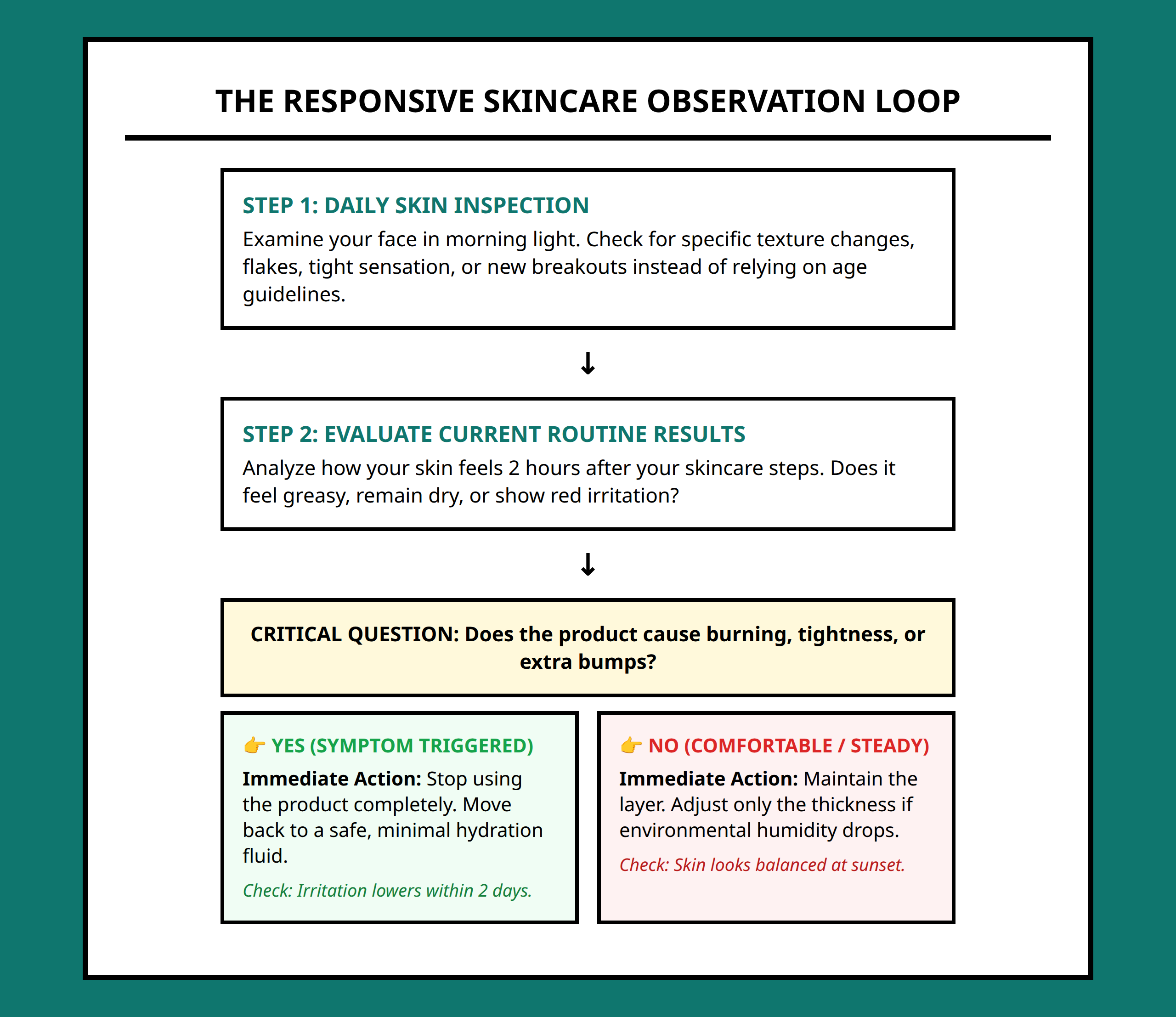
Korean skincare routines often start with a simpler question: what is the skin doing right now?
That shift changes the entire decision-making process.
Instead of beginning with demographic labels, the routine begins with observation.
People pay attention to things like:
- How the skin reacts after cleansing
- Whether weather changes increase dryness
- How much hydration the skin seems to hold
- Whether products create irritation or comfort
- How the skin changes during stress or lack of sleep
I think this creates a more responsive relationship with skincare because the routine stays flexible instead of fixed permanently around age categories.
The skin is treated as something dynamic.
That matters because skin condition can shift surprisingly quickly. Someone who normally has balanced skin may suddenly become sensitive during winter or after changing environments. Another person may become oilier during humid months and drier during colder seasons.
A rigid routine often struggles to adapt to those changes.
Personalization Often Comes Through Trial and Observation
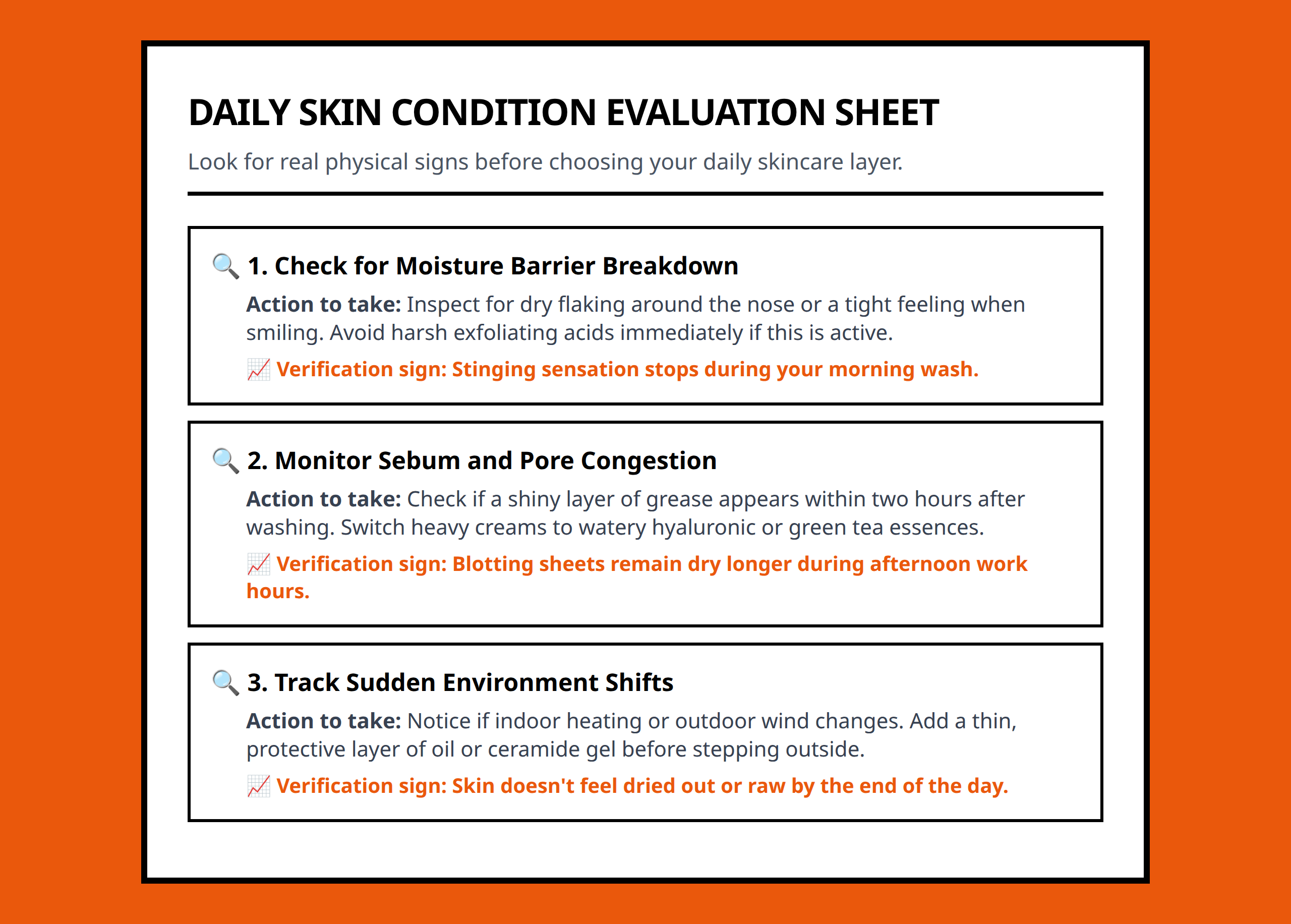
One thing I find interesting in Korean skincare culture is how normal experimentation seems to be.
Consumers often test products, adjust routines, and stop using products quickly if the skin responds poorly.
That flexibility is important because skincare is rarely completely universal.
Even products that work extremely well for one person may feel irritating, heavy, or ineffective for someone else with different skin behavior.
I would treat skincare more like ongoing adjustment than permanent identity.
A person might use lightweight hydration during humid weather, richer moisturizing support during colder months, and gentler products during periods of irritation. The routine evolves alongside the skin instead of staying locked into one category forever.
This is also why Korean skincare routines often feel less emotionally attached to “holy grail” products. If something stops working well, many consumers move on quickly rather than forcing loyalty.
Why Observation Matters More Than Marketing Labels
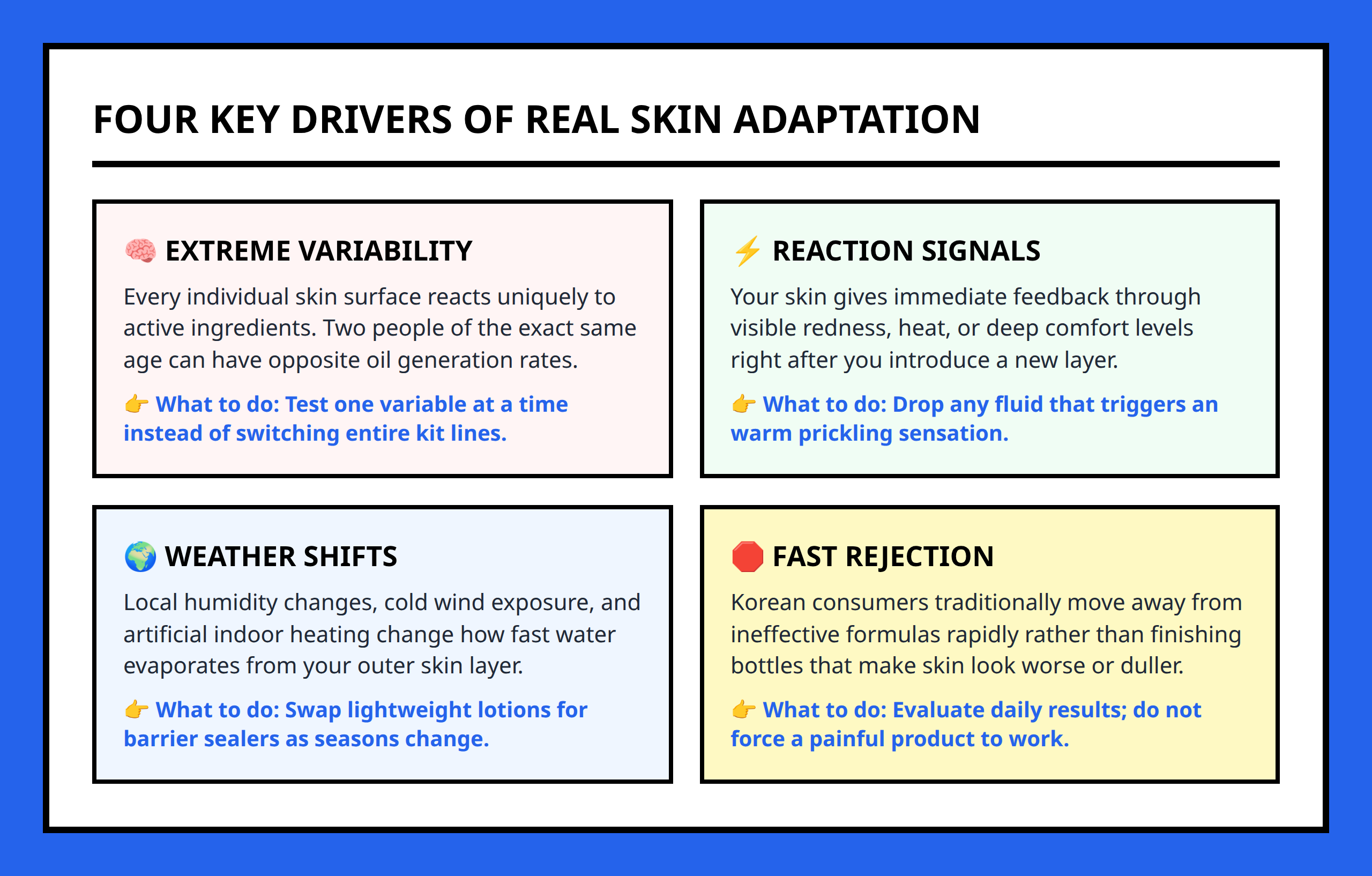
Marketing categories can sometimes oversimplify skin concerns.
Products labeled “anti-aging,” “for oily skin,” or “for dry skin” may still behave very differently depending on texture, ingredients, climate, and individual sensitivity.
I think many people become disconnected from their actual skin because they rely too heavily on labels instead of observation.
For example, someone may assume they have oily skin permanently because their forehead becomes shiny during the day. At the same time, they may ignore signs of dehydration underneath, like tightness after cleansing or flaky texture around the nose.
The label becomes stronger than the skin’s real behavior.
Korean skincare routines often encourage more frequent adjustment because consumers are expected to pay attention continuously instead of choosing one identity permanently.
Why Personalized Routines Usually Become Simpler Over Time
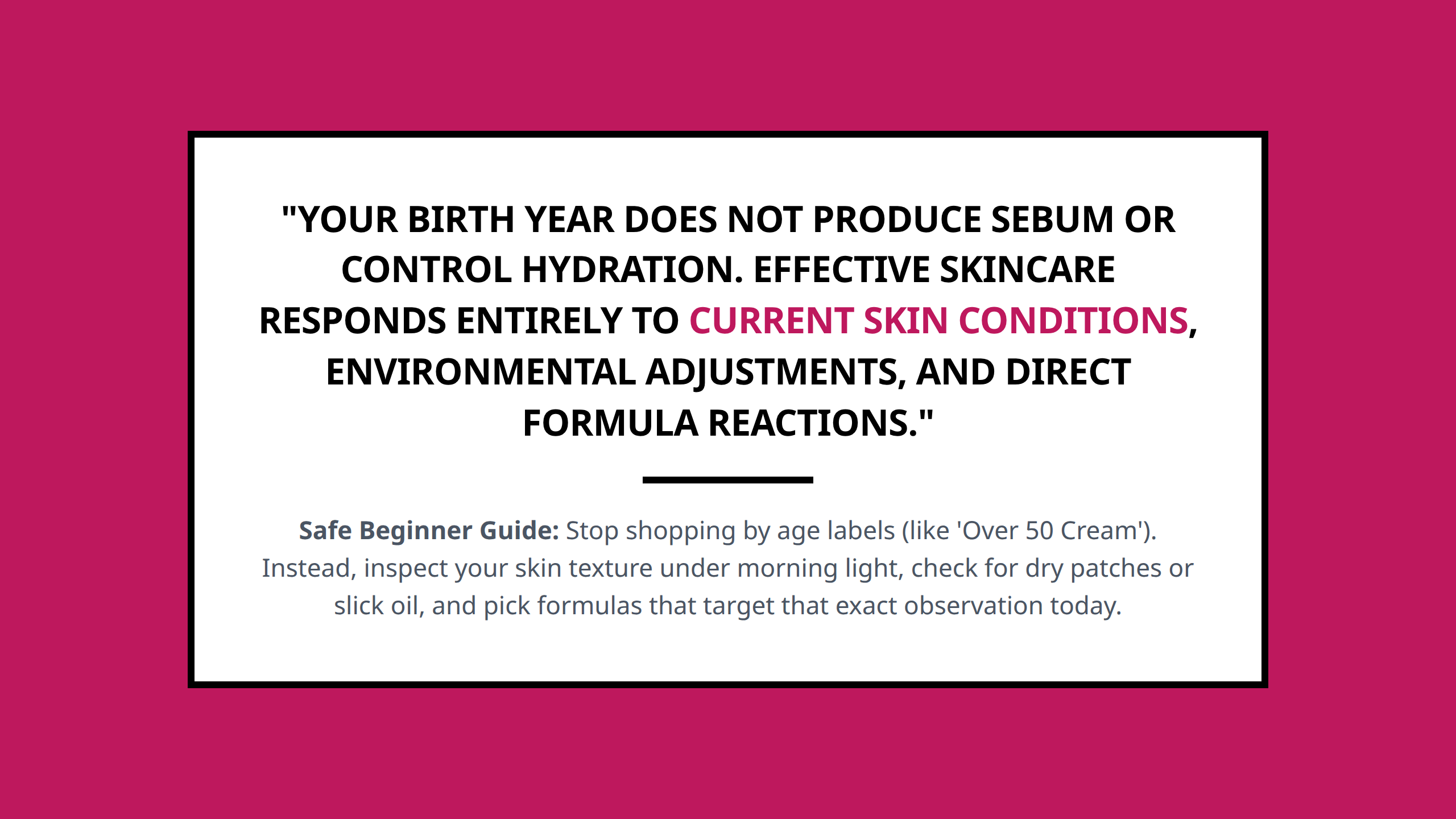
Ironically, personalization often makes skincare less overwhelming eventually.
At first, experimentation can feel confusing because people are trying to understand how their skin reacts.
But over time, observation creates pattern recognition.
Someone may notice:
- Certain cleansers increase irritation quickly
- Hydration matters more during travel
- Heavy creams feel uncomfortable in humid weather
- Lack of sleep changes skin sensitivity
- Gentler routines work better during breakouts
I think this is one reason Korean skincare routines often emphasize paying attention to skin comfort so strongly. The routine becomes easier to personalize once people stop chasing universal rules.
The goal is not to build the “correct” routine for a certain age group forever.
The goal is to understand how your own skin behaves under changing conditions.
Why Korean Consumers Abandon Products So Quickly
One practical result of this mindset is that Korean skincare consumers often stop using products faster than many Western brands expect.
If a product feels irritating, too heavy, too drying, or simply ineffective, people move on.
I think this behavior reflects a larger philosophy: the skin’s response matters more than the product’s marketing identity.
That perspective changes skincare from something rule-based into something observational.
Instead of asking, “What should someone my age use?” the more useful question becomes:
What is my skin actually asking for right now?
- Personalized skincare: A skincare approach that adjusts products and routines based on individual skin behavior instead of fixed categories like age or gender.
- Dehydrated skin: Skin that lacks enough water content, even if the surface still appears oily.
- Anti-aging: A marketing category for products designed to address visible signs of aging like fine lines, dryness, or uneven texture.
- Skin barrier: The outer protective layer of the skin that helps retain moisture and reduce irritation.
- Skin sensitivity: A condition where the skin reacts easily to products, weather, cleansing, or environmental stress.
References:
- https://heypretty.gr/how-to-build-your-personalized-korean-skincare-routine/
- https://www.reddit.com/r/koreanskincare/comments/1ppwgq1/do_personalized_skin_assessments_change_how_you/
- https://www.reddit.com/r/koreanskincare/comments/1ppwgq1/do_personalized_skin_assessments_change_how_you/nuq3kwe/
- https://www.reddit.com/r/koreanskincare/comments/1ppwgq1/do_personalized_skin_assessments_change_how_you/nvj3v6z/
- https://www.quora.com/Are-the-beauty-routines-or-skin-products-that-Koreans-use-the-reason-for-their-good-skin-or-is-it-genetics
- https://www.reddit.com/r/EuroSkincare/comments/197jmzx/are_korean_skincare_really_that_great/
- https://www.reddit.com/r/EuroSkincare/comments/197jmzx/are_korean_skincare_really_that_great/ki10fc8/
- https://www.reddit.com/r/SkincareAddiction/comments/1ovbe8d/product_question_why_is_everyone_i_know_suddenly/
- https://www.youtube.com/watch?v=JCIL52AEwzY
- https://bomibox.com/how-to-choose-korean-skincare-for-your-age-a-k-beauty-guide
- https://www.healthline.com/health/beauty-skin-care/korean-skincare-routine
- https://themonodist.com/the-10-step-korean-skin-care-routine-is-not-real-and-never-was/
- https://yepposoonsoo.se/en/blogs/articles/korean-skincare
- https://holyskin.fr/en/blogs/skincare-coreenne/principes-skincare-coreenne
- https://en.wikipedia.org/wiki/East_Asian_age_reckoning
- https://www.reddit.com/r/koreanskincare/comments/1ppwgq1/do_personalized_skin_assessments_change_how_you/nwc8cuq/
