Dewy skin in Korean beauty is not about looking oily. It refers to skin that appears hydrated, smooth, healthy, and naturally luminous because moisture is being maintained consistently beneath the surface.
A lot of people hear the phrase “dewy skin” and immediately imagine greasy skin, shiny foreheads, or heavy product buildup. That misunderstanding is especially common among people with oily or acne-prone skin who already feel frustrated by excess shine.
I think the confusion happens because both hydrated skin and oily skin can reflect light. But the way they look — and the reason they look that way — are completely different.
Takeaways
- Dewy skin refers to hydrated, healthy-looking skin, not greasy skin.
- Korean skincare treats hydration as ongoing maintenance instead of occasional repair.
- Oily skin can still become dehydrated underneath the surface.
- Consistent hydration practices often improve skin texture and balance over time.
Dewy Skin Is About Skin Health, Not Surface Shine
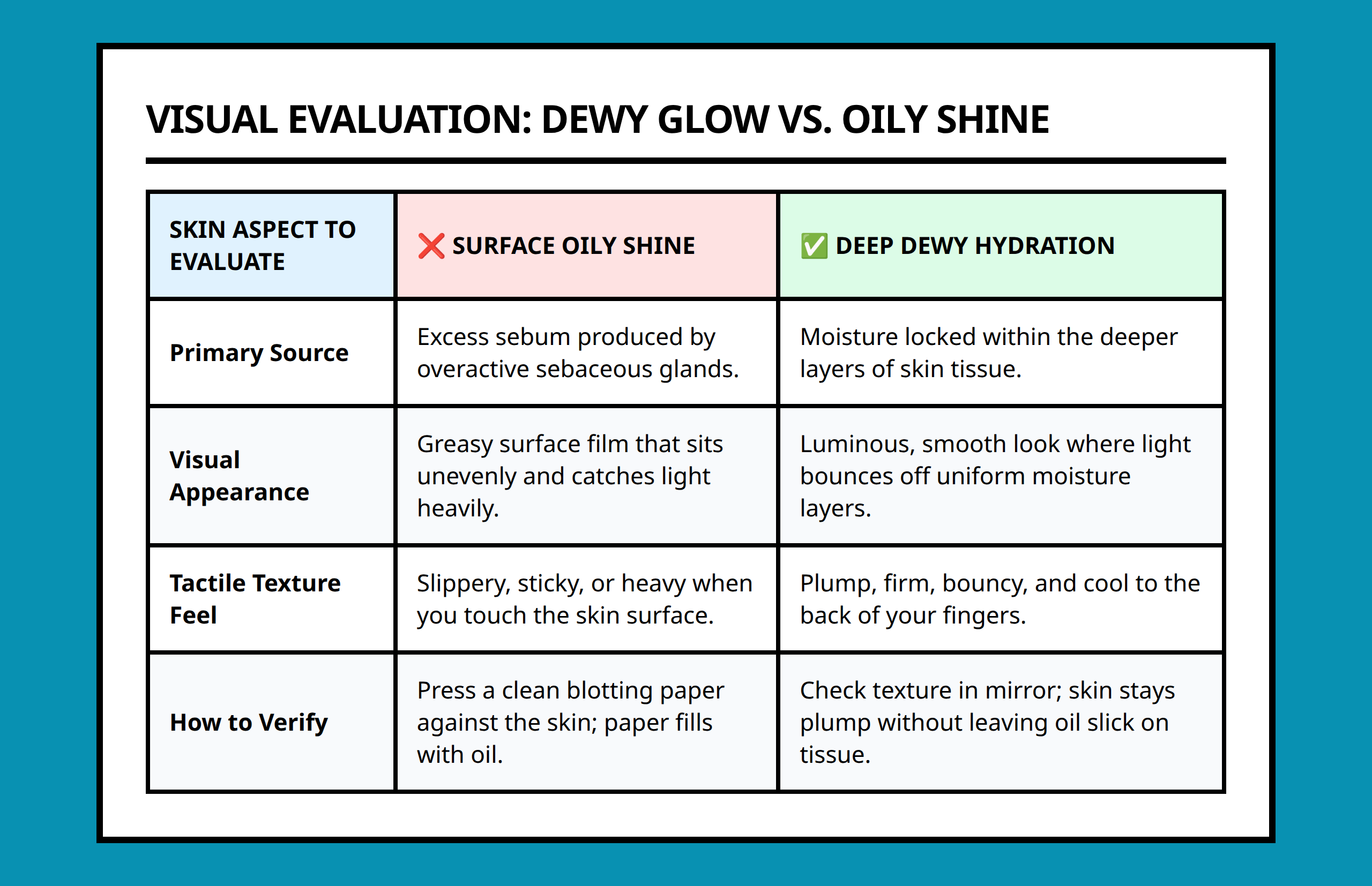
In Korean beauty culture, luminous skin is often treated as a sign that the skin is functioning well.
The glow people associate with “dewy skin” usually comes from smooth texture, hydration, and light reflecting evenly across healthier-looking skin.
Greasy skin looks different.
When skin is excessively oily, the shine often appears uneven or heavy. The skin may look slick around the forehead, nose, or chin while still feeling dehydrated underneath.
I think this distinction is important because many people with oily skin start avoiding hydration completely. They assume every moisturizer or hydrating product will automatically make them shinier.
That reaction can actually make the situation worse.
Skin that lacks hydration often becomes more reactive and uncomfortable over time. Some people then try to compensate by using stronger cleansers, oil-control products, or drying treatments, which can leave the skin even more imbalanced.
Why Korean Skin Care Focuses So Much on Hydration
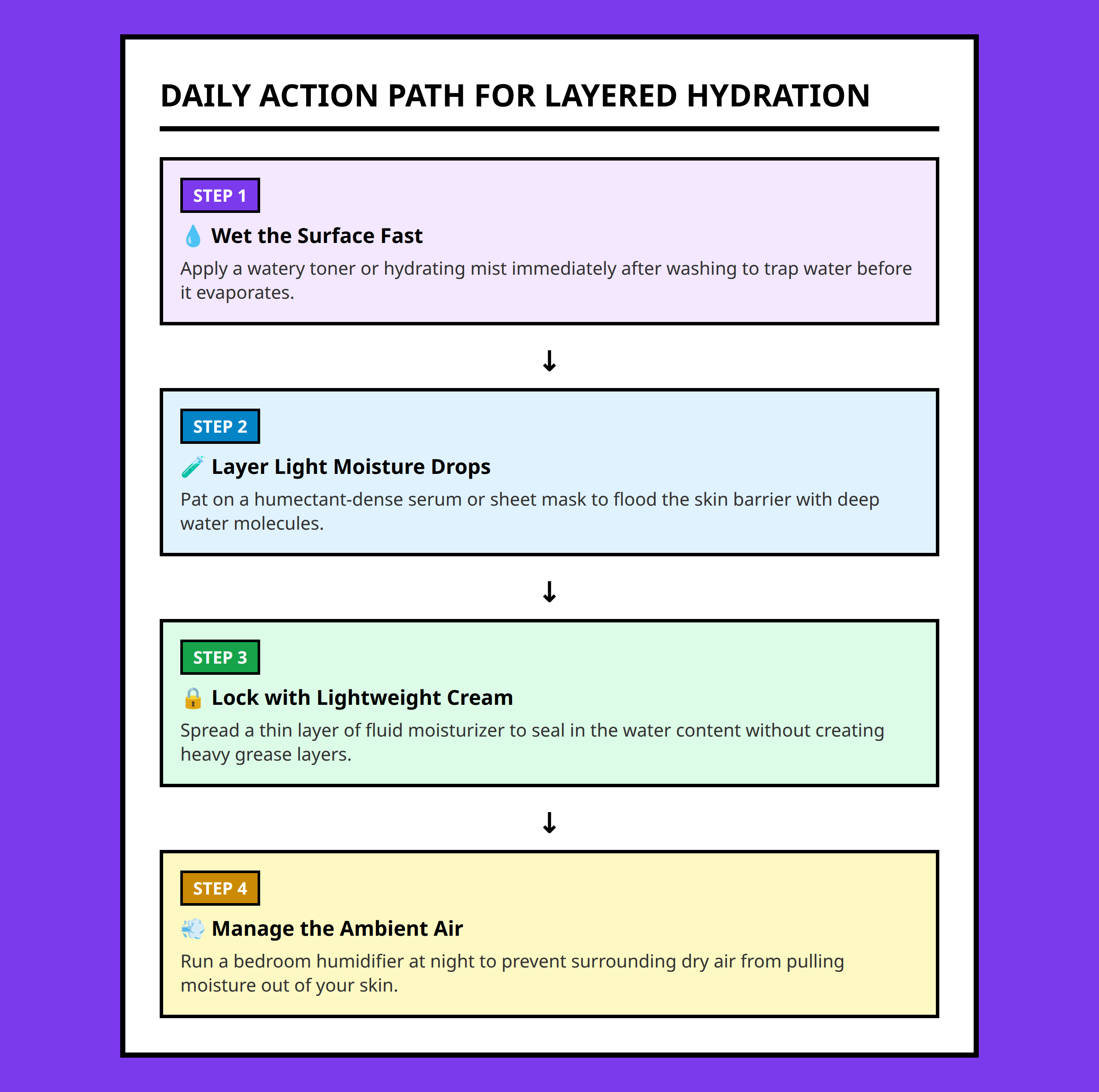
Hydration is treated almost like daily maintenance in Korean skincare routines.
That means hydration is not reserved for winter dryness or mature skin. It becomes part of everyday skin support.
I noticed this difference most clearly in how often hydration appears throughout Korean skincare culture:
- Facial mists during dry weather
- Layered lightweight hydration products
- Sheet masks for moisture support
- Humidifiers during colder seasons
- Daily moisturizing even for oily skin types
The goal is not to make the skin wet or overloaded. The goal is to help the skin maintain comfortable moisture levels consistently.
This changes the overall relationship people have with skincare. Instead of waiting for severe dryness, irritation, or dull texture, hydration becomes preventive.
You can see this in ordinary situations. Someone spending all day in an air-conditioned office may notice their skin feeling tighter by late afternoon even if their face still looks shiny. That person may need hydration support, not stronger oil removal.
The surface appearance alone does not always tell the full story.
Oily Skin and Dehydrated Skin Can Exist at the Same Time
This is probably one of the biggest misunderstandings behind the dewy skin conversation.
Many people assume oily skin automatically means hydrated skin.
But oil and hydration are not identical.
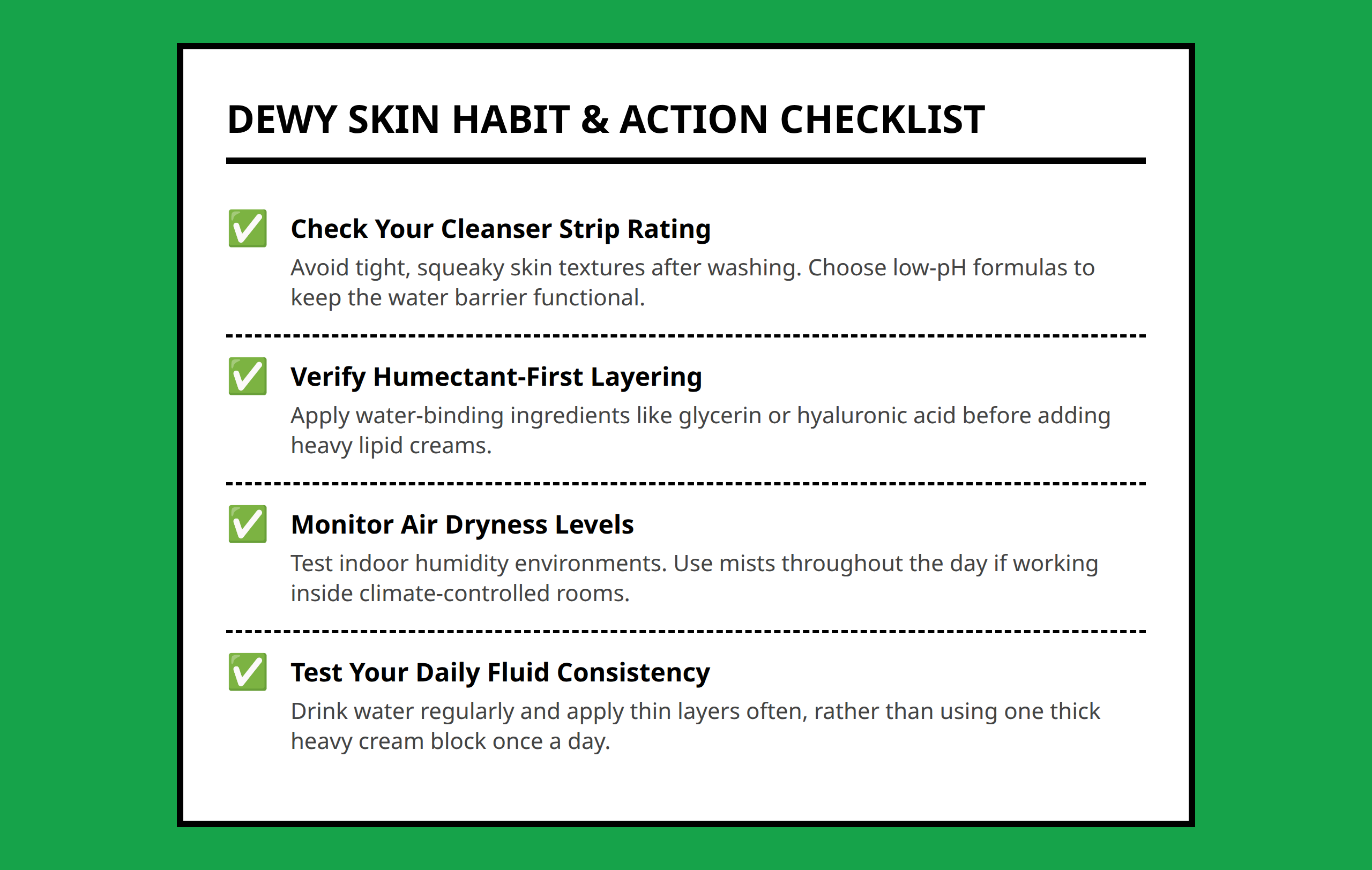
Skin can produce excess oil while still lacking enough water content underneath. In fact, some people with oily skin experience dehydration because they over-cleanse, skip moisturizer, or constantly use drying acne products.
I would pay close attention to signs like:
- Skin feeling tight after cleansing
- Oiliness returning very quickly
- Flaky patches underneath makeup
- Dull texture despite visible shine
- Skin becoming irritated easily
Those situations often point toward imbalance rather than “too much moisture.”
This is one reason Korean skincare routines often prefer lighter layers of hydration instead of one thick heavy cream. The routine tries to support hydration without creating unnecessary heaviness on the surface.
Dewy Skin Usually Comes From Consistency, Not One Product
A lot of people search for dewy skin the same way people search for miracle anti-aging products. They want one item that creates instant glow overnight.
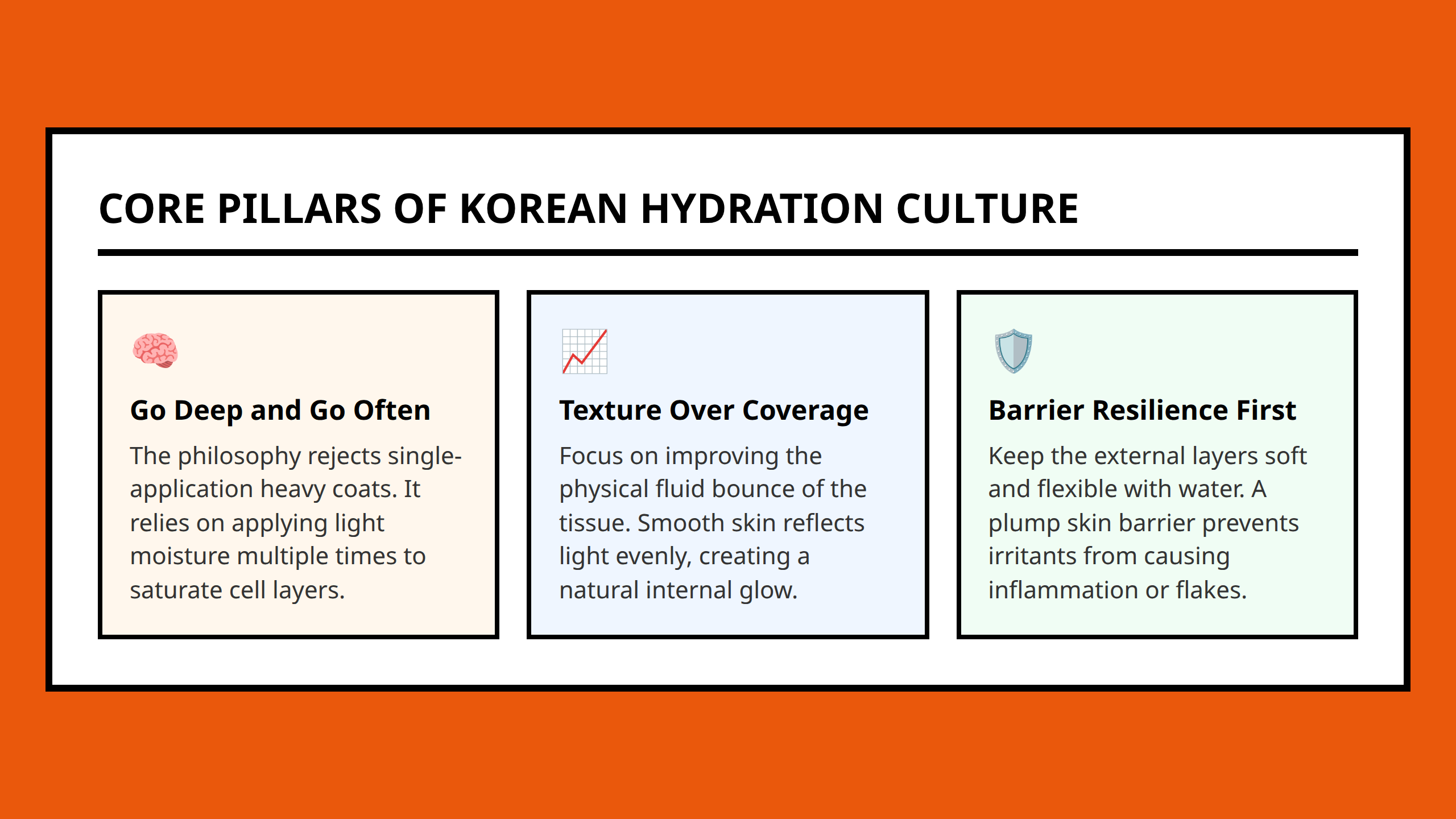
But the Korean skincare approach usually treats dewy skin as the result of repeated habits.
That includes:
- Gentle cleansing
- Daily hydration
- Sun protection
- Avoiding excessive irritation
- Maintaining the skin barrier consistently
I think this is why Korean beauty routines often emphasize comfort and routine stability so heavily. Healthy-looking skin is easier to maintain when the skin barrier stays calmer overall.
The glow associated with dewy skin is often subtle in real life. It is less about looking wet and more about skin appearing smooth, flexible, and naturally healthy.
That difference matters because social media sometimes exaggerates the look into something unrealistic. Extremely shiny makeup finishes can blur the line between hydrated skin and oily skin visually.
The original skincare idea is much more balanced than that.
Why the Dewy Skin Ideal Became So Central in Korean Beauty
The preference for dewy skin reflects a larger skincare philosophy.
In Korean beauty culture, skin care is often viewed as long-term maintenance rather than short-term correction. Healthy-looking skin is valued before heavy cosmetic coverage enters the picture.
Hydration supports that goal because hydrated skin usually looks smoother, calmer, and more resilient over time.
I think that is why the dewy skin ideal continues to appear repeatedly across Korean skincare routines. It represents visible skin comfort and balance, not excess product sitting on top of the face.
Once you understand that distinction, the entire concept starts making much more sense.
Dewy skin is not supposed to look greasy. It is supposed to look alive.
- Dewy skin: A Korean beauty term describing skin that looks hydrated, smooth, healthy, and naturally luminous.
- Hydration: Water content within the skin that helps maintain comfort, flexibility, and healthy texture.
- Skin barrier: The outer protective layer of the skin that helps retain moisture and defend against irritation.
- Humidifier: A device that adds moisture to indoor air, often used to help reduce dryness in the skin during dry seasons or air-conditioned conditions.
- Sheet mask: A face-shaped mask soaked in skincare ingredients, commonly used in Korean skincare routines for temporary hydration support.
References:
- https://www.reddit.com/r/AsianBeauty/comments/3tf3et/what_are_the_difference_between_looking_dewy_and/
- https://www.reddit.com/r/30PlusSkinCare/comments/1kiitqg/what_is_dewyglass_skin_exactly_is_it_the_sheen/
- https://www.reddit.com/r/kbeauty/comments/1jwia8k/glass_skin_whats_the_difference_between_glowy_and/
- https://www.laroche-posay.com.au/blog/glass-skin.html
- https://all-about-korea.com/glass-skin-korean-beauty-meaning/
- https://koreancare.bg/en/blogs/news/what-is-glass-skin-the-science-behind-luminous-translucent-complexion
- https://skin-styles.com/sv/blogs/nyheter-1/dewy-skin-definition-differences-proven-techniques
- https://blog.pureance.com/glass-skin-vs-oily-skin/
- https://www.nivea.co.uk/products/advice-how-to-get-dewy-skin
- https://www.healthline.com/health/beauty-skin-care/how-to-get-glass-skin
- https://www.clinikally.com/blogs/news/skincare-tips-for-dewy-and-oily-skin
- https://www.moncornerb.com/en/content/764-the-korean-routine-for-a-glass-skin-effect
- https://www.revivalabs.com/is-dewy-skin-the-same-as-glowing-skin/
