Korean skincare packaging is not only designed to look attractive on a shelf. It also helps make skincare routines feel enjoyable, emotionally rewarding, and easier to repeat consistently as part of daily life.
A lot of people dismiss cute skincare packaging immediately. If a product looks playful, colorful, or overly charming, the assumption is often that the company is compensating for weak formulas or trying to sell appearance instead of quality.
I used to react that way too. Serious skincare, at least in my mind, was supposed to look clinical, minimal, and almost medical. Anything too cute felt less trustworthy.
What changed my perspective was realizing that Korean beauty culture often treats packaging as part of the skincare experience itself, not just decoration wrapped around the product.
Takeaways
- Korean skincare packaging is designed to increase emotional engagement with routines.
- Enjoyable products are often used more consistently over time.
- Packaging influences habit formation, convenience, and shopping behavior.
- In Korean beauty culture, design is treated as part of product function, not separate from it.
Why Cute Packaging Is Taken More Seriously in Korean Beauty Culture
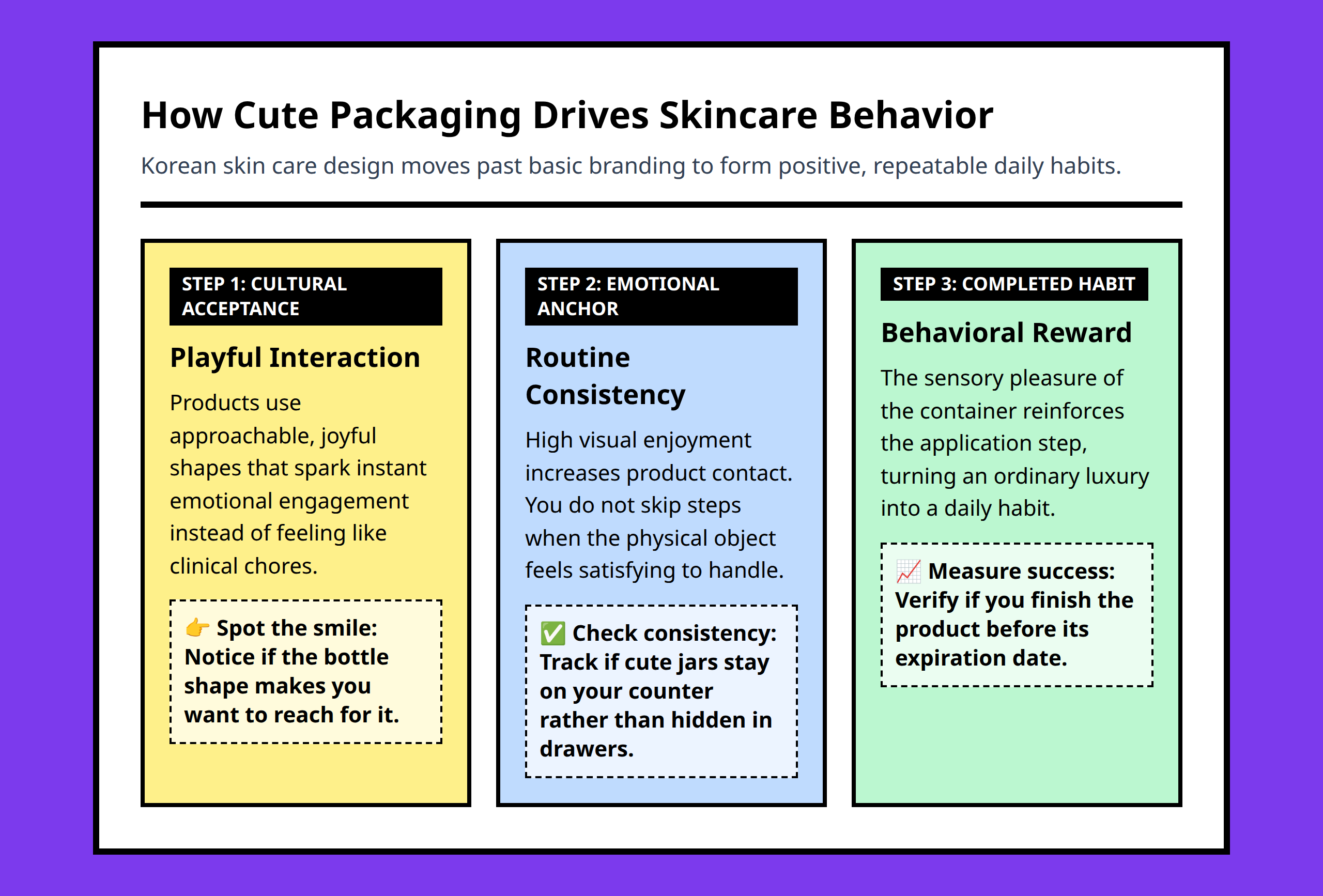
In some beauty markets, cute packaging is treated almost like a warning sign. People assume products that look playful must be less effective or less sophisticated.
Korean skincare culture approaches the idea differently.
Packaging is often viewed as part of the emotional relationship people build with products they use every day. Since skincare routines are repeated constantly, the experience of using the product matters alongside the formula itself.
I think this becomes easier to understand when you compare skincare to other daily habits.
People naturally repeat behaviors more consistently when the experience feels pleasant instead of purely functional. A reusable water bottle someone genuinely likes often gets used more than one they find awkward or unattractive. The same behavioral logic appears in skincare.
If a cleanser, moisturizer, or sheet mask feels enjoyable to pick up and use, the routine itself may feel less like maintenance work.
That emotional difference sounds small, but repeated habits are often shaped by small feelings.
Packaging Helps Turn Skin Care Into a Routine Instead of a Chore
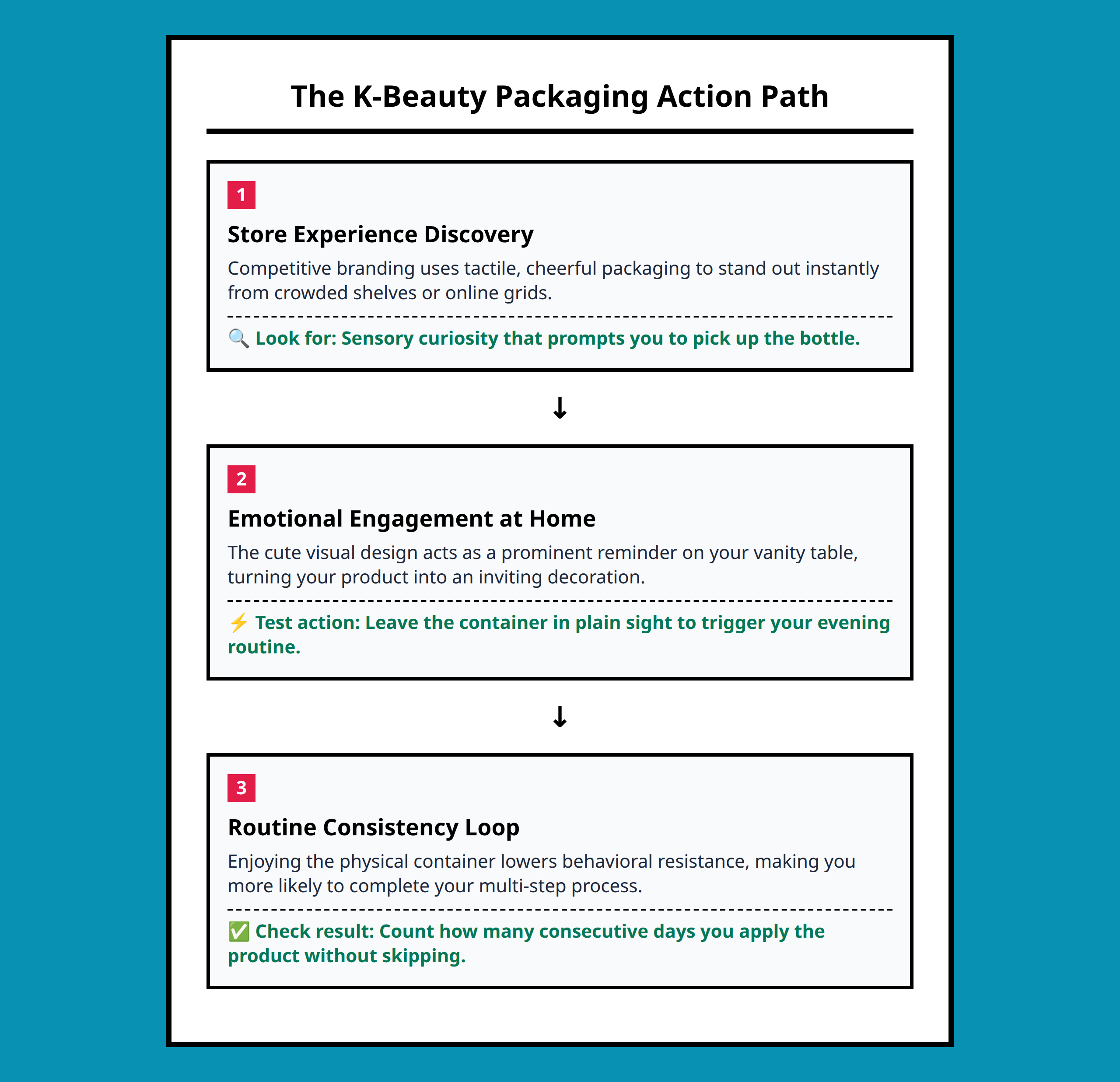
One of the more interesting ideas in Korean skincare culture is that skincare should feel approachable and enjoyable rather than punishing.
I think packaging quietly supports that philosophy.
A person who feels emotionally disconnected from skincare may skip routines frequently, especially at night when they are tired. But products that feel comforting, visually satisfying, or playful can reduce some of the resistance around repetition.
You can picture a simple everyday moment: someone gets home late after work and feels tempted to skip their routine entirely. A product that feels enjoyable to use may not magically create discipline, but it can lower the mental friction enough that the person still follows through.
That matters because skincare results usually depend more on consistency than occasional intensity.
Korean beauty brands seem to understand this well. Packaging often encourages skincare to feel personal, relaxing, or emotionally rewarding instead of clinical and corrective all the time.
The Store Experience Is Part of the Product Experience Too
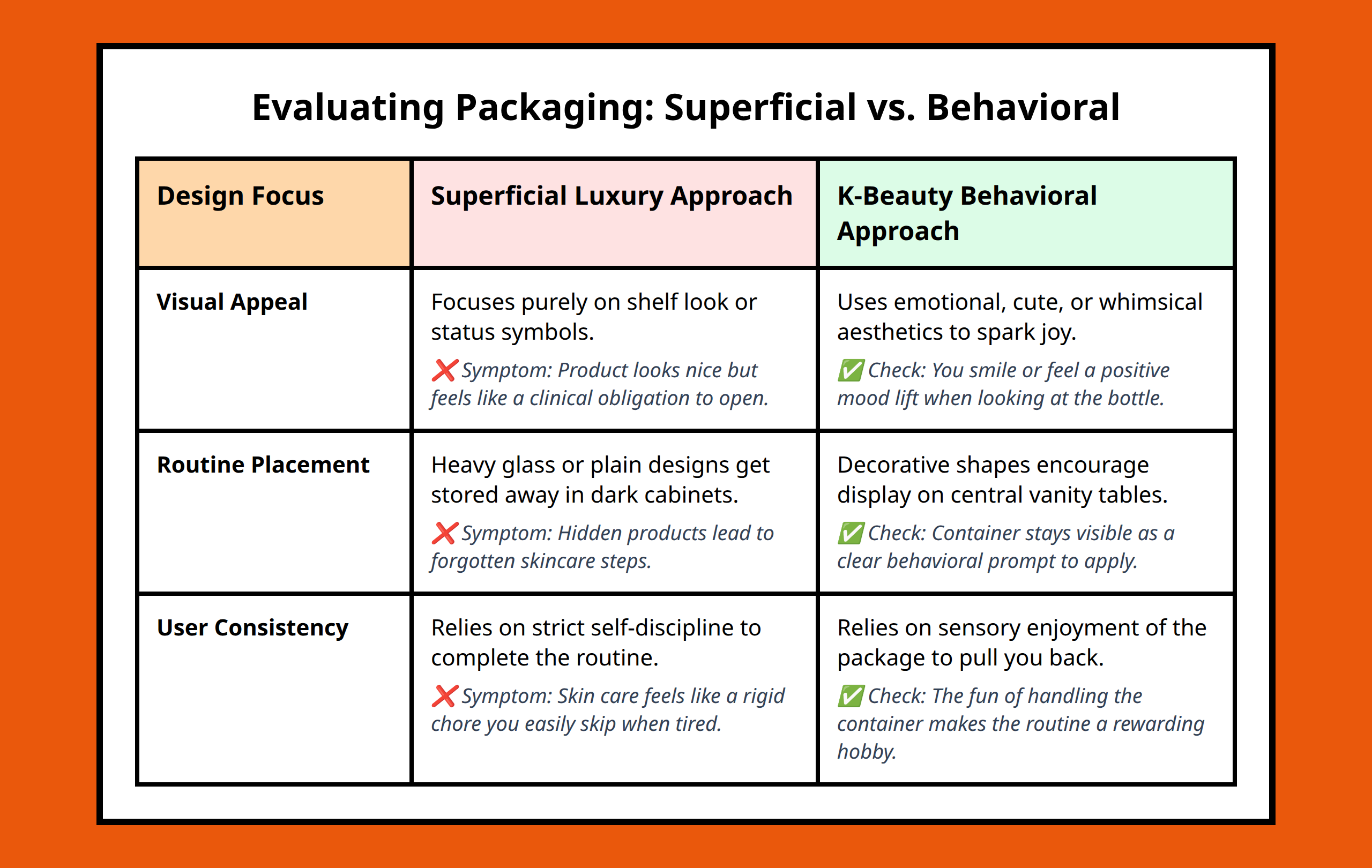
Packaging also affects how people interact with beauty stores.
Korean skincare shops are often designed to encourage browsing, testing, curiosity, and experimentation. Products compete visually for attention in crowded retail environments where consumers are constantly exposed to new launches.
I would not separate the packaging from that larger environment.
When products look visually distinct, approachable, or memorable, people engage with them more easily. They pick them up, test textures, read labels, and talk about them with friends.
That interaction becomes part of the beauty culture itself.
In many cases, skincare is treated less like a purely medical correction system and more like a lifestyle habit connected to comfort, self-care, and routine enjoyment.
The packaging helps communicate that emotional tone immediately before the product is even opened.
Why Packaging Can Affect Consumer Trust in Different Ways
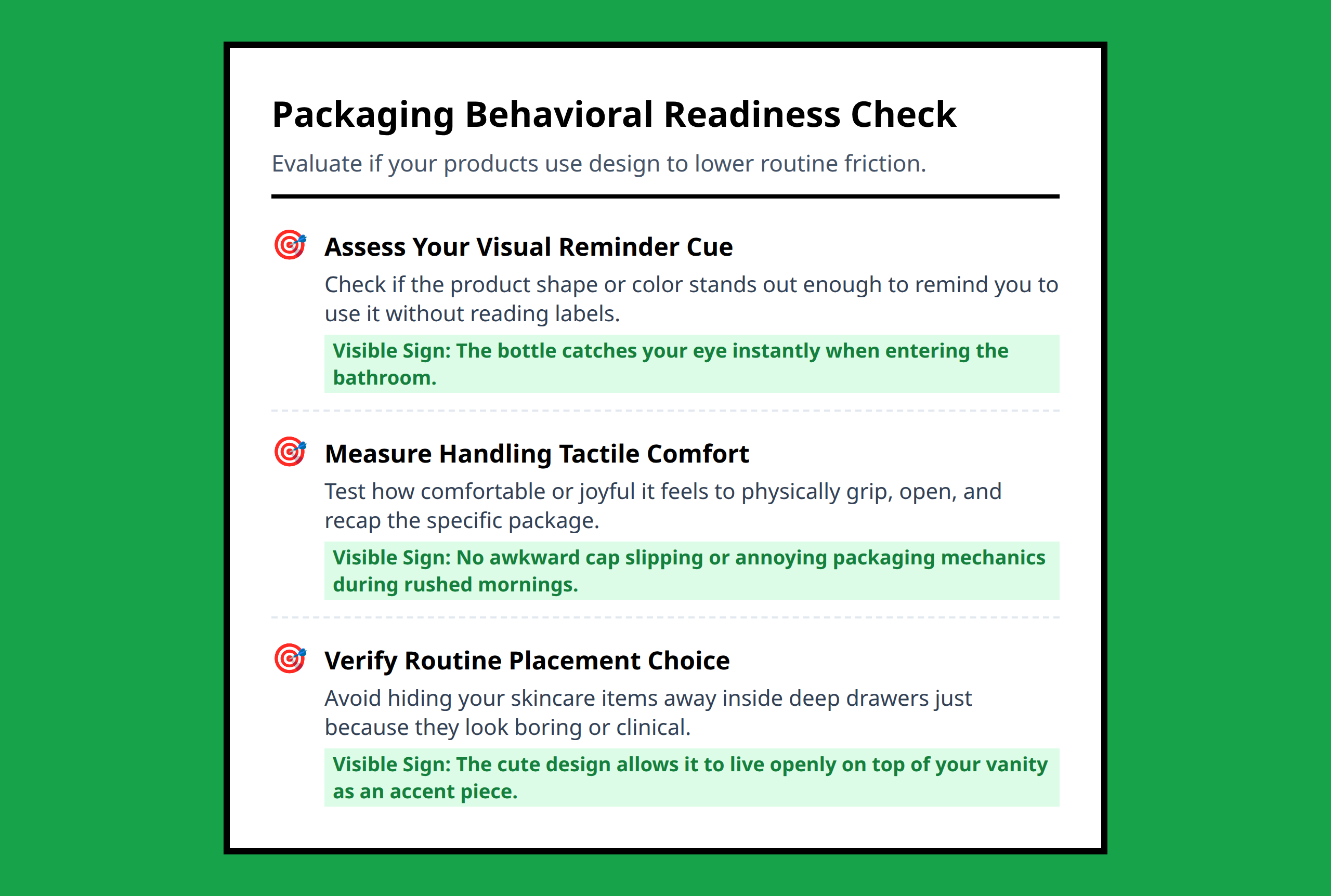
I think one reason people misunderstand Korean skincare packaging is that different beauty cultures signal trust differently.
Some consumers associate trust with plain packaging because clinical design feels more scientific or serious. Others associate trust with care, detail, and emotional connection.
Korean skincare brands often lean toward the second approach.
That does not mean formulas stop mattering. The product still has to work well enough for consumers to repurchase it. Korean skincare markets are highly competitive, and people switch products quickly when they are disappointed.
But the packaging helps shape the emotional entry point into the routine.
A moisturizer in a soft pastel container may communicate comfort and hydration differently than one packaged like a medical treatment. Neither approach is automatically more effective. They simply create different user experiences.
Packaging Also Encourages Experimentation
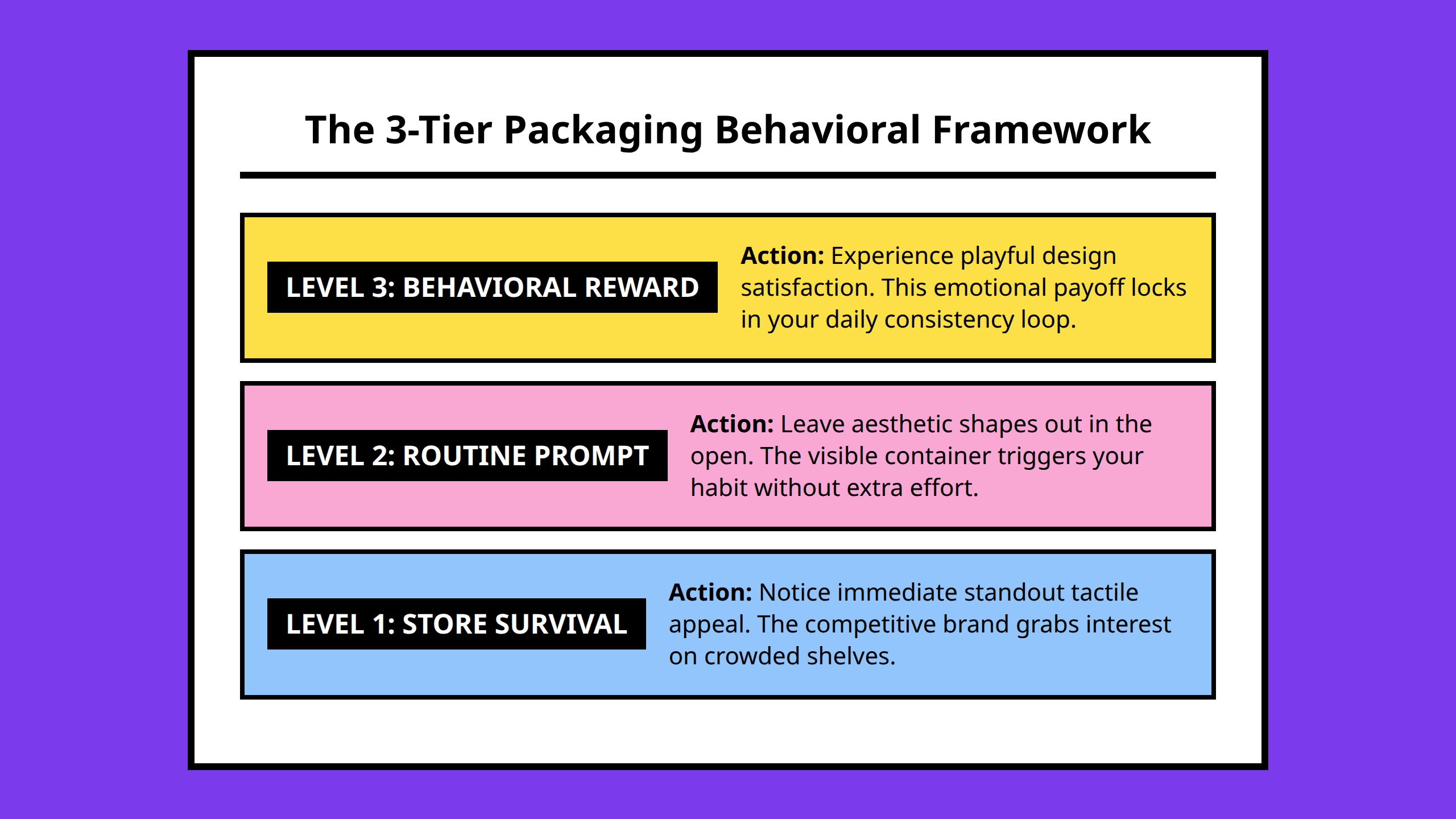
Korean beauty culture tends to reward curiosity.
Consumers frequently test new products, textures, and formats instead of staying loyal to one routine permanently. Packaging plays a role in making experimentation feel inviting instead of intimidating.
I think this helps explain why Korean skincare launches often feel visually creative even when the actual product category is familiar.
A sheet mask, cleanser, or lip product may not be chemically revolutionary, but thoughtful packaging can still make the experience feel fresh and engaging.
That matters in a market where consumers are constantly surrounded by alternatives.
The visual identity helps products stand out emotionally, not just functionally.
Good Packaging Becomes Part of Habit Design
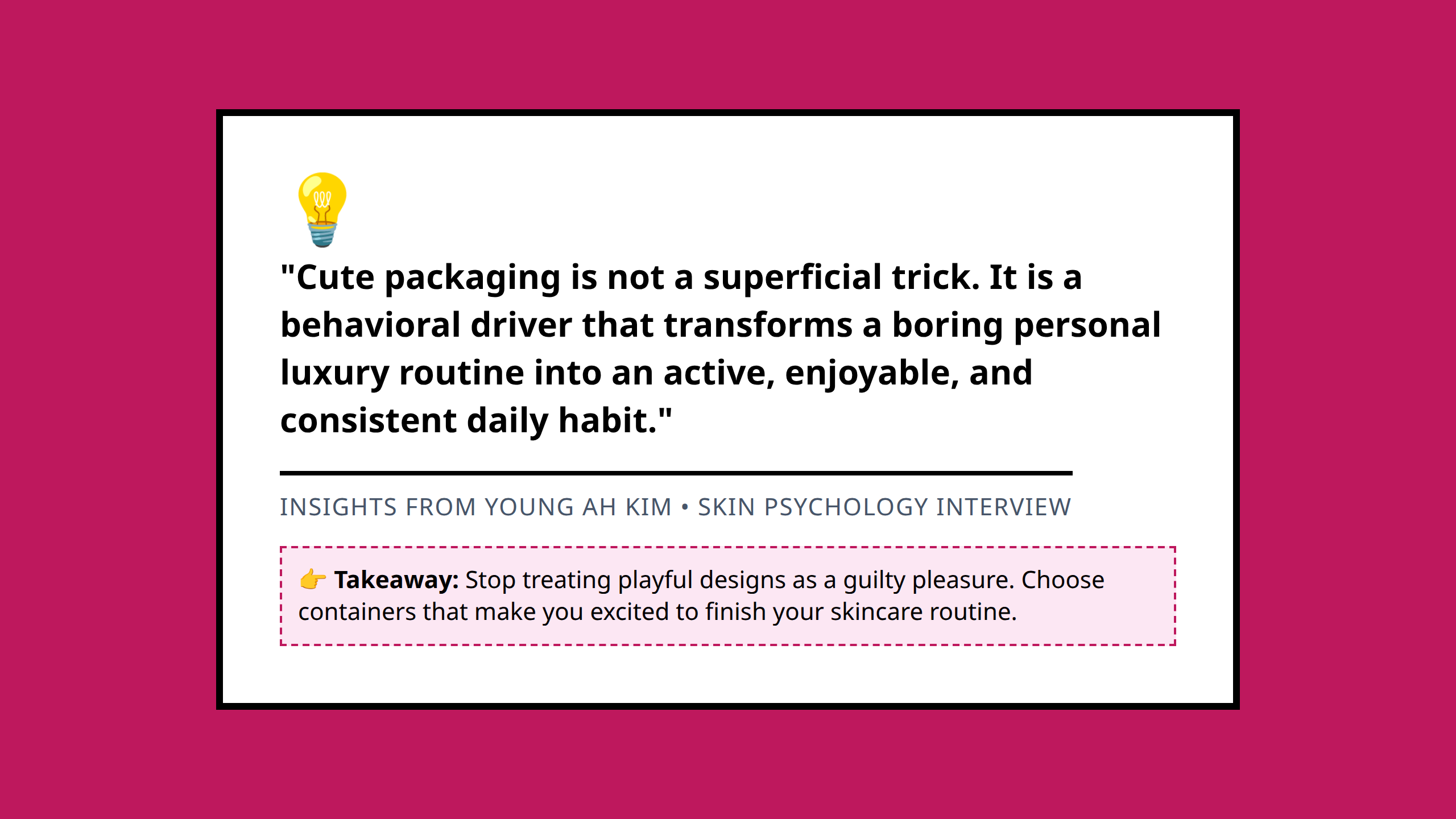
The more I think about Korean skincare packaging, the less I see it as superficial branding.
I see it more as behavioral design.
The routine becomes easier to repeat when products feel accessible, pleasant, convenient, and emotionally rewarding. Packaging influences all of those things quietly.
That does not mean every cute product deserves automatic trust. Attractive packaging can still exist alongside weak formulas or aggressive marketing.
But dismissing packaging entirely misses something important about human behavior.
People are more likely to maintain routines that feel good to participate in.
Korean skincare packaging often works because it supports that reality instead of pretending skincare is only about ingredients and correction.
- K-beauty: A general term used for Korean beauty and skincare products, routines, and trends.
- Behavioral design: Designing products or experiences in ways that influence habits, actions, and repeated behavior.
- Sheet mask: A face-shaped mask soaked in skincare ingredients, commonly used for temporary hydration and comfort.
- Consumer engagement: The emotional and behavioral interaction people have with products, brands, or shopping experiences.
- Routine consistency: The ability to repeat skincare habits regularly over time instead of using products only occasionally.
References:
- https://www.youtube.com/shorts/rIQfJcWtGQQ
- https://www.reddit.com/r/koreanskincare/comments/1tmp2lq/anyone_else_obsessed_with_pretty_skincare/
- https://www.reddit.com/r/koreanskincare/comments/1tmp2lq/anyone_else_obsessed_with_pretty_skincare/onoesym/
- https://www.reddit.com/r/koreanskincare/comments/1tmp2lq/anyone_else_obsessed_with_pretty_skincare/onoiga0/
- https://www.reddit.com/r/KoreanBeauty/comments/1swy20b/are_you_buying_based_on_looks_or_ingredients/
- https://www.linkedin.com/posts/youliya-turdakova_beautyglobalindustry-koreanbrands-recycledmaterials-activity-7397205507347869696-86lV
- https://www.dubaiwholesalestore.com/blogs/news/the-psychology-behind-k-beauty-packaging-and-why-customers-love-it
- https://beautylau.fr/en/blogs/culture-tendances-kbeauty/packaging-kbeauty
- https://www.linkedin.com/pulse/packaging-wars-why-korean-beauty-looks-fun-european-rich-stoklosa-11e8e
- https://glamobserver.com/korean-beauty-impact-packaging/
- https://www.cwaysoftware.com/blog/korean-skincare-packaging-trends-2025
- https://www.reddit.com/r/AsianBeauty/comments/wjguvm/i_noticed_that_cute_korean_beauty_brands_changed/
- https://www.red-dot.org/magazine/k-beauty
- https://www.reddit.com/r/koreanskincare/comments/1tmp2lq/anyone_else_obsessed_with_pretty_skincare/onot9jb/
- https://www.reddit.com/r/KoreanBeauty/comments/1swy20b/are_you_buying_based_on_looks_or_ingredients/oiiw6g2/
- https://www.reddit.com/r/KoreanBeauty/comments/1swy20b/are_you_buying_based_on_looks_or_ingredients/oijdnyz/
- https://www.reddit.com/r/KoreanBeauty/comments/1swy20b/are_you_buying_based_on_looks_or_ingredients/oijvxft/
