Korean beauty products evolve quickly because the market rewards experimentation, consumers switch products easily, and brands are expected to release new ideas constantly instead of relying on long-term loyalty alone.
A lot of people notice Korean beauty trends after they spread internationally. Cushion compacts, sheet masks, sleeping packs, and new texture formats often seem to appear from Korea first before showing up everywhere else.
What interests me more is not the individual product itself. It is the environment that keeps producing those products so quickly in the first place.
Takeaways
- Korean skincare consumers expect fast product innovation and constant improvement.
- Low brand loyalty pushes companies to release new ideas aggressively.
- Packaging, textures, and shopping experience matter alongside ingredients.
- Competition rewards brands that respond quickly to trends and consumer feedback.
Speed Is Built Into Korean Consumer Culture
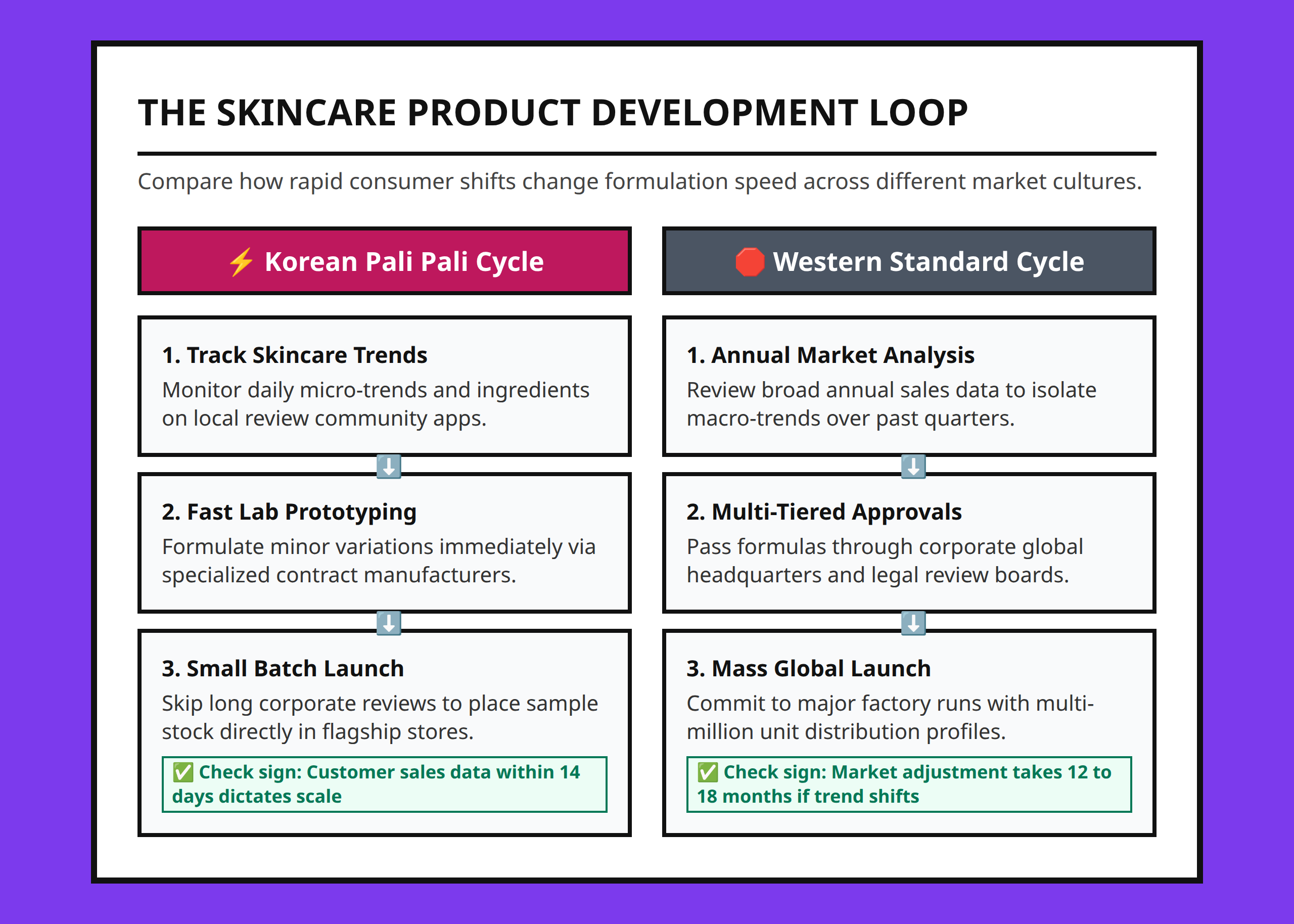
One of the biggest ideas behind Korean beauty innovation is speed.
The Korean phrase “pali pali,” which roughly means “quickly” or “faster,” reflects a broader cultural expectation around convenience, responsiveness, and rapid improvement. That mindset influences skincare too.
Consumers often expect products, trends, and shopping experiences to evolve constantly instead of staying fixed for years.
I think this changes how beauty companies behave from the beginning. In slower-moving markets, a successful product may remain mostly unchanged for a long time because consumers stay loyal out of habit. Korean beauty brands operate under more pressure to keep surprising people.
If a new ingredient texture, packaging style, or skincare format becomes popular, competitors move quickly to release their own versions or improvements.
You can see this in ordinary shopping behavior. Someone browsing a beauty store in Seoul may test several newly launched products in a single visit because trying something new feels normal rather than risky.
That willingness to experiment keeps the market moving.
Brand Loyalty Is Much Weaker Than Many Western Companies Expect
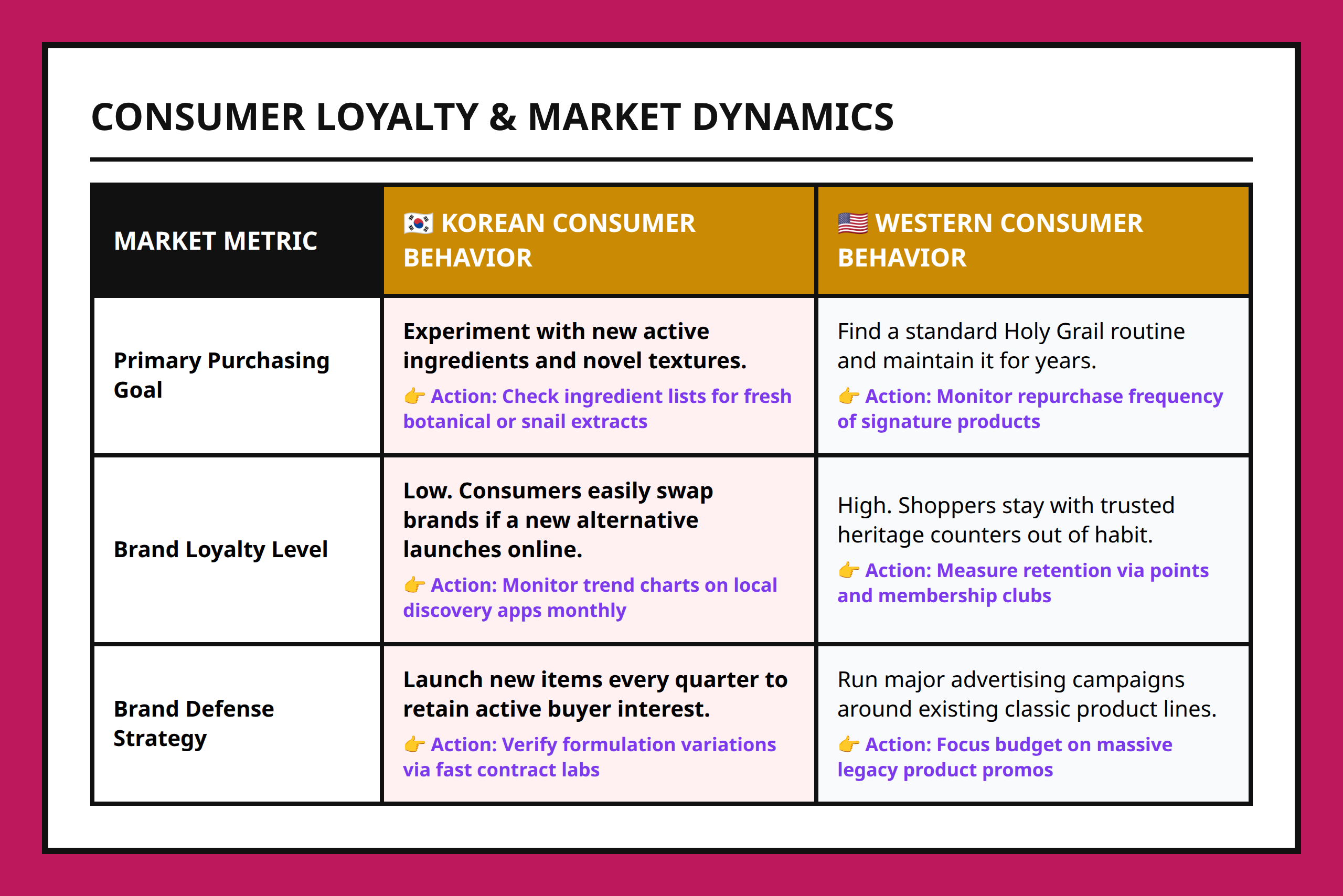
One detail that stands out in Korean skincare culture is how easily consumers switch brands.
People are often willing to try new products even when their current routine already works reasonably well.
That behavior creates a very different business environment.
In many Western beauty markets, companies invest heavily in building emotional loyalty around signature products. The assumption is that customers will continue repurchasing the same items for years.
Korean skincare consumers often behave more like active testers.
I would describe the mindset less as “I found my forever brand” and more as “What is interesting or improved now?”
This creates pressure on beauty companies to innovate continuously because consumers are not automatically loyal forever.
A moisturizer that feels exciting this year may quickly lose attention if another company introduces a lighter texture, more convenient packaging, or a more enjoyable user experience.
That competitive instability pushes brands to evolve faster instead of relying only on reputation.
Innovation Is Not Limited to Ingredients
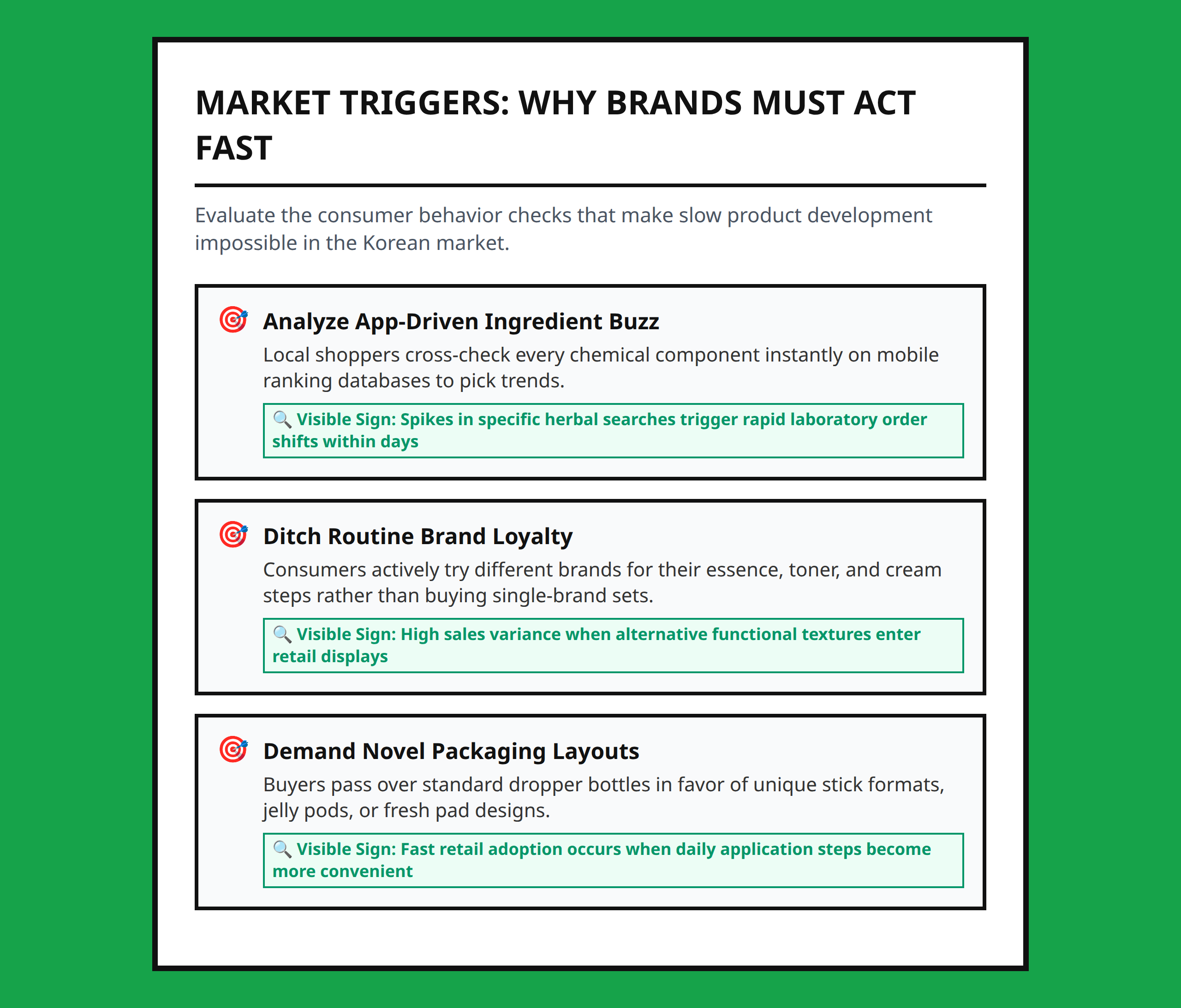
When people talk about beauty innovation, they often focus only on ingredients.
But Korean skincare innovation also happens through:
- Packaging design
- Product textures
- Application methods
- Routine convenience
- Portability
- Shopping experience
I think this broader definition of innovation helps explain why Korean beauty products often feel more playful or approachable.
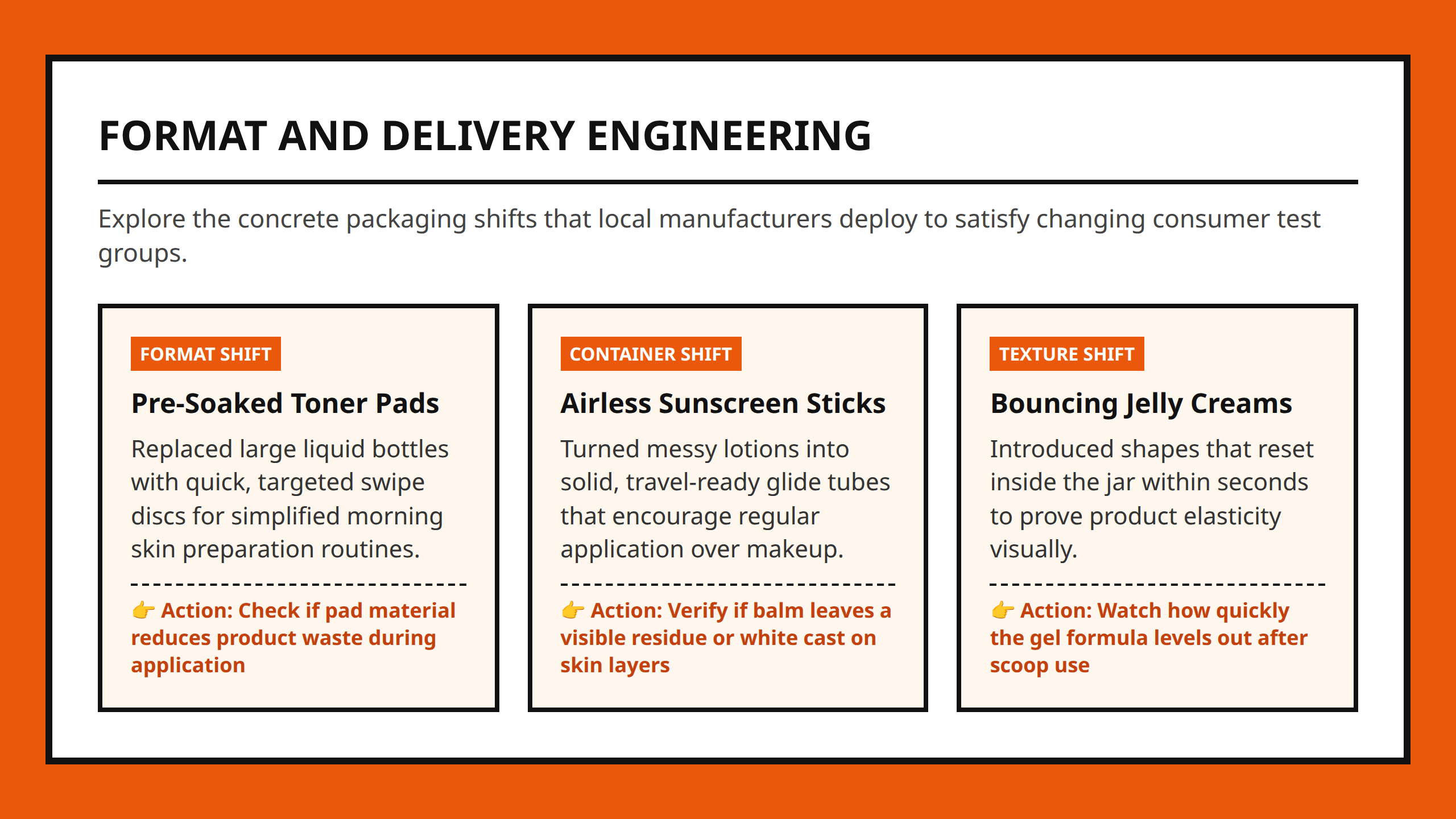
A product does not need to invent a completely new ingredient to feel innovative. Sometimes the innovation comes from making skincare easier, faster, cleaner, or more enjoyable to use daily.
Sheet masks are a good example of this. The concept helped turn hydration into something convenient and experience-driven rather than purely functional.
The same thing happens with packaging.
Compact products, travel-friendly containers, colorful designs, and easier application systems all compete for attention in a crowded market.
That may sound superficial at first, but I think it affects behavior more than people realize. Products that feel pleasant and easy to use often become habits more easily.
Rapid Feedback Loops Keep Trends Moving
Korean skincare brands operate in an environment where trends spread and change quickly.
Consumers share reactions rapidly through online reviews, social media, beauty communities, and store feedback. Brands pay attention because staying relevant matters immediately.
This creates shorter feedback loops between companies and consumers.
If a texture feels too heavy, packaging feels inconvenient, or a formula stops exciting buyers, companies often respond quickly with updated releases or alternative versions.
I think this constant adjustment changes the emotional tone of the industry too. Korean beauty culture often treats skincare as something dynamic and experimental rather than static.
You can picture a common situation where someone buys a newly popular serum because friends keep talking about the texture online. A few months later, attention shifts toward another format that feels lighter or easier to layer. Brands that react slowly risk disappearing from the conversation entirely.
That pressure rewards speed more than stability.
Competition Makes Beauty Stores Feel Different Too
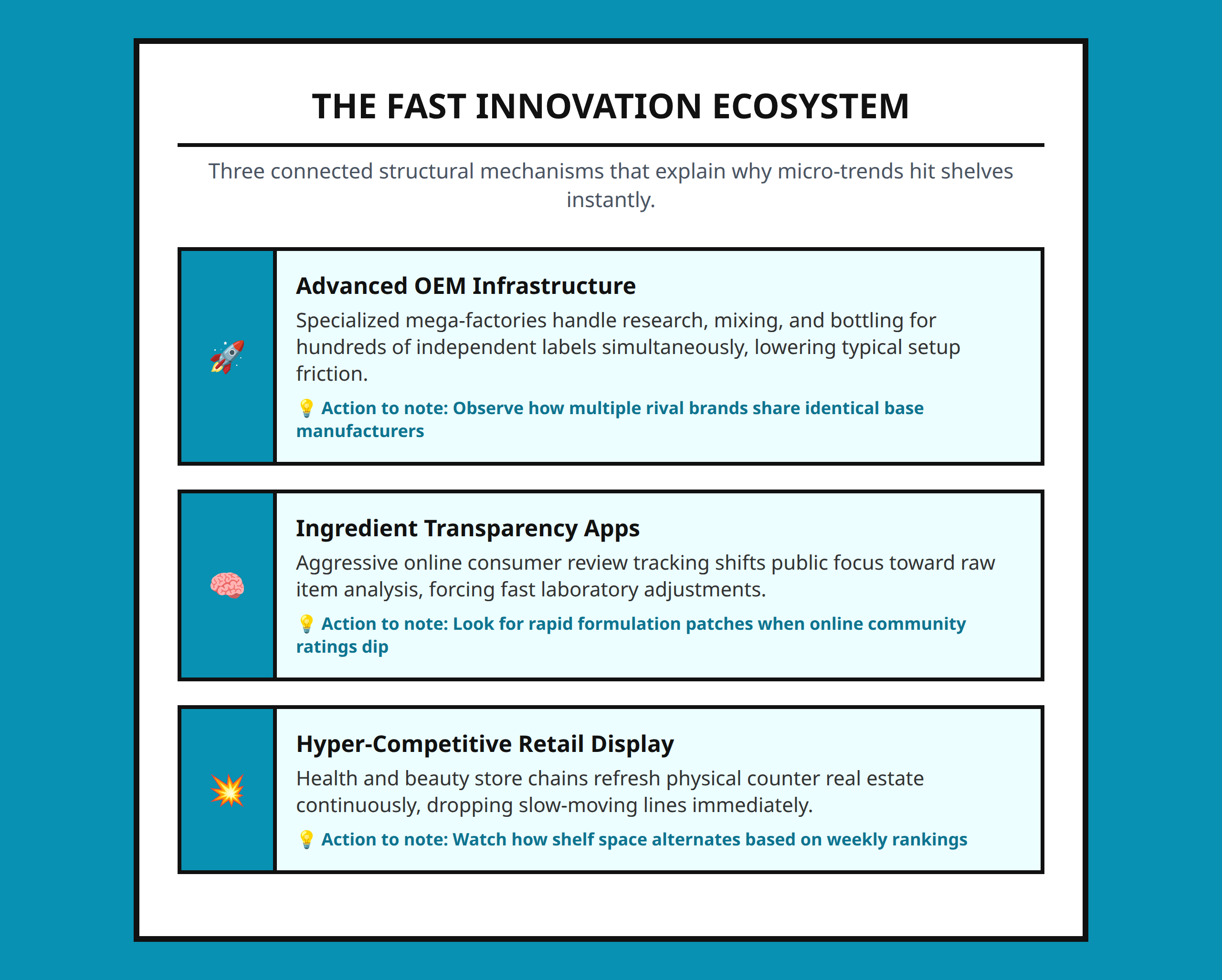
The intensity of competition affects physical shopping experiences as well.
Korean beauty stores often encourage browsing, testing, sampling, and discovery. Consumers are exposed to large numbers of products in a relatively small space.
I think this environment strengthens experimentation because shoppers do not feel locked into one brand identity.
When new launches appear constantly, consumers begin expecting novelty as part of the experience itself.
That expectation feeds back into product development. Brands compete not only on effectiveness but also on excitement, presentation, and speed of response to trends.
The result is an industry where innovation becomes normal instead of occasional.
Why Fast Innovation Can Be Both Helpful and Overwhelming
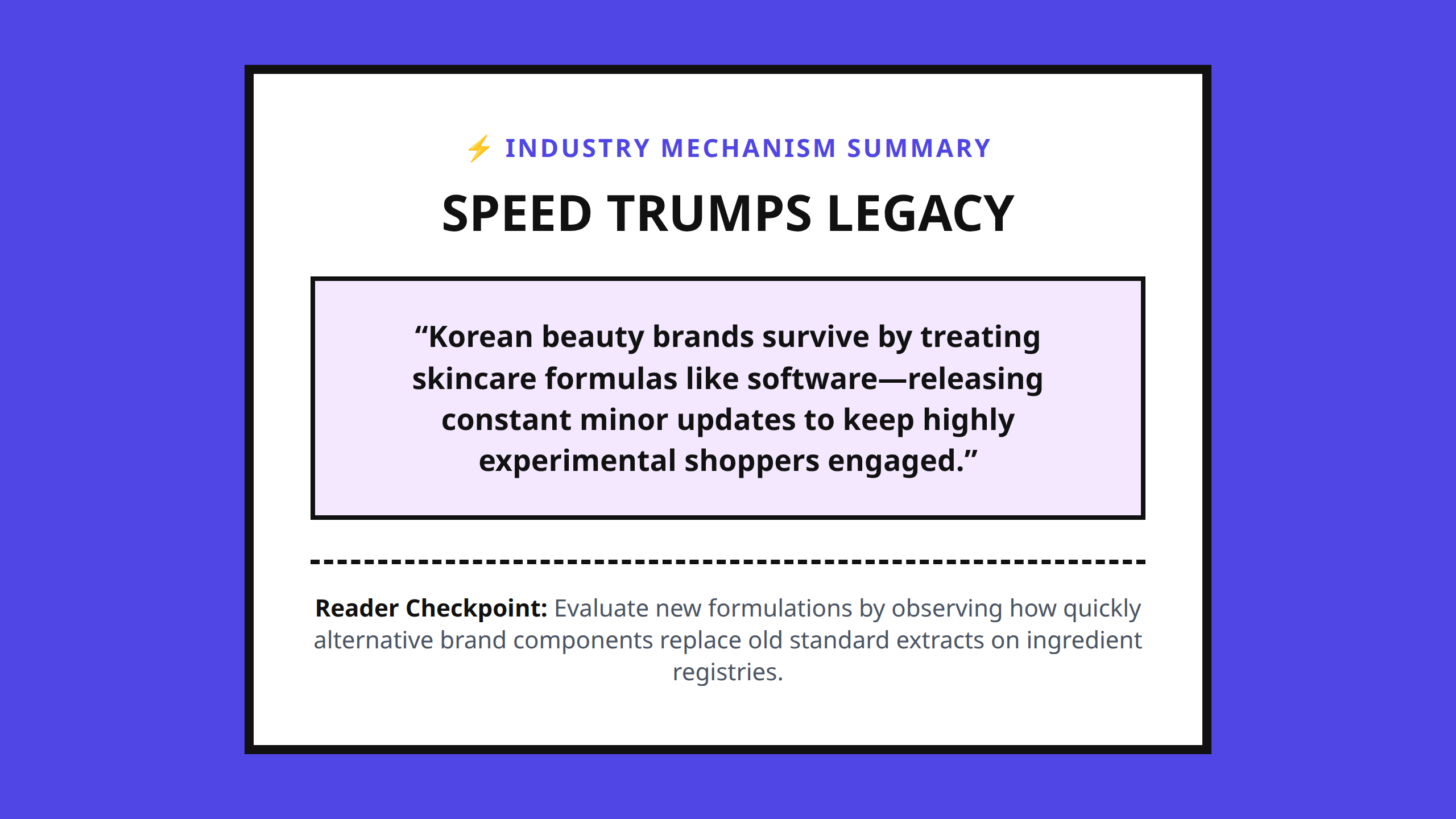
I would not automatically assume faster innovation always means better products.
The rapid pace creates benefits, but it can also overwhelm consumers.
People may feel pressure to constantly chase the newest ingredient or trend instead of understanding what actually works for their skin.
Some products disappear quickly before consumers fully understand whether they are genuinely useful long term.
At the same time, the speed of competition often pushes companies to improve textures, comfort, convenience, and accessibility faster than slower-moving beauty markets.
That tradeoff is probably the most useful way to understand Korean skincare innovation.
The industry moves quickly because consumers reward experimentation and brands cannot afford to stay still for very long.
- Pali pali: A Korean phrase meaning “quickly” or “faster,” often used to describe Korea’s fast-moving culture and consumer expectations.
- K-beauty: A common term for Korean beauty and skincare products, trends, and routines.
- Sheet mask: A face-shaped mask soaked in skincare ingredients, designed for temporary hydration and skin support.
- Consumer feedback loop: The cycle where customer reactions influence how companies adjust products, marketing, or future releases.
- Brand loyalty: The tendency for consumers to repeatedly buy from the same company over time.
References:
- https://www.youtube.com/watch?v=RqSjiAyBYA0
- https://www.youtube.com/watch?v=s6yhQhFrZIc
- https://www.youtube.com/watch?v=Afnt5nCyRow
- https://www.reddit.com/r/SkincareAddiction/comments/1ovbe8d/product_question_why_is_everyone_i_know_suddenly/
- https://www.reddit.com/r/SkincareAddiction/comments/1ovbe8d/product_question_why_is_everyone_i_know_suddenly/noi0mt1/
- https://www.reddit.com/r/SkincareAddiction/comments/1ovbe8d/product_question_why_is_everyone_i_know_suddenly/nohw1tr/
- https://www.quora.com/Why-is-Korean-skin-care-so-much-better-than-American-skin-care-What-should-I-try-first
- https://www.reddit.com/r/Sephora/comments/1tqcsg7/are_korean_products_really_are_superior/
- https://www.asiance.com/blog/how-korean-beauty-is-reshaping-the-industry-at-a-global-scale/
- https://knokglobal.com/blog/korean-skincare-vs-western-brands-comparison-2026
- https://cbgardn.com/comparing-korean-skincare-vs-western-skincare-approaches/
- https://brandcapitalfund.substack.com/p/korea-where-beauty-retail-and-culture
- https://www.linkedin.com/pulse/how-korean-beauty-differs-from-western-commalax-global-uqvgc
- https://www.reddit.com/r/AsianBeauty/comments/1hplgsn/elitism_around_korean_vs_korean_western_skincare/
- https://www.reddit.com/r/AsianBeauty/comments/5mfquj/why_do_korean_brands_seem_more_readily_available/
- https://www.esmeestheticstudio.com/post/why-korean-skincare-is-leading-the-global-beauty-industry-the-science-innovation-and-government-s
- https://www.reddit.com/r/SkincareAddiction/comments/1ovbe8d/product_question_why_is_everyone_i_know_suddenly/nohzac3/
- https://koreanskincare.nl/blogs/skintalks/why-is-korean-skin-care-so-good-and-popular
- https://www.vogue.com/article/inside-the-most-advanced-beauty-industry-in-the-world
