The best cleanser is not the strongest one. Understanding cleanser ingredients, pH, and formulation can help you avoid irritation, dehydration, and unnecessary breakouts while keeping your skin clean and comfortable.
Many people spend hours comparing serums and treatments, then pick a cleanser almost as an afterthought. I used to assume cleansing was the simplest step in skincare. The more I learned, the more I realized that a cleanser can either support your skin or quietly create problems that the rest of your routine struggles to fix.
A good cleanser removes dirt, oil, sunscreen, and makeup without disrupting the skin’s protective barrier. That balance is what makes cleanser selection more important than it first appears.
Takeaways
- Choose a cleanser based on your skin type and skin condition, not marketing claims.
- Harsh cleansing can contribute to dehydration, irritation, and barrier damage.
- Lower-pH cleansers generally work more harmoniously with the skin’s naturally acidic surface.
- Different cleanser formats serve different purposes; there is no single best cleanser for everyone.
- Most people only need to cleanse once or twice daily.
Why Cleansing Matters More Than Most People Think
The purpose of cleansing is straightforward: remove substances that do not belong on your skin. That includes excess oil, sweat, environmental debris, sunscreen, and makeup. The challenge is doing this without stripping away components that help keep the skin healthy.
I pay close attention to this distinction because many skin complaints begin when cleansing becomes too aggressive. Someone with tight, flaky skin after washing may assume they need stronger products to “fix” their skin, when the cleanser itself could be contributing to the problem.
Your skin relies on a protective barrier and a naturally acidic surface environment. A cleanser that repeatedly disrupts these systems can leave skin feeling clean in the short term but uncomfortable over time.
Understanding Cleanser Ingredients and How They Work
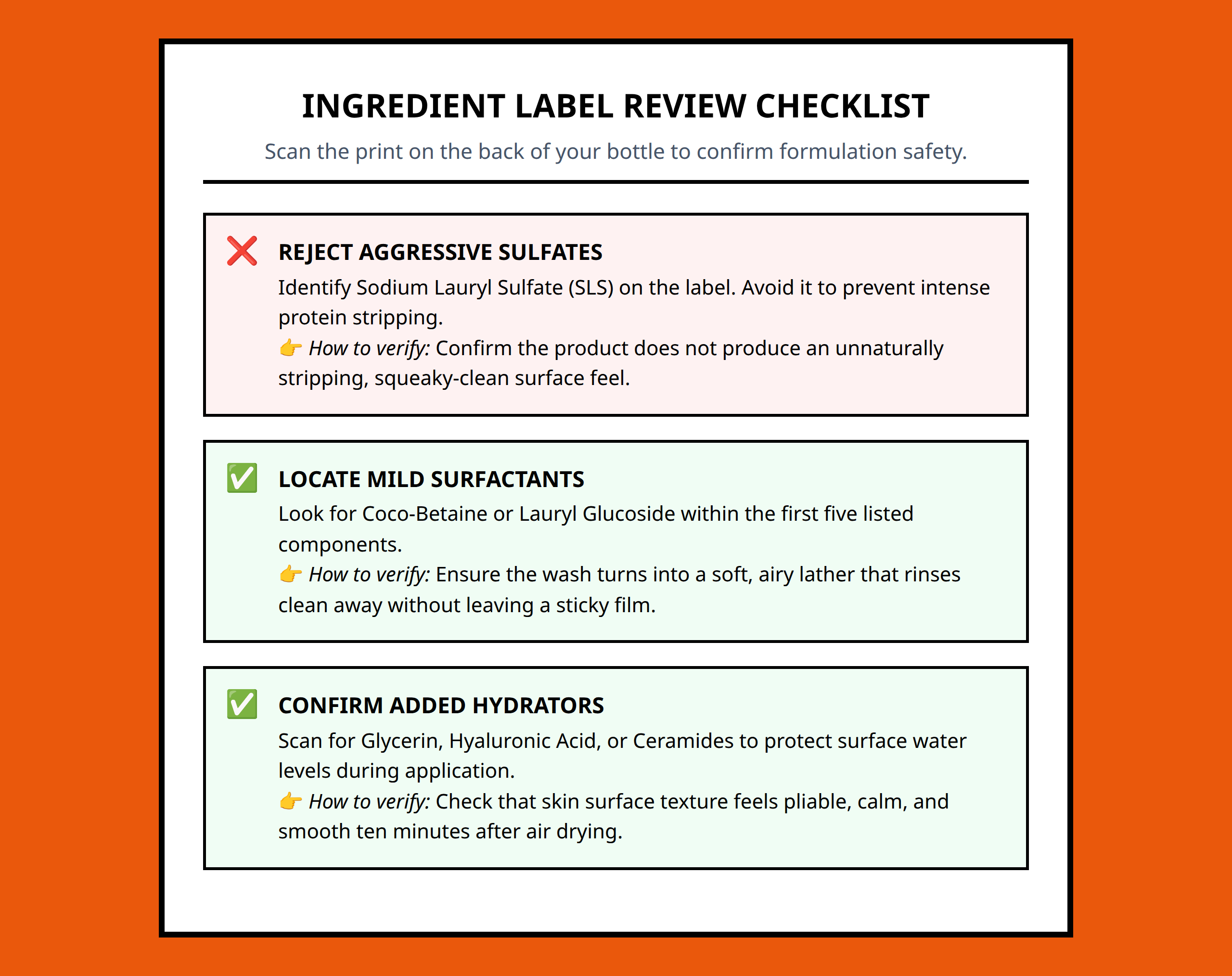
The key cleaning ingredients in cleansers are surfactants. These molecules help water mix with oil so that dirt, sebum, sunscreen, and makeup can be rinsed away.
The practical issue is that surfactants do not always distinguish between unwanted oil and the lipids that help maintain your skin barrier. Some are gentler, while others can remove more of the skin’s natural protective substances.
When I evaluate a cleanser, I don’t ask whether it cleans well. Nearly all cleansers clean. I ask whether it cleans well enough without leaving the skin feeling stripped, tight, or irritated.
A common real-world example is someone who enjoys the squeaky-clean feeling after washing. That sensation can feel satisfying, but it often signals that too much oil and moisture have been removed. If your skin feels uncomfortable immediately after cleansing, that is useful information rather than something to ignore.
Why Cleanser pH Deserves Attention
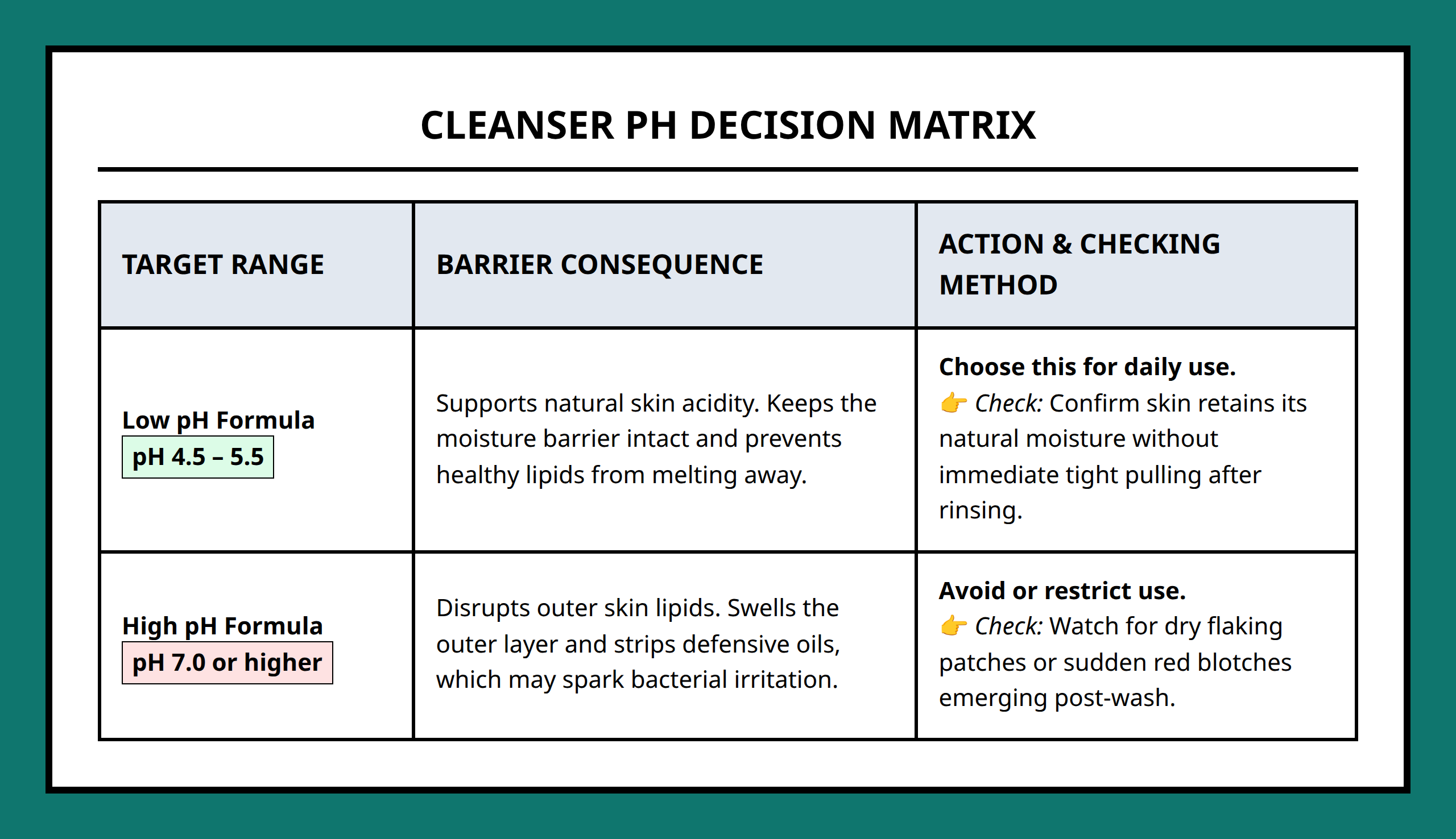
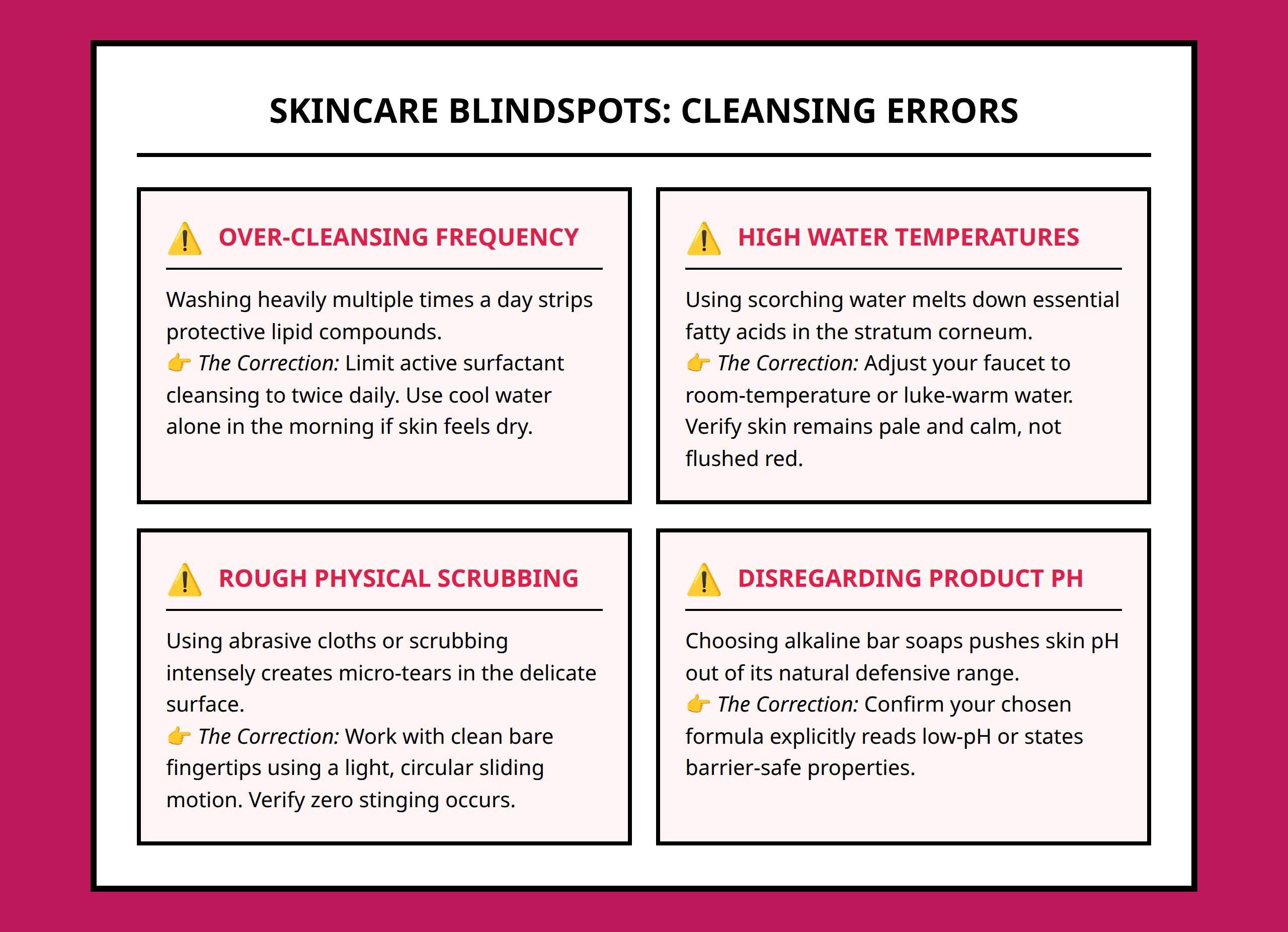
Your skin surface is naturally acidic, generally around pH 4 to 6. This acidic environment helps support healthy skin function and maintain the balance of microorganisms living on the skin.
Because of this, cleanser pH can influence how comfortable your skin feels after washing. Cleansers with a lower pH tend to be more compatible with the skin’s natural environment.
I would never choose a cleanser based solely on pH, but I also would not ignore it. A well-formulated cleanser combines appropriate pH with suitable surfactants and supporting ingredients. Looking at only one factor rarely tells the whole story.
The Main Cleanser Types and Who They Tend to Suit
Different cleanser formats solve different problems. Understanding what each type is designed to do makes shopping much easier.
| Cleanser Type | Typical Characteristics | Often Suitable For |
|---|---|---|
| Gel Cleanser | Lightweight, often removes oil efficiently | Normal to oily skin |
| Foam Cleanser | Creates foam and can feel very cleansing | Oily skin that tolerates stronger cleansing |
| Cream Cleanser | Richer and often less drying | Dry or sensitive skin |
| Cleansing Milk | Contains oils and moisturizing ingredients | Dry skin |
| Cleansing Oil | Excellent for dissolving makeup and sunscreen | Most skin types, especially makeup wearers |
| Micellar Water | Uses micelles to lift impurities from skin | Light cleansing or makeup removal |
I find it useful to think about cleanser formats as tools rather than quality rankings. A cream cleanser is not automatically better than a gel cleanser. The better choice depends on what your skin needs.
Matching a Cleanser to Your Skin Type and Conditions
The most useful cleanser recommendations come from understanding your skin rather than following trends.
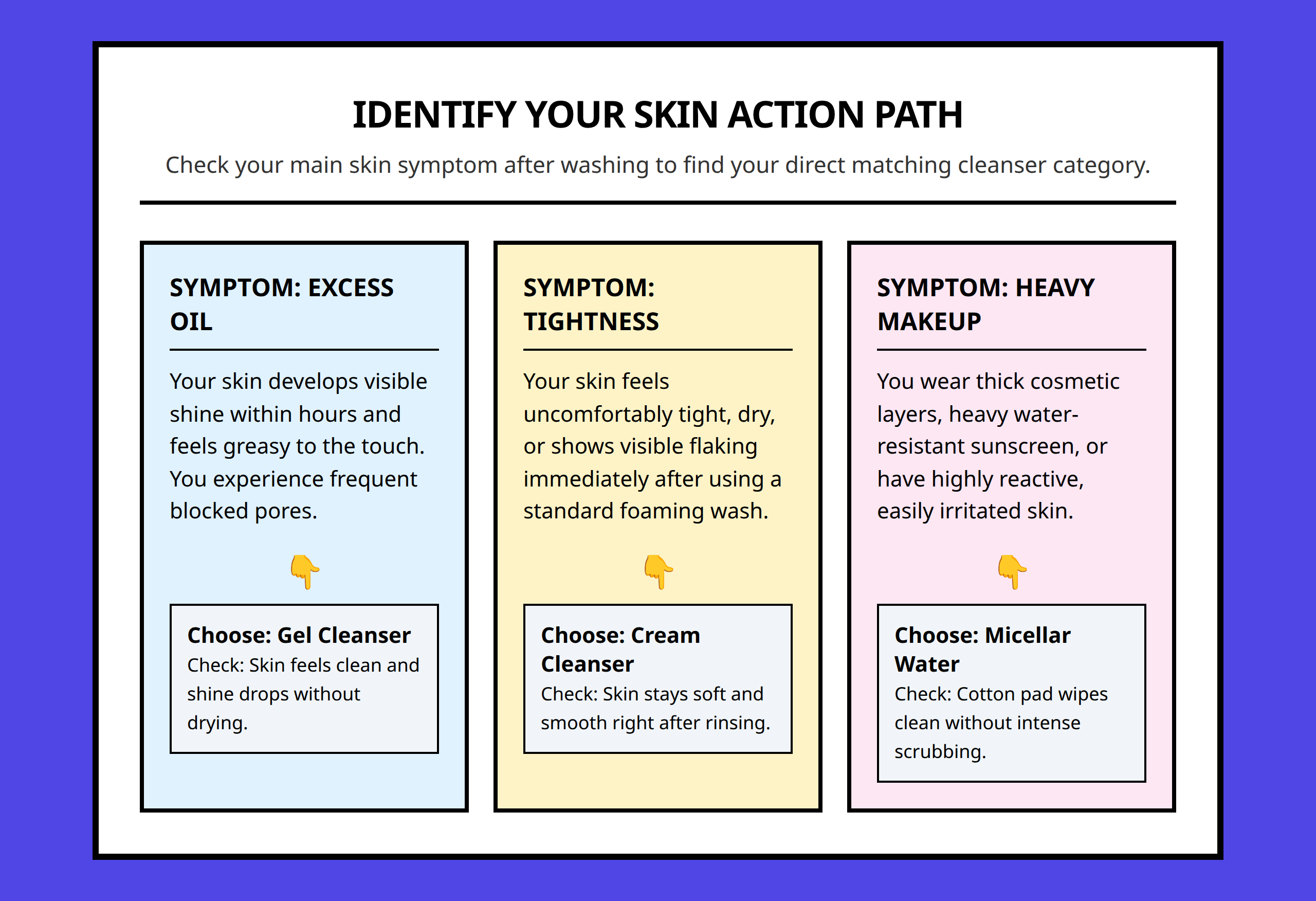
- Dry skin: Look for oil-containing cleansers such as cleansing milks and cream cleansers that help preserve skin comfort.
- Oily skin: Gel and foam cleansers can work well if your skin is not prone to dehydration.
- Dehydration-prone skin: Avoid harsh cleansers and look for ingredients such as glycerin and sorbitol that help reduce water loss.
- Sensitive skin: Prioritize gentle surfactants and avoid unnecessarily aggressive cleansing methods.
One detail I think people often overlook is that oily skin and dehydrated skin can exist together. If your face becomes oily but still feels tight and uncomfortable, stronger cleansing may make the situation worse rather than better.
Common Cleansing Habits That Cause Problems
Many cleansing mistakes come from trying to do too much.
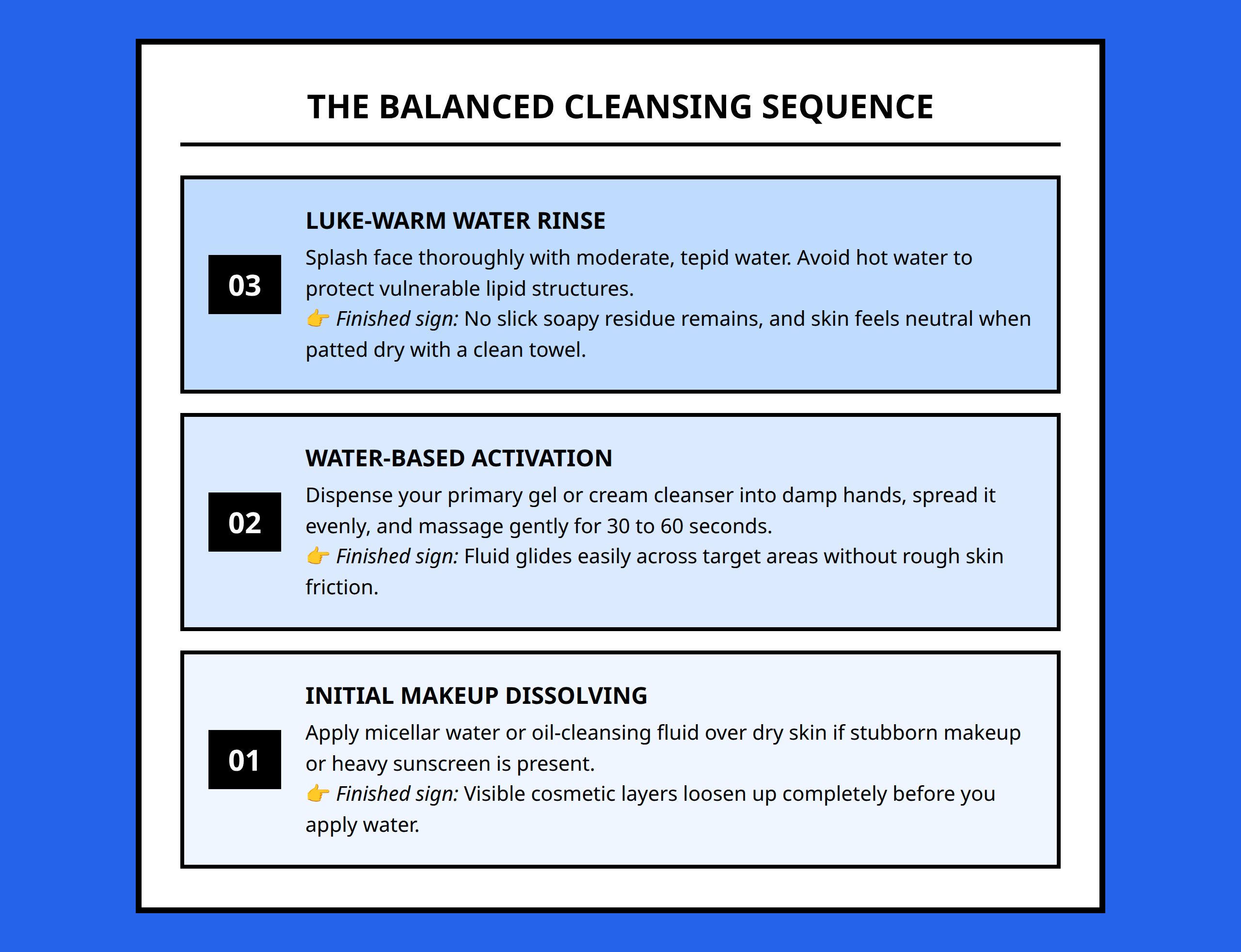
- Using hot water, which can increase irritation and strip skin components.
- Leaving cleanser on the skin to “work longer” even though cleansing products do not need extended contact time.
- Cleansing excessively throughout the day.
- Scrubbing aggressively during makeup removal.
Picture someone removing waterproof eye makeup after a long day. Rubbing repeatedly around the eyes may eventually remove the makeup, but it can also irritate one of the most delicate areas of the face. Holding the remover against the makeup briefly and allowing it to loosen the product is usually much gentler.
How Often Should You Cleanse?
Many people can cleanse once daily in the evening and do perfectly well. Overnight, there is usually very little buildup that cannot be handled with water and gentle blotting in the morning.
If I were troubleshooting irritated or dehydrated skin, one of the first questions I would ask is whether cleansing frequency is higher than necessary. Reducing cleansing can sometimes improve comfort surprisingly quickly.
The goal is simple: remove what needs removing and leave everything else alone.
- Surfactant: A cleansing ingredient that helps water mix with oil so dirt and sebum can be washed away.
- pH: A measurement of acidity or alkalinity. Human skin naturally functions best in a mildly acidic range.
- Skin Barrier: The outer protective structure of the skin that helps retain moisture and block irritants.
- Micellar Water: A cleansing liquid containing tiny cleansing structures called micelles that attract oil and dirt.
- Dehydrated Skin: Skin that lacks water rather than oil. It can occur in both oily and dry skin types.
References:
- https://www.youtube.com/watch?v=R0NTtGB2Wf0
- https://www.youtube.com/watch?v=rYJwj9YwdPM
- https://www.youtube.com/watch?v=5nxXBuxKm3E
- https://www.cerave.com/skin-smarts/skincare-tips-advice/how-to-choose-face-wash-cleanser-for-skin-type
- https://www.thayers.com/the-blog/how-to-choose-a-cleanser
- https://www.moretodayskincare.com/blog/how-to-choose-a-cleanser
- https://drdavinlim.com/a-z-skin-care/cleanser/
- https://www.vanilla.com.sg/blog/how-to-select-the-right-cleanser-based-on-your-skin-type/
- https://www.tru-skin.com/blog/must-have-ingredients-in-facial-cleansers-for-great-skin
- https://theskinpharmacy.com/2025/08/11/how-to-choose-cleansers-based-on-your-skin-type/
