Understanding your skin’s unique needs is the first step to an effective routine. This guide helps you evaluate your skin type and conditions so you can choose products that truly work for you.
Takeaways
- Start with a minimalist routine to let your skin reveal its natural state.
- Evaluate each area of your face separately for oil levels and conditions like dehydration, sensitivity, acne, aging, and hyperpigmentation.
- Use a simple skin map or diary to track observations before adding new products.
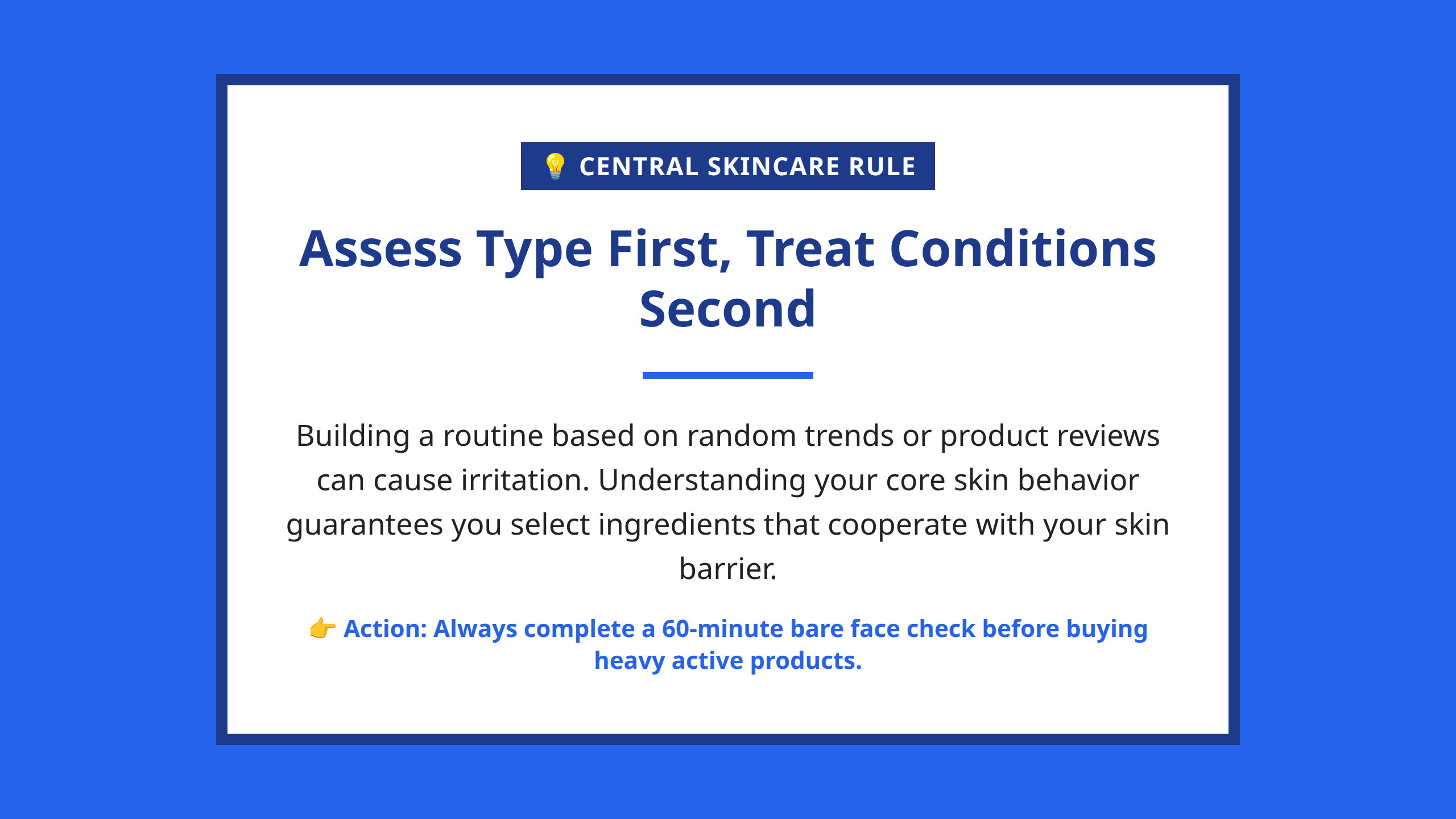
When I first started analyzing my skin, I realized that a proper assessment is more than just knowing if it’s dry or oily. Each area of the face—forehead, cheeks, nose, and chin—can behave differently, and understanding these variations is key to picking products that actually help rather than harm.
Why Skin Assessment Matters
Assessing your skin gives you insight into both your skin type and conditions. Skin type refers to how much natural oil your skin produces, while conditions like dehydration, sensitivity, acne, aging, and hyperpigmentation can fluctuate. Identifying these allows you to choose appropriate routines and prevent issues like irritation or ineffective treatments.
Step 1: Reset Your Routine
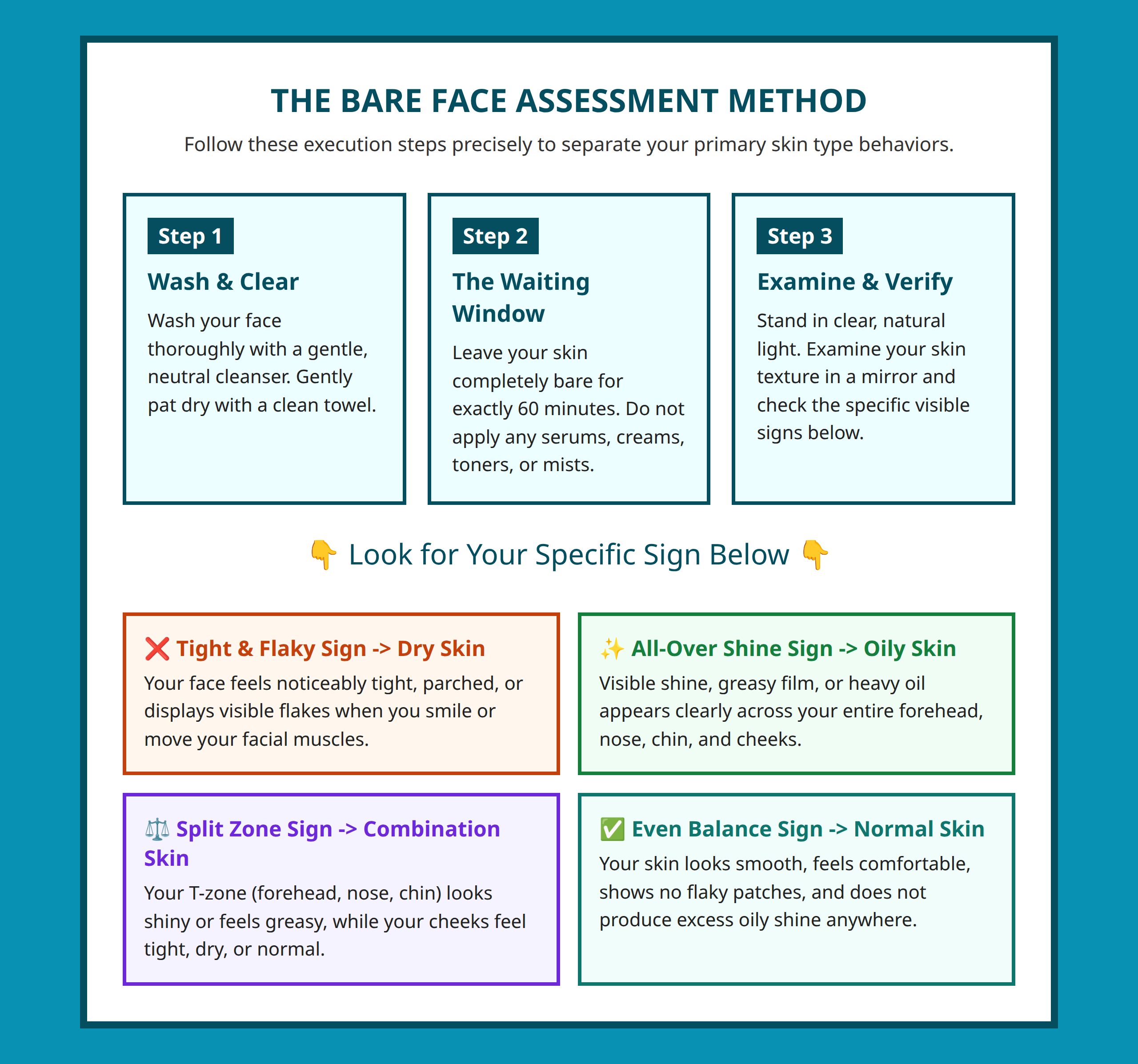
Before evaluating your skin, strip your routine down to the basics: a gentle cleanser and a simple moisturizer. If you’re using prescription products like Retin-A, keep those in place. This “reset week” removes the influence of previous products so you can observe your skin in its natural state. Avoid sunscreen during this short assessment period unless you’ll be exposed to strong sunlight, and practice sun avoidance.
Step 2: Observe and Record

After a week on a minimalist routine, examine your face in a well-lit spot. Check for:
- Oil production: Identify dry, normal, oily, or combination areas.
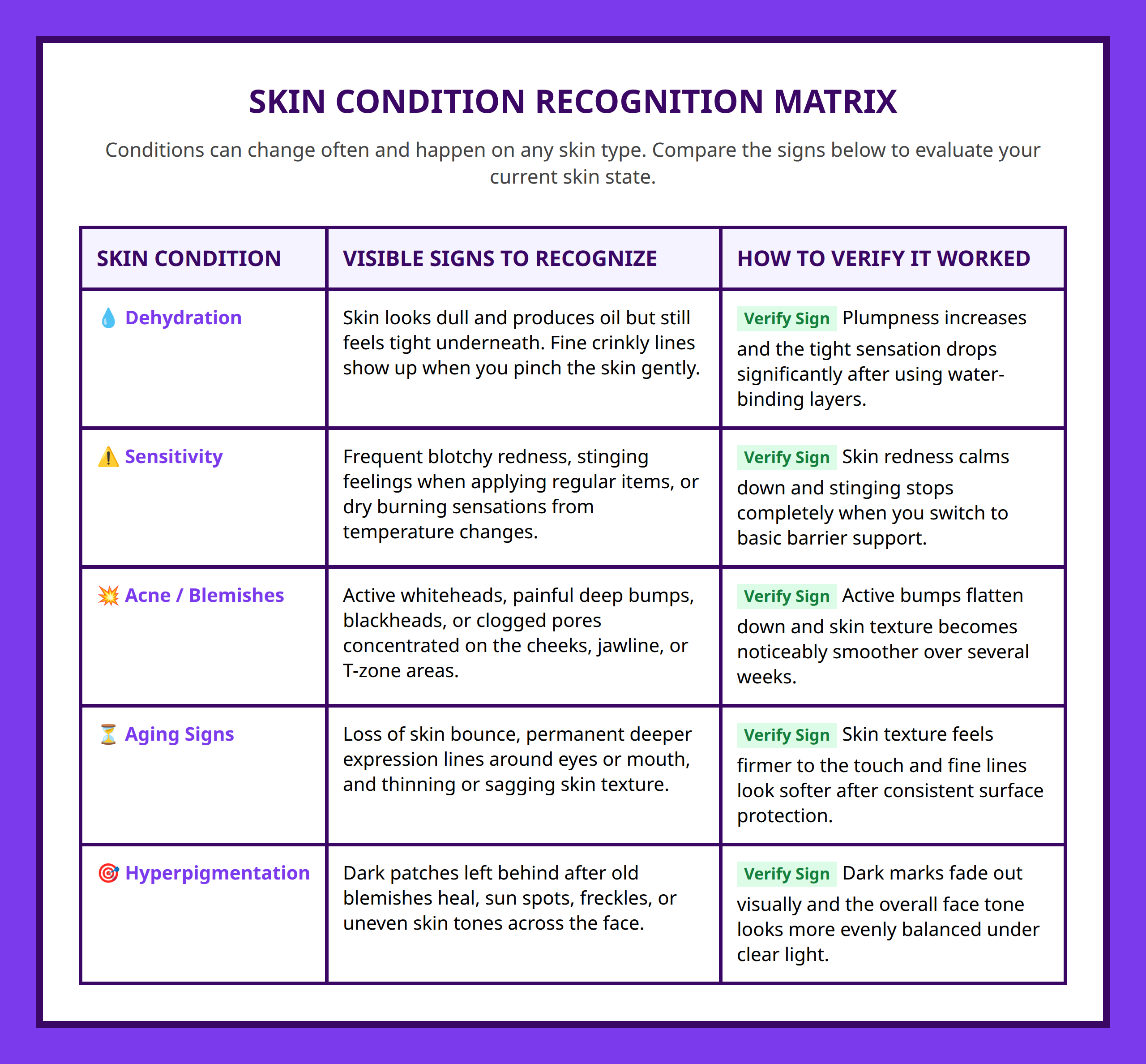
- Dehydration: Signs include tightness after washing, flaky patches, or fine lines when pinched.
- Sensitivity: Look for reactions like burning, stinging, redness, or irritation from products, environmental triggers, or friction.
- Acne: Identify breakouts, blackheads, or areas prone to congestion.
- Aging signs: Notice fine lines, wrinkles, sagging, sun spots, or dullness.
- Hyperpigmentation: Look for darker patches caused by sun damage, inflammation, or hormonal changes.
Document your findings in a simple chart or skin diary, noting specifics for each area of the face. Include other observations such as sensitivities or triggers you notice from environment, diet, or skincare ingredients.
Step 3: Map Findings to Your Routine
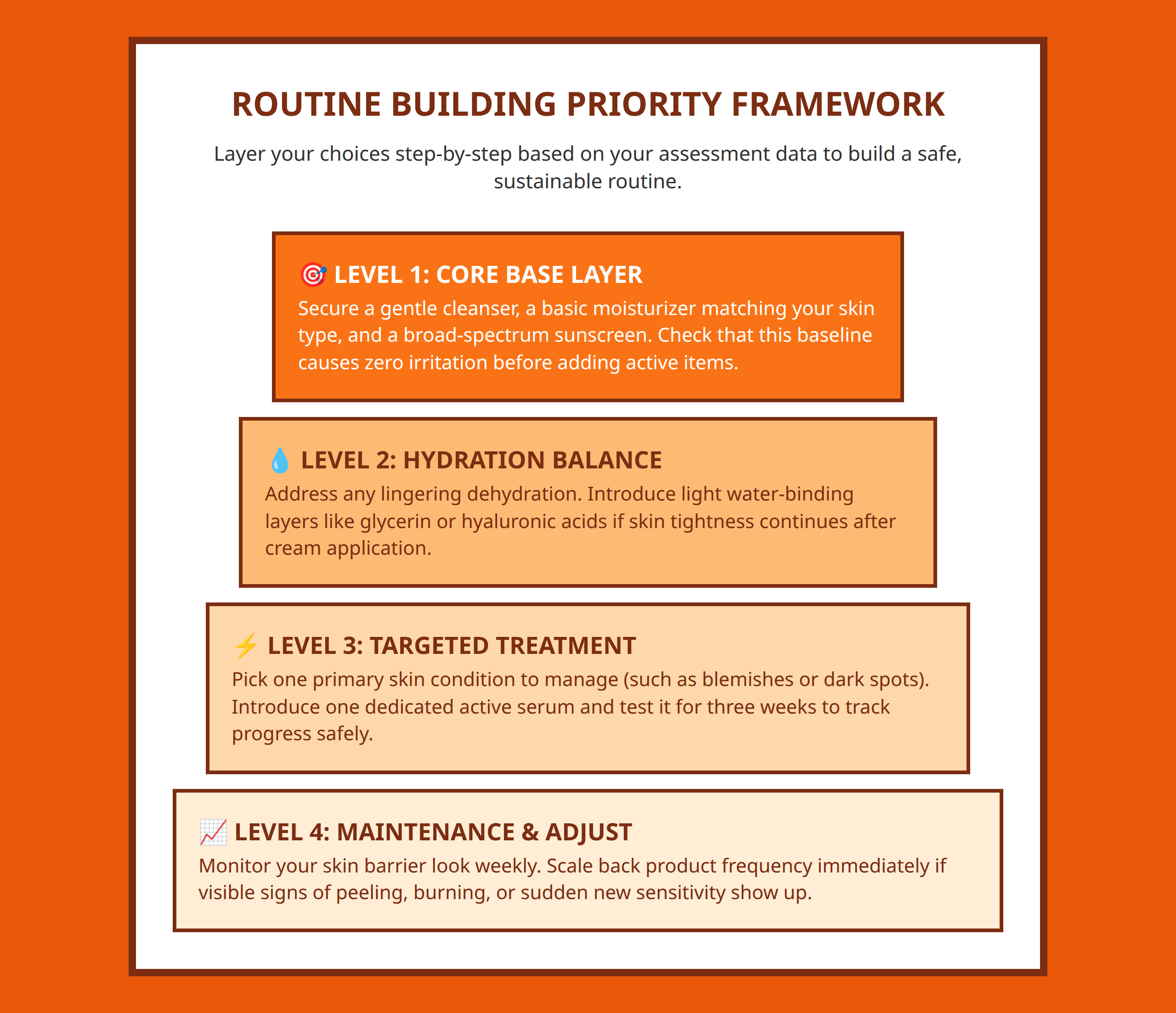
Once you have a clear map of your skin, you can start selecting products that target your specific needs. For example, dehydrated skin benefits from humectants and occlusives, sensitive areas require gentle surfactants, and acne-prone zones may benefit from targeted actives like salicylic acid. Keep in mind that each area may need slightly different approaches.
Remember the golden rule: introduce new products one at a time, spaced two weeks apart, and patch test before widespread use. This lets you accurately gauge how each product interacts with your skin and avoids unnecessary irritation or confusion about which product causes reactions.
Tracking Progress
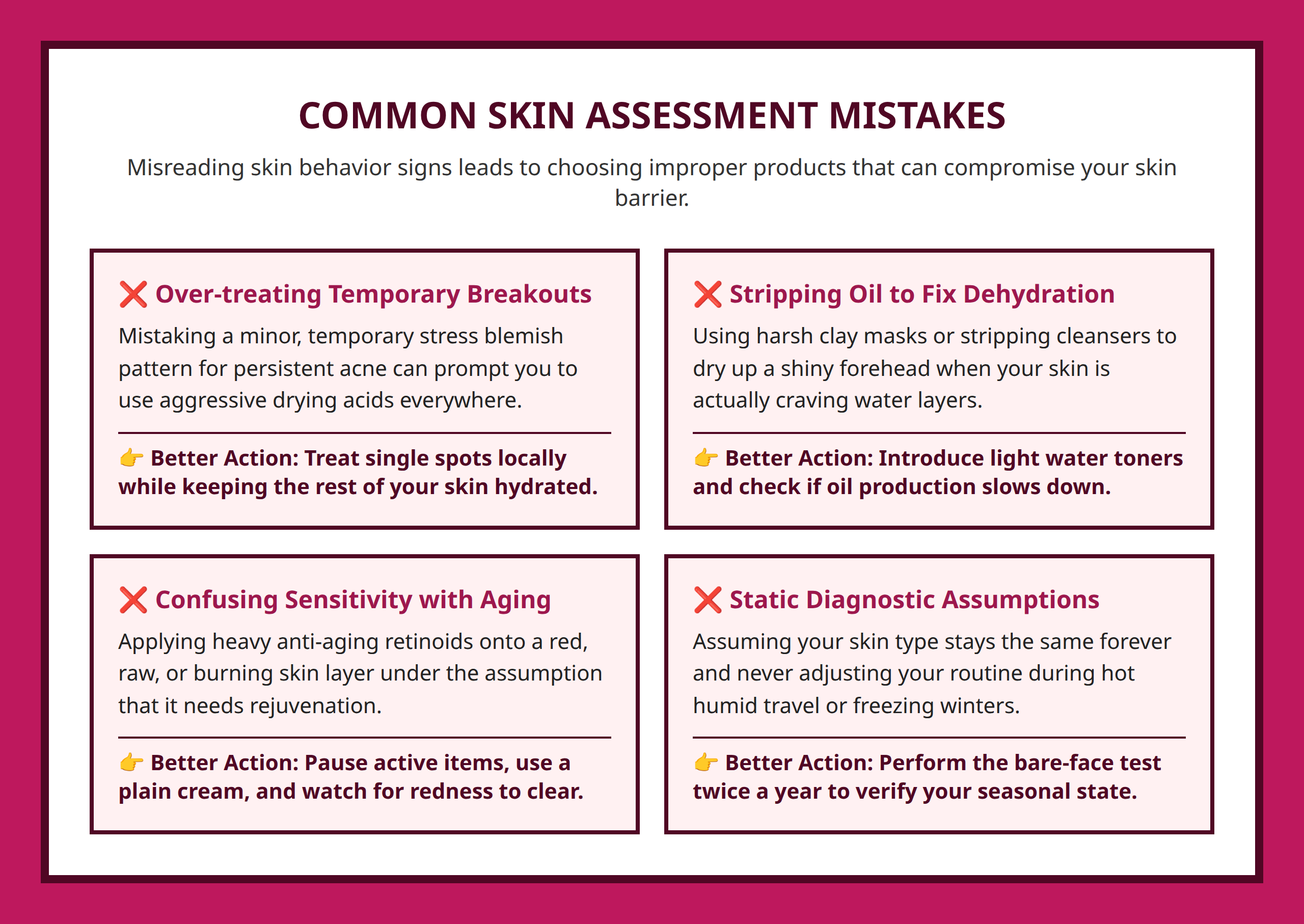
Keeping a skin diary helps track changes, especially when testing new products or actives. Note daily conditions, product use, breakouts, or reactions. This record provides practical insights for adjusting your routine and evaluating long-term skin improvement.
- Skin Type: Classification based on natural oil (sebum) production: dry, normal, oily, or combination.
- Dehydration: Temporary lack of water in the skin, which can occur even on oily skin.
- Sensitivity: Skin prone to reactions like redness, stinging, or irritation from products or environmental factors.
- Hyperpigmentation: Darker patches of skin caused by sun, inflammation, or hormonal changes.
- Skin Diary: A record of skin observations, product use, and reactions to track and understand your skin.
References:
- https://www.cerave.com/skin-smarts/skincare-tips-advice/what-skin-type-do-i-have
- https://theordinary.com/en-us/regimen-builder.html
- https://skintypesolutions.com/pages/skin-type-quiz
- https://douglasj.edu/how-to-build-your-skincare-routine-based-on-your-skin-type/
- https://www.botanicalscience.net/determining-your-skin-type-for-a-personal-skincare-routine/
- https://www.healthline.com/health/beauty-skin-care/skin-types-care
- https://geologie.com/blogs/geologie-101/how-to-determine-your-skin-type-and-craft-the-perfect-skincare-routine
- https://cnalifestyle.channelnewsasia.com/style-beauty/know-your-skin-type-and-how-care-it-472871
- https://www.kiehls.com.au/skincare-advice/what-is-my-skin-type.html
