[Tags]skin health, sleep and skin, stress and skin, healthy lifestyle, nutrition
Skin quality is shaped by far more than cleansers and moisturizers. Daily habits such as movement, emotional well-being, nutrition, detoxification, and sleep influence how healthy, resilient, and vibrant your skin appears over time.
When people struggle with their skin, the first instinct is often to look for a new product. I understand that impulse because skincare products are visible, easy to buy, and easy to change. What is less obvious is that many skin concerns begin long before anything touches the skin.
The more I think about skin health, the more I see it as a reflection of what is happening inside the body. Skin responds to circulation, stress levels, nutrition, rest, and the body’s ability to eliminate waste. Looking at skin through that wider lens helps explain why external care sometimes produces limited results on its own.
Takeaways
- Healthy skin reflects overall lifestyle habits, not just topical care.
- Physical activity supports circulation that helps nourish skin cells.
- Emotional stress can influence how skin looks and feels.
- Nutrition affects the building blocks available to the skin.
- Sleep supports repair and renewal processes that benefit skin health.
Why Skin Often Mirrors Internal Health
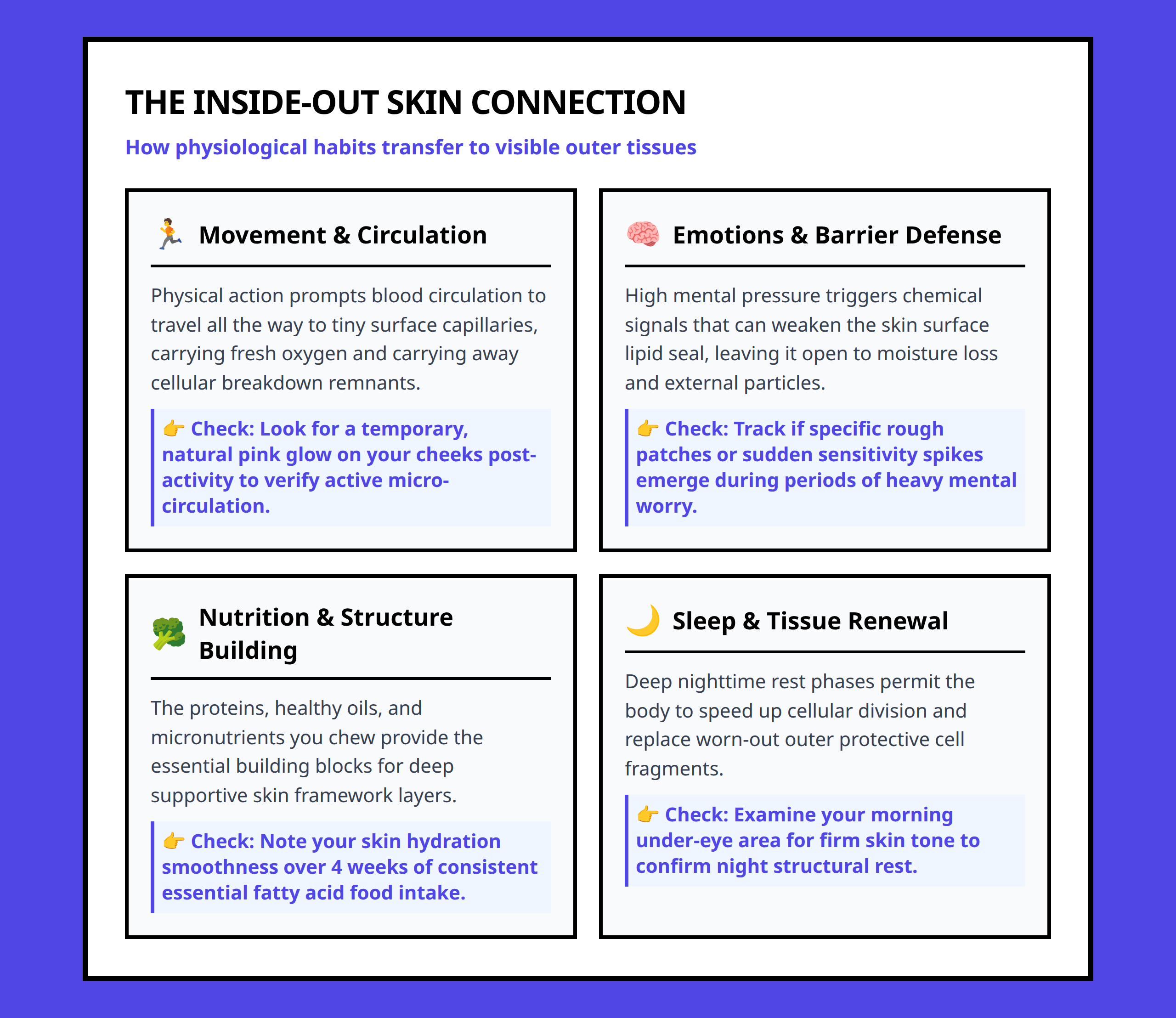
One of the most useful ideas in skin care is that the skin is connected to the body’s broader systems. It does not function independently. Skin depends on nutrients, oxygen, hydration, circulation, and restorative processes occurring throughout the body.
Because of that connection, changes in lifestyle can eventually appear on the skin. A person may spend weeks improving their skincare routine while continuing habits that place stress on the body. In that situation, the skin is receiving mixed signals.
When I evaluate skin health, I want to look beyond the bathroom shelf and pay attention to the daily behaviors that influence the body’s overall condition.
Movement Helps Deliver What Skin Needs

Exercise supports circulation, and circulation helps transport oxygen and nutrients throughout the body, including to the skin. Better circulation also supports the removal of waste products generated through normal cellular activity.
I find it helpful to think about movement as a delivery system. Skin cells require resources to function properly. Those resources must reach the skin through the body’s circulatory network.
A simple example is someone who spends most of the day sitting indoors and rarely engages in physical activity. Even if that person follows a careful skincare routine, they may miss some of the broader benefits associated with regular movement and healthy circulation.
Emotions Can Leave Visible Marks on the Skin
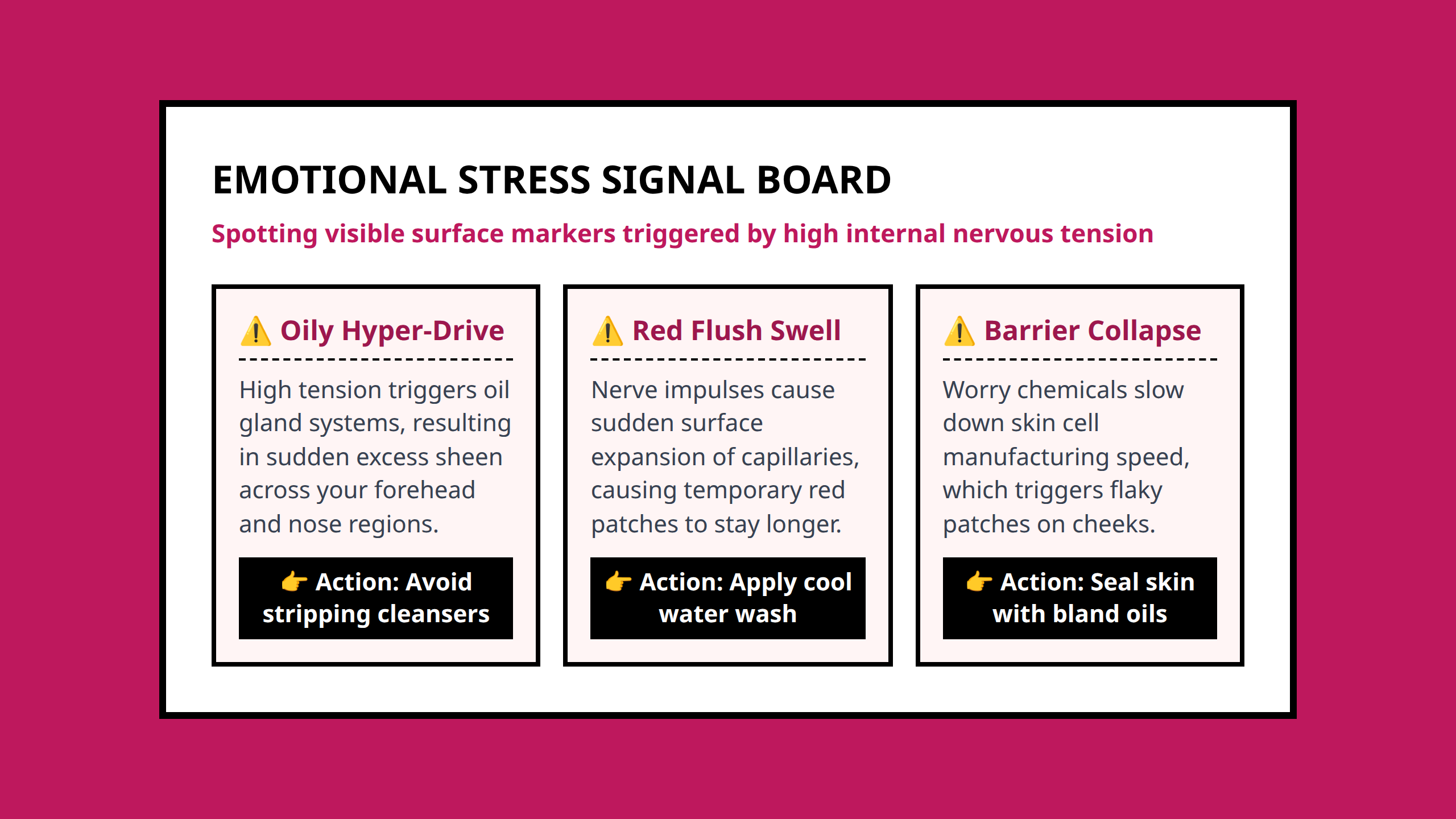
The relationship between emotions and skin is easy to underestimate because it is difficult to see directly. Yet emotional stress can affect physiological processes throughout the body, including those that influence the skin.
Many people have experienced periods of pressure, worry, or emotional strain and noticed changes in how their skin behaves. While stress does not create every skin problem, it can contribute to conditions that make skin more difficult to manage.
What stands out to me is that emotional health is often treated separately from skin health when the two are more connected than they first appear.
Nutrition Supplies the Raw Materials for Healthy Skin

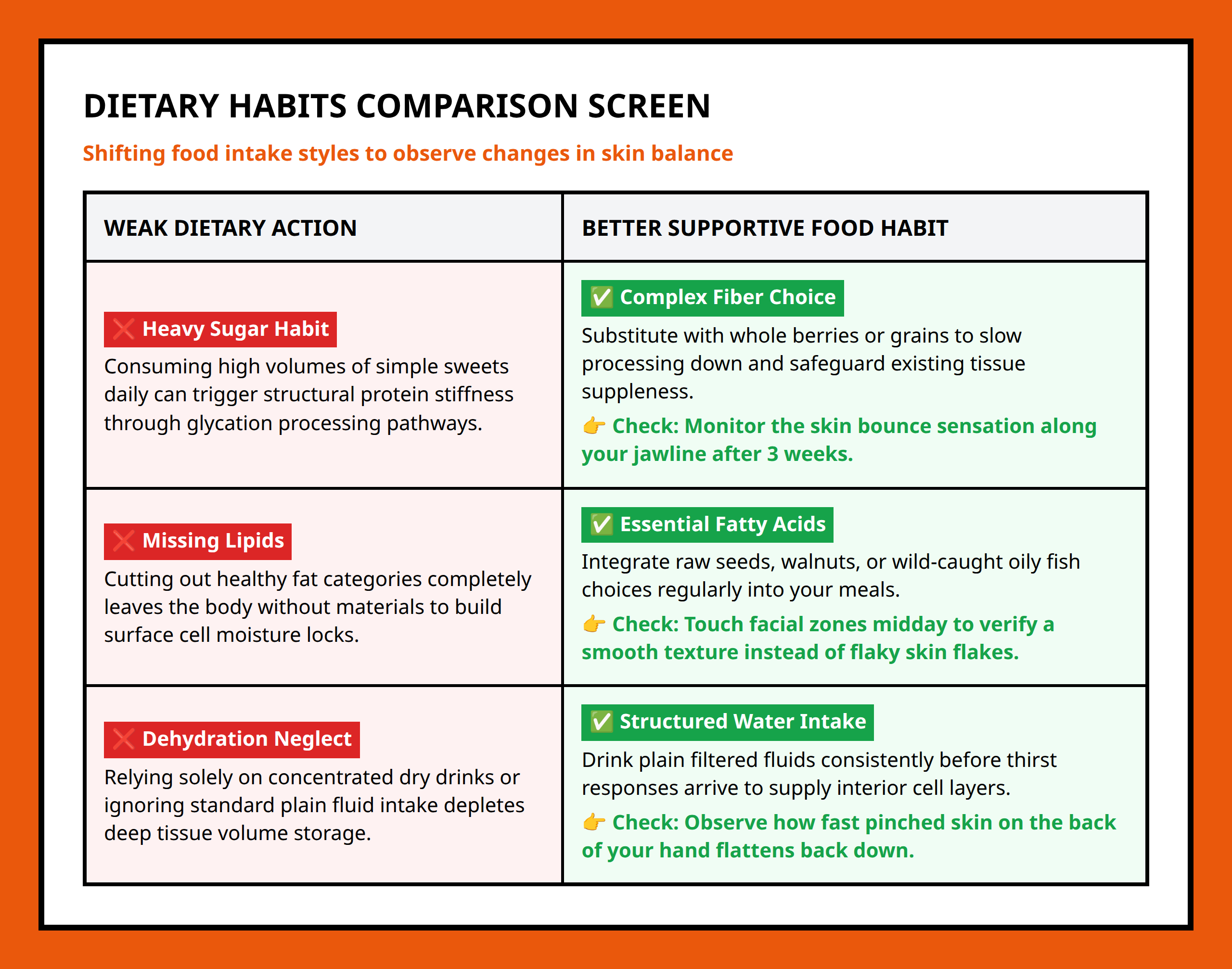
Skin constantly renews itself. That process depends on nutrients obtained through food. If the body lacks important nutritional resources, the skin has fewer materials available to support normal function and repair.
I would approach nutrition as a long-term influence rather than a quick fix. One healthy meal does not instantly transform skin, just as one unhealthy meal does not instantly damage it. The cumulative pattern matters more than any single choice.
When someone focuses exclusively on products while ignoring nutrition, they may be overlooking one of the most fundamental influences on skin quality.
Detoxification Supports Skin Function
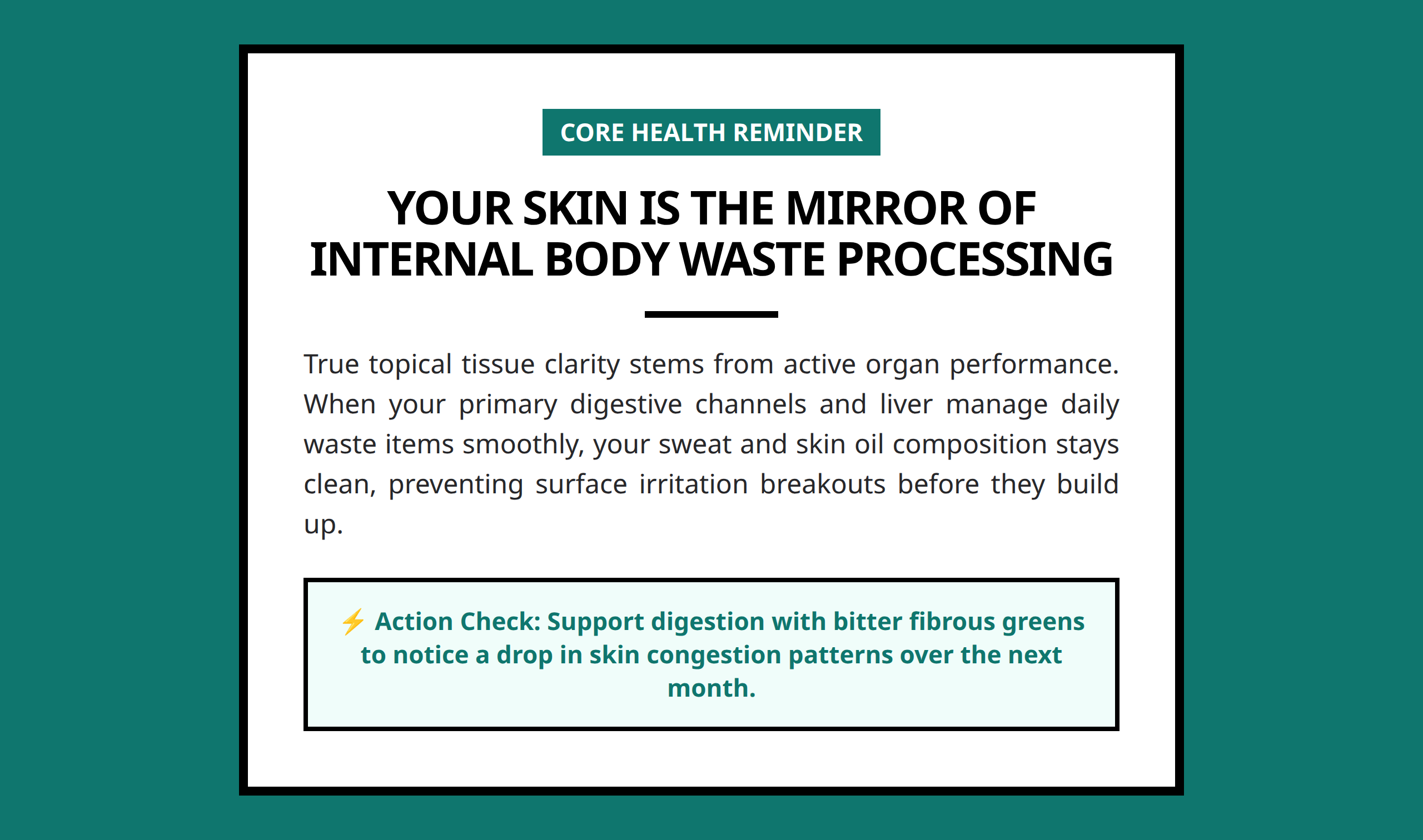
The body continuously processes and eliminates waste through various systems. Supporting those natural detoxification processes is part of maintaining overall health, and skin benefits from that broader balance.
I am careful not to treat detoxification as a trendy concept or a dramatic cleansing event. The more practical perspective is recognizing that healthy bodily functions contribute to healthy skin.
Small daily habits that support overall well-being often matter more than occasional extreme efforts that promise rapid results.
Sleep Is One of the Most Overlooked Skin Habits
Sleep provides the body with time for recovery and renewal. Skin is part of that process. During periods of adequate rest, the body can devote resources to maintenance and repair that are more difficult to prioritize when sleep is consistently disrupted.
I pay close attention to sleep whenever skin health becomes a concern. Someone may carefully follow every skincare step yet regularly sacrifice sleep because of work, entertainment, or stress.
Imagine a person who stays up late for several weeks while juggling deadlines and personal responsibilities. They may begin to notice dullness, fatigue-related changes, or skin that seems less vibrant than usual. The skincare products have not changed, but an important lifestyle factor has.
Seeing Skin Health as a System
The most useful lesson I take from these connections is that skin should be viewed as part of a larger system. Exercise influences circulation. Emotions influence stress responses. Nutrition supplies building materials. Detoxification supports balance. Sleep enables renewal. Each factor contributes something different to skin health.
When I think about improving skin quality, I would not start by asking only what to apply to the skin. I would also ask what daily habits might be helping—or quietly undermining—the skin’s ability to thrive.
That question often leads to a more complete understanding of skin health than any product label can provide.
- Circulation: The movement of blood throughout the body, delivering oxygen and nutrients to tissues.
- Detoxification: The body’s natural process of processing and eliminating waste products.
- Skin renewal: The ongoing process through which skin cells are repaired and replaced.
- Stress response: Physiological changes triggered by emotional or physical stress that can influence skin health.
- Nutrition: The nutrients obtained from food that support bodily functions, including skin maintenance and repair.
References:
- https://freiaaesthetics.sg/how-lifestyle-habits-affect-skin-health/
- https://www.mdcsnyc.com/post/how-sleep-stress-and-diet-impact-your-skin-health
- https://aethosnyc.com/how-lifestyle-affects-skin-health/
- https://www.ijcmph.com/index.php/ijcmph/article/download/12610/7646/59831
- https://www.kovakcosmeticcenter.com/how-diet-sleep-and-stress-affect-your-skin/
- https://www.puremed.uk/blog/how-lifestyle-affects-your-skin
- https://skintoheart.com/blogs/news/how-lifestyle-affects-skin
- https://treatmentcentre.com.au/blogs/skin-health/the-impact-of-lifestyle-choices-on-skin-health-how-diet-exercise-and-stress-management-influence-skin
- https://myinvity.com/blog/sleep-and-skin-health/
- https://www.nkydermatology.com/blog/1428209-how-lifestyle-habits-influence-skin-aging
- https://www.newriverdermatology.com/blog/the-connection-between-sleep-and-skin-why-beauty-sleep-is-real
- https://pmc.ncbi.nlm.nih.gov/articles/PMC12141273/
