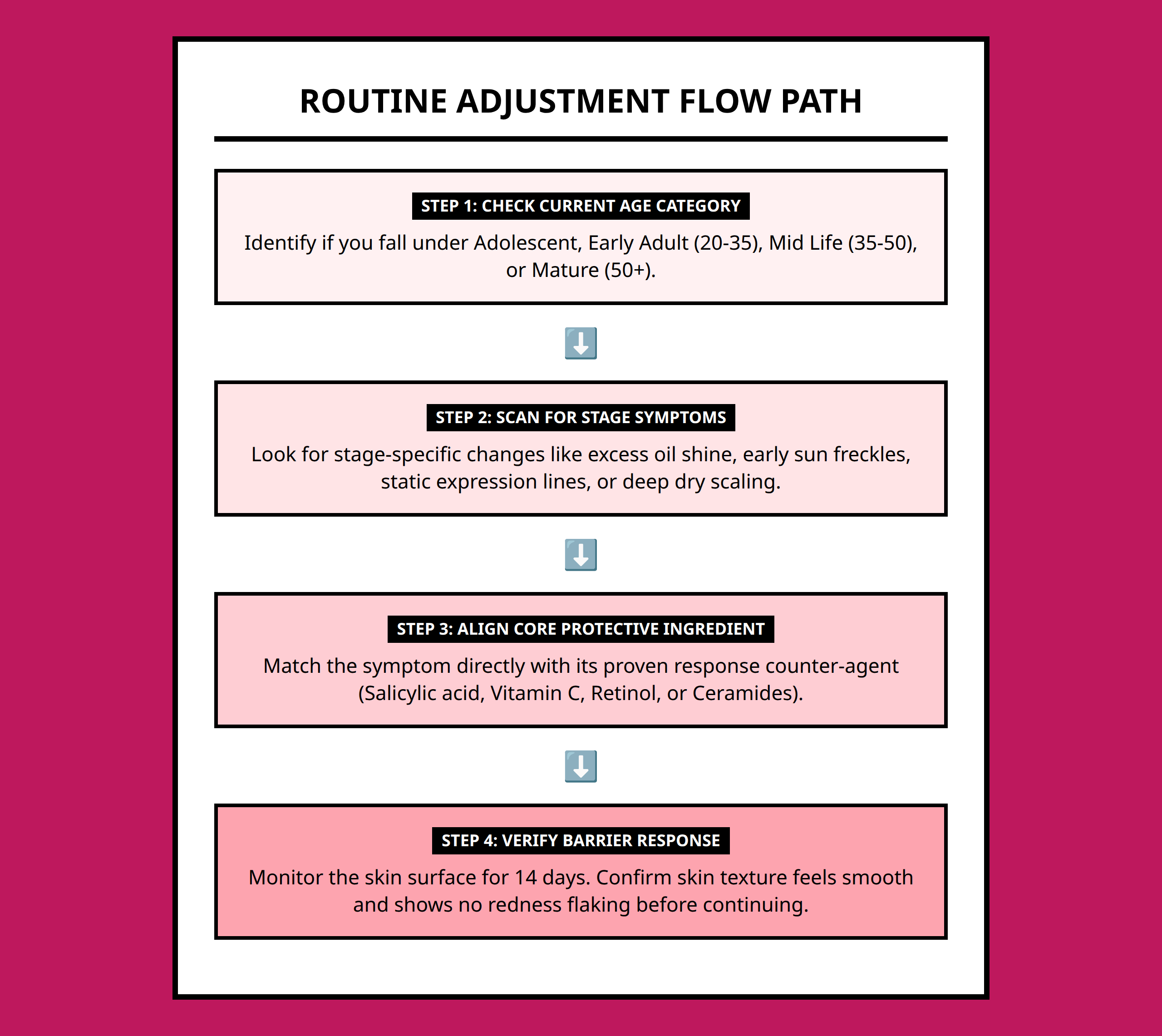
Our skin does not age all at once. Each stage of life brings unique changes that require a tailored approach to care, from adolescence through the fifties and beyond.
I often notice that people treat skincare as a one-size-fits-all activity, but the reality is far more dynamic. Understanding how the skin evolves over time allows us to prioritize the right routines at the right age.
By mapping out the predictable changes from teen years to middle age, it becomes easier to anticipate common concerns and adjust care practices accordingly. Observing these shifts helps avoid common missteps like over-treating youthful skin or under-supporting mature skin.
Takeaways
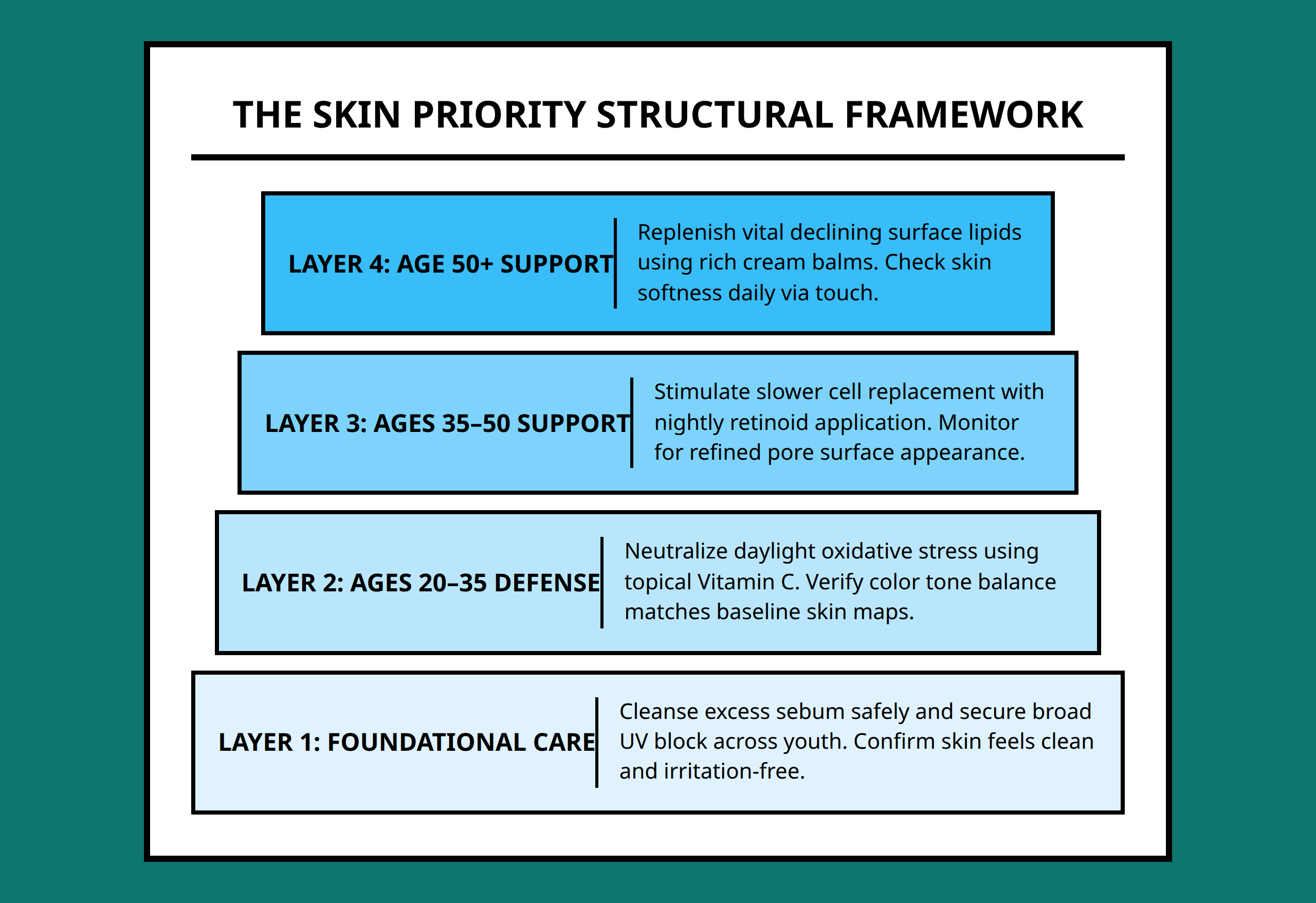
- Skin changes predictably with age, requiring adjusted skincare priorities.
- Adolescence involves oil regulation and early preventive care.
- 20–35 emphasizes maintenance and subtle anti-aging habits.
- 35–50 requires active support for firmness, elasticity, and hydration.
- 50+ prioritizes protective routines and gentle enhancement of skin resilience.
Adolescence: Managing Oil and Building Healthy Habits
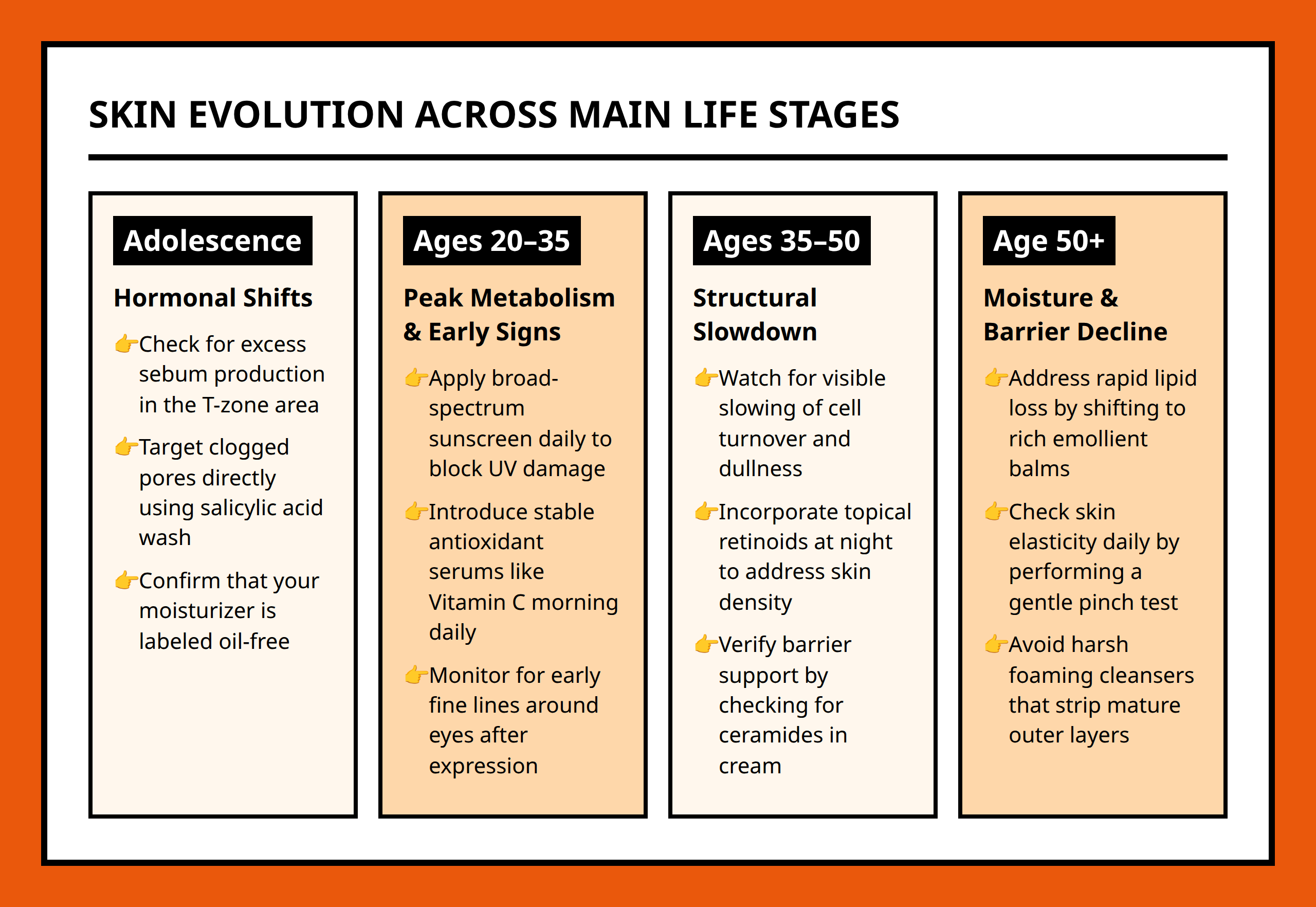
During adolescence, sebaceous activity peaks, causing oiliness and occasional breakouts. I focus on simple routines that cleanse effectively without stripping natural oils. Establishing these foundational habits early sets the stage for healthier skin in adulthood .
Ages 20–35: Maintenance and Preventive Care
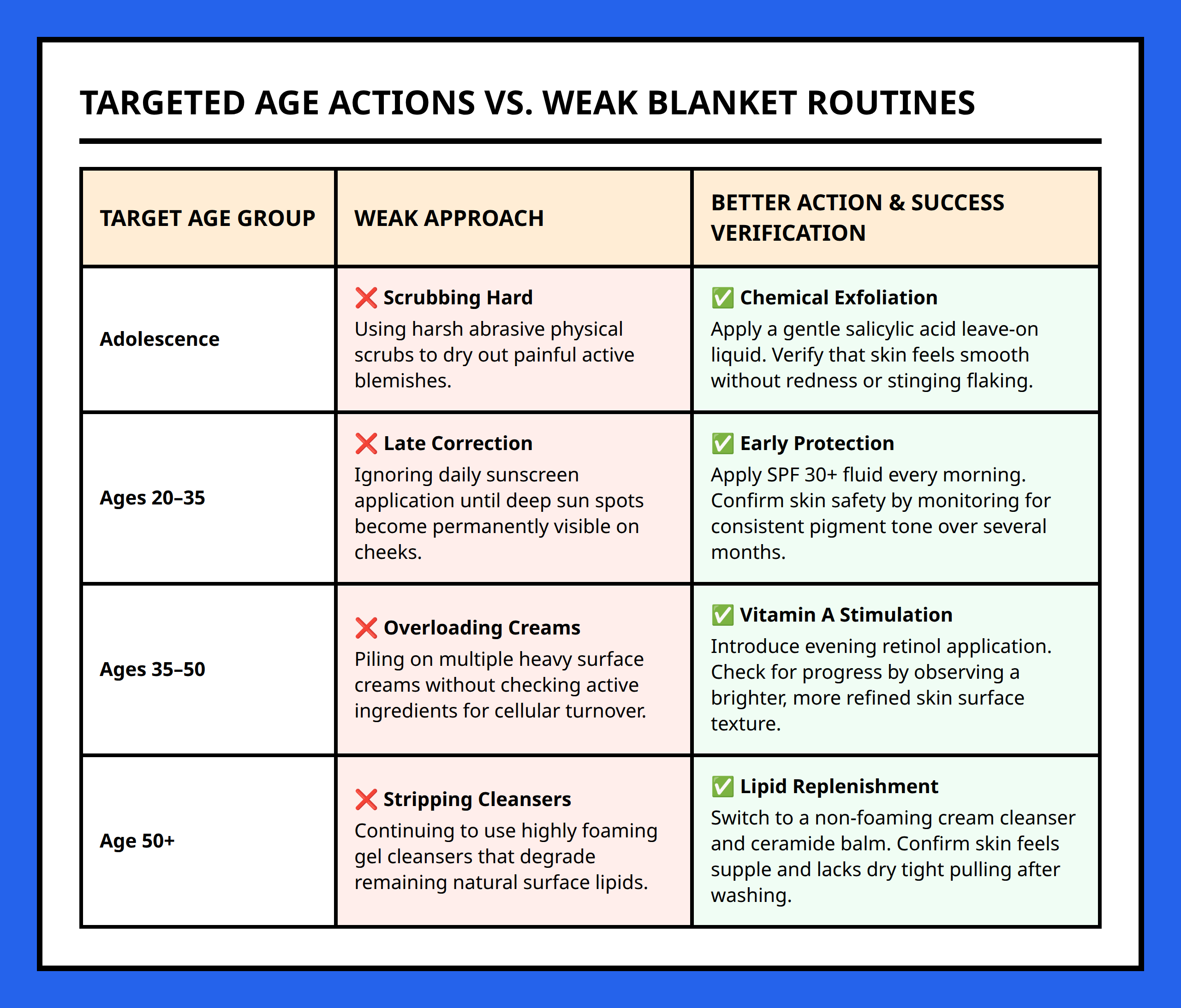
In the twenties and early thirties, skin tends to be resilient but begins to show subtle signs of aging. At this stage, I emphasize consistent hydration, sunscreen use, and gentle exfoliation. This helps maintain elasticity, prevent early damage, and keeps the skin balanced before noticeable aging accelerates .
Ages 35–50: Addressing Firmness, Hydration, and Lines
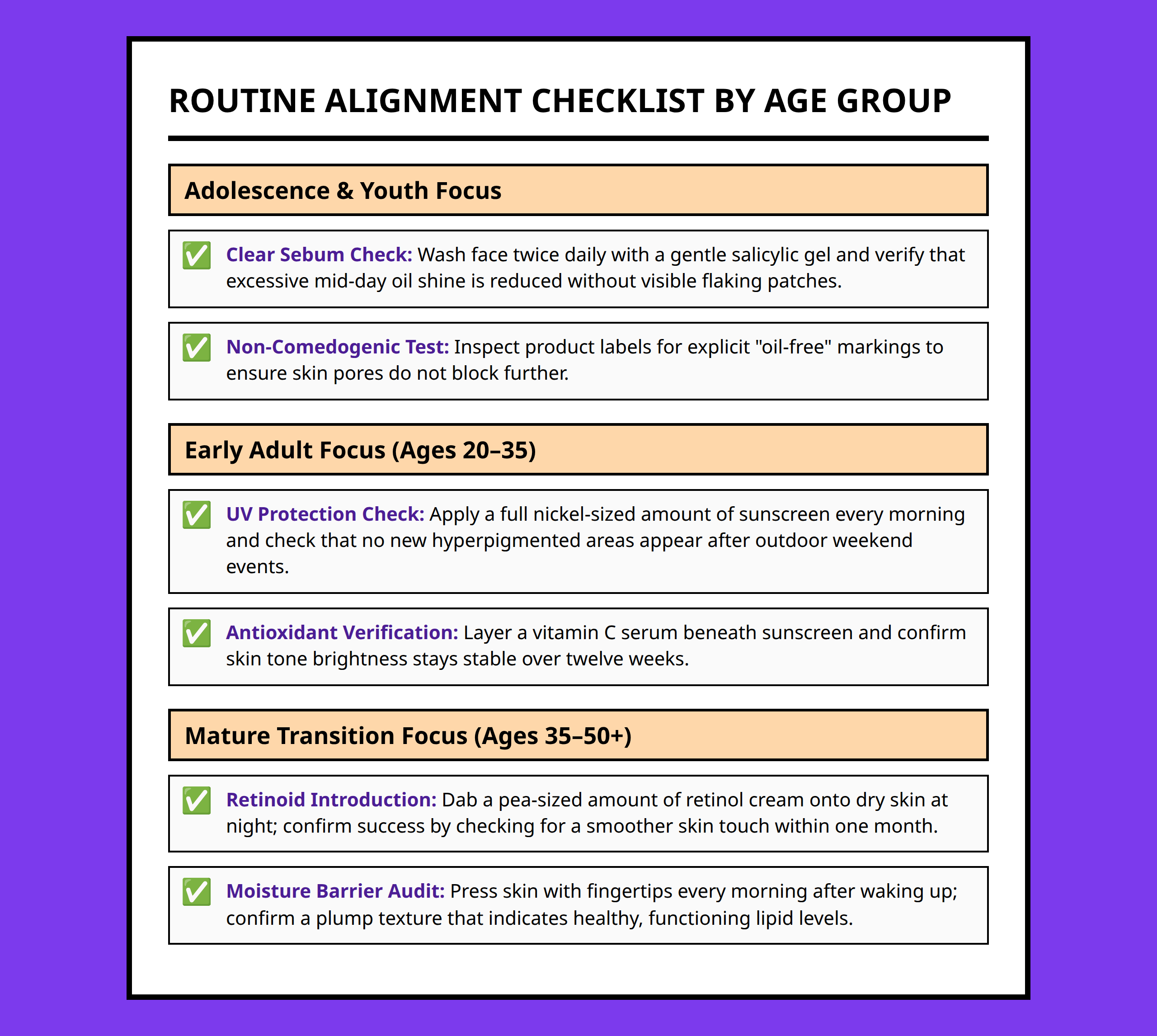
Midlife brings more visible changes: decreased collagen production, fine lines, and loss of firmness. I recommend boosting routines with ingredients or practices that support hydration and elasticity. Targeted moisturizers and consistent protection from environmental stressors become more important than ever .
50 and Beyond: Gentle Support and Skin Resilience
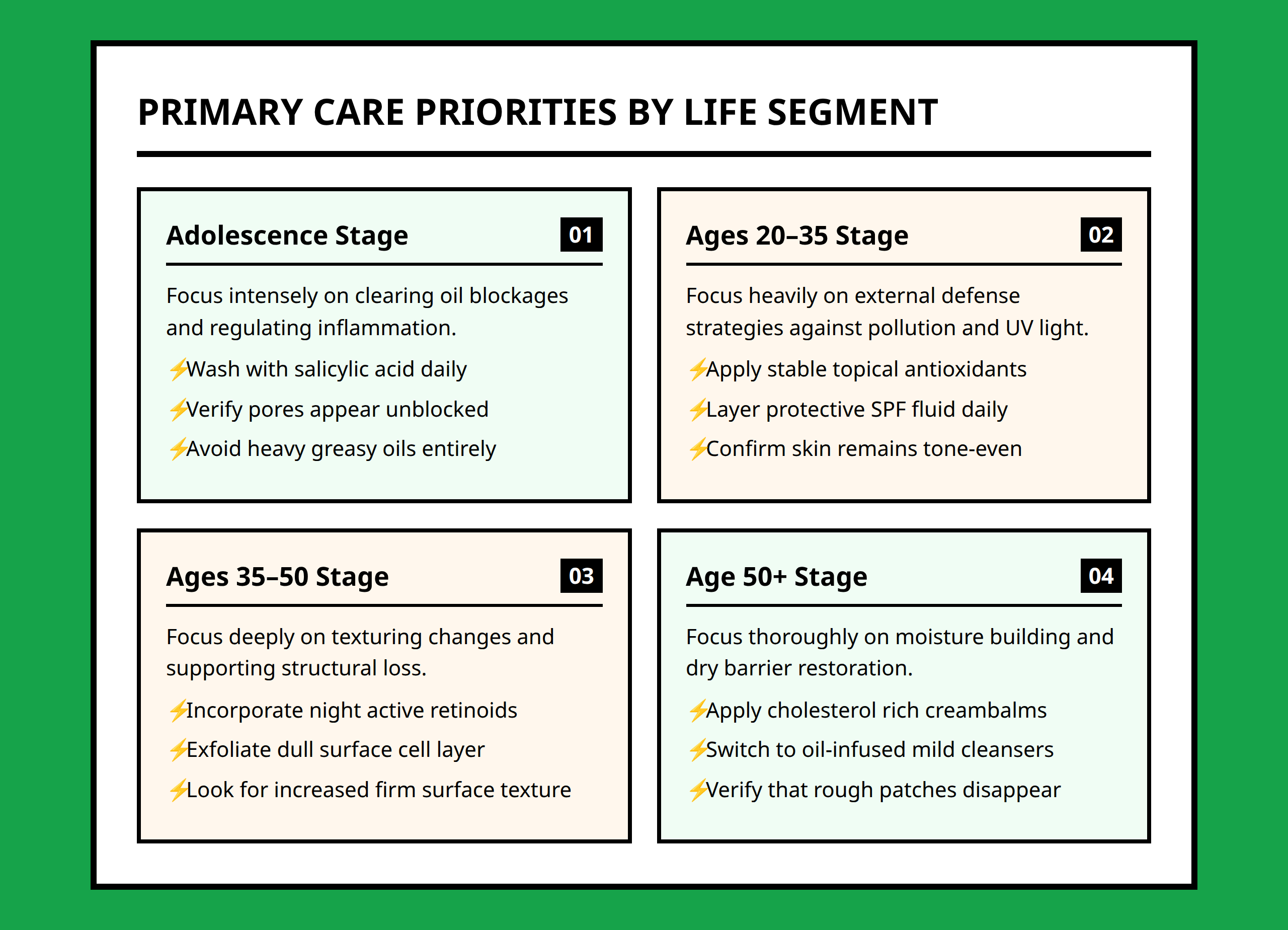
After fifty, skin often becomes thinner, more fragile, and slower to repair. My focus shifts to gentle hydration, barrier support, and protective measures like antioxidant-rich routines. Treatments are chosen to enhance resilience and comfort rather than aggressive anti-aging effects .
- Sebaceous glands: Skin glands that produce oil, which peaks during adolescence.
- Elasticity: The skin’s ability to return to its original shape after stretching or movement.
- Hydration: The process of maintaining adequate water content in the skin to prevent dryness and maintain comfort.
- Barrier function: The outer layer of skin that protects against environmental stressors and prevents moisture loss.
References:
- https://dermacarehr.com/learning-center/2026-anti-aging-roadmap-what-to-do-in-your-20s-30s-40s-50s/
- https://www.healthylife.com.au/learn/characteristics-of-aging-skin
- https://pmc.ncbi.nlm.nih.gov/articles/PMC3583892/
- https://www.advancedcosmeceuticals.com.au/blogs/news/skincare-through-the-ages
- https://www.theskinmanifesto.com.au/blog/best-skincare-routine
- https://www.aad.org/public/everyday-care/skin-care-secrets/anti-aging/reduce-premature-aging-skin
- https://drstorm.co.uk/blogs/learn-with-dr-jude/skincare-through-the-ages-how-your-skin-s-dna-changes-over-time
