Many skincare routines fail for one simple reason: people buy products before they understand their skin type. A quick at-home skin test can help you identify whether your skin is oily, dry, or combination and make better decisions about everything that follows.
I often notice that beginners approach skincare backward. They start with products, trends, or recommendations from friends and only later wonder why nothing seems to work.
When I look at most skincare mistakes, a common pattern appears: people are trying to solve the wrong problem. A cleanser designed for oily skin can make dry skin feel worse. A rich moisturizer meant for dryness can leave oily skin feeling greasy. Before choosing products, I would first want to know exactly what kind of skin I am dealing with.
Takeaways
- Identify your skin type before buying skincare products.
- A simple tissue-paper test can reveal whether your skin is oily, dry, or combination.
- Different skin types require different skincare priorities.
- Using products that don’t match your skin type can create new problems.
Why Skin Type Matters More Than Most People Think
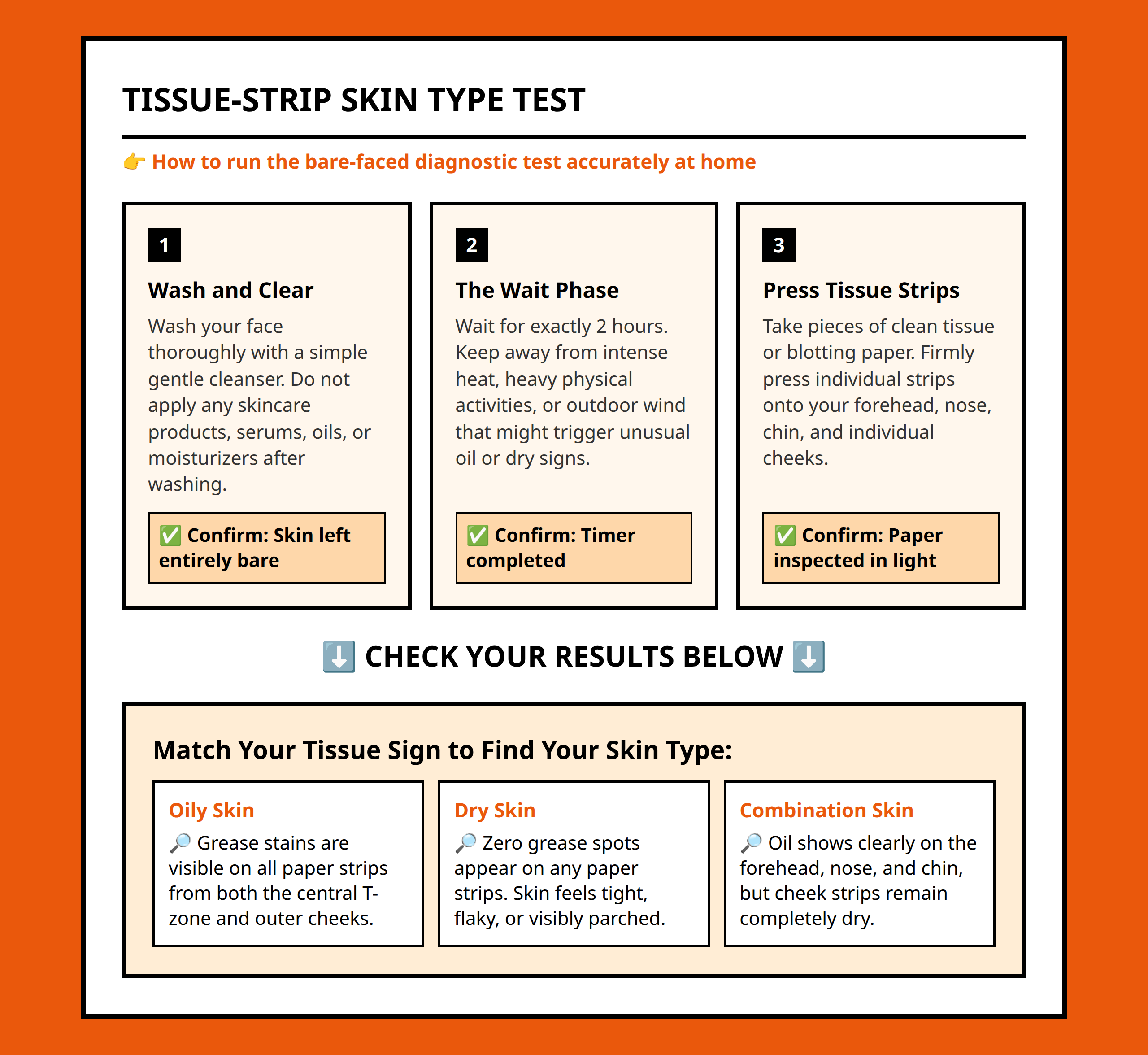
Your skin is not just a surface that receives products. It behaves differently depending on how much oil it produces, how well it retains moisture, and how different areas of the face respond to environmental conditions.
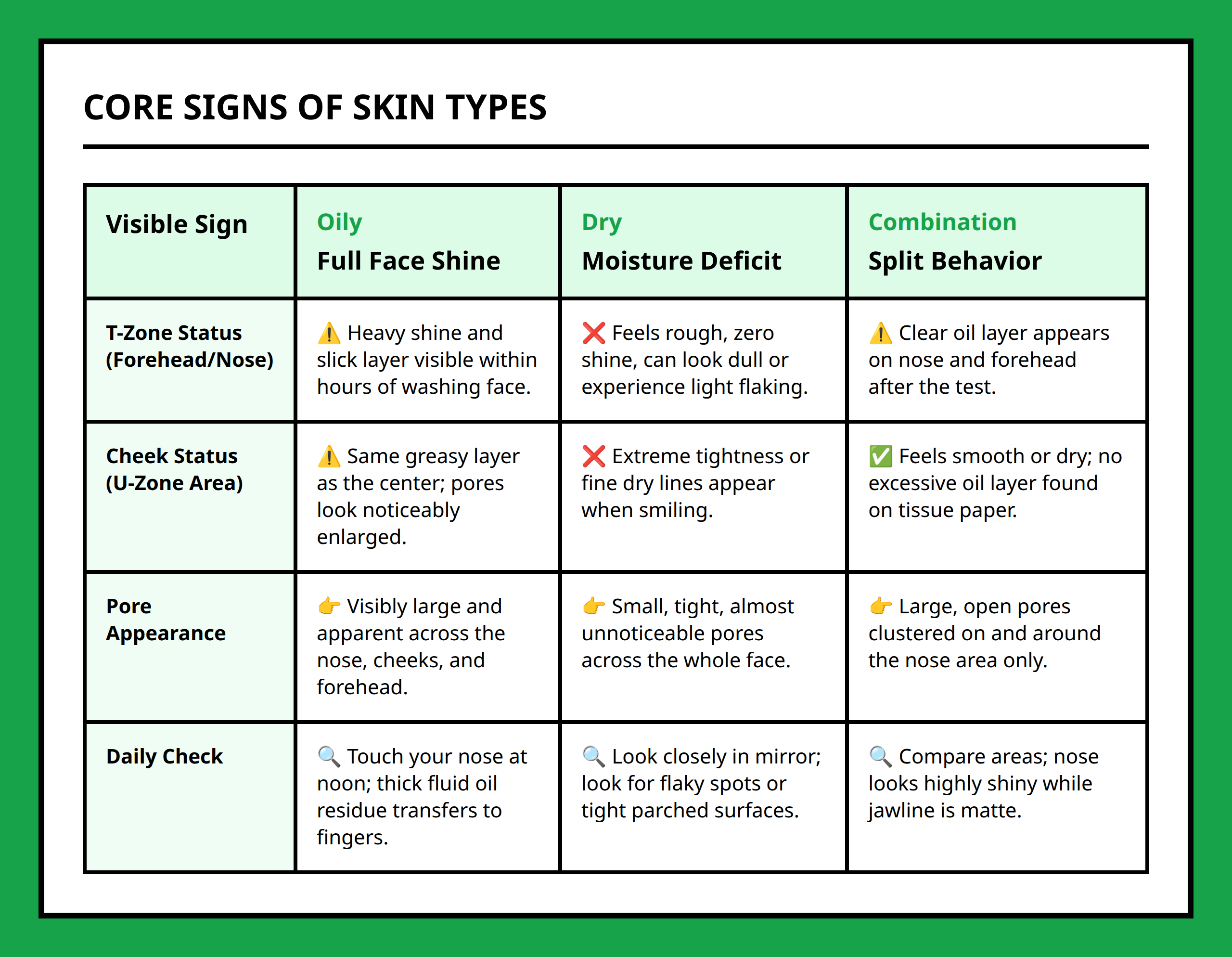
A person with oily skin often struggles with shine, enlarged pores, and buildup. Someone with dry skin may deal with tightness, rough texture, or flaking. A person with combination skin experiences both conditions at the same time.
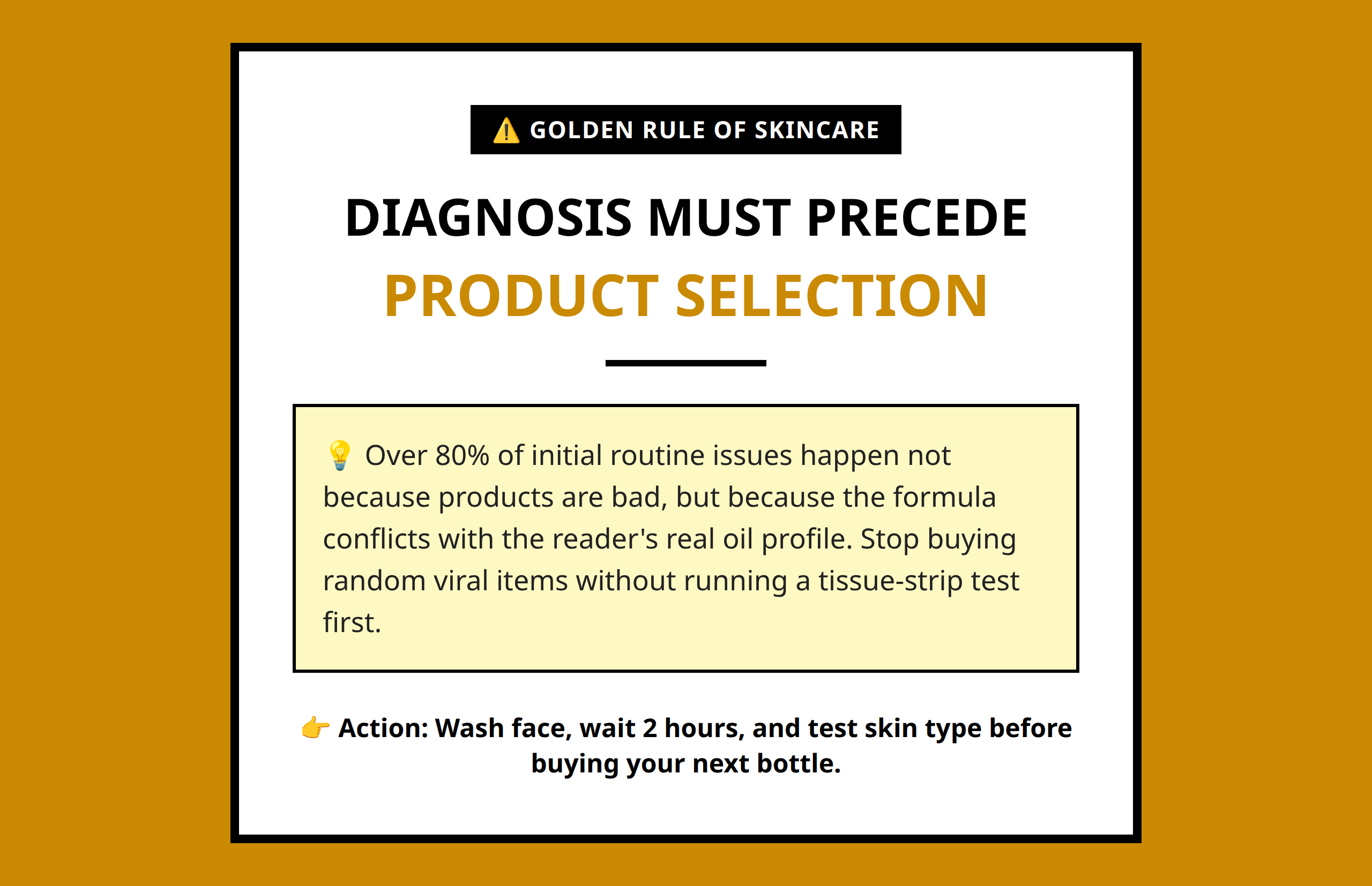
This is why I would never choose a skincare routine before understanding the skin itself. The diagnosis comes first. Product selection comes second.
The Simple Tissue-Paper Test You Can Do at Home
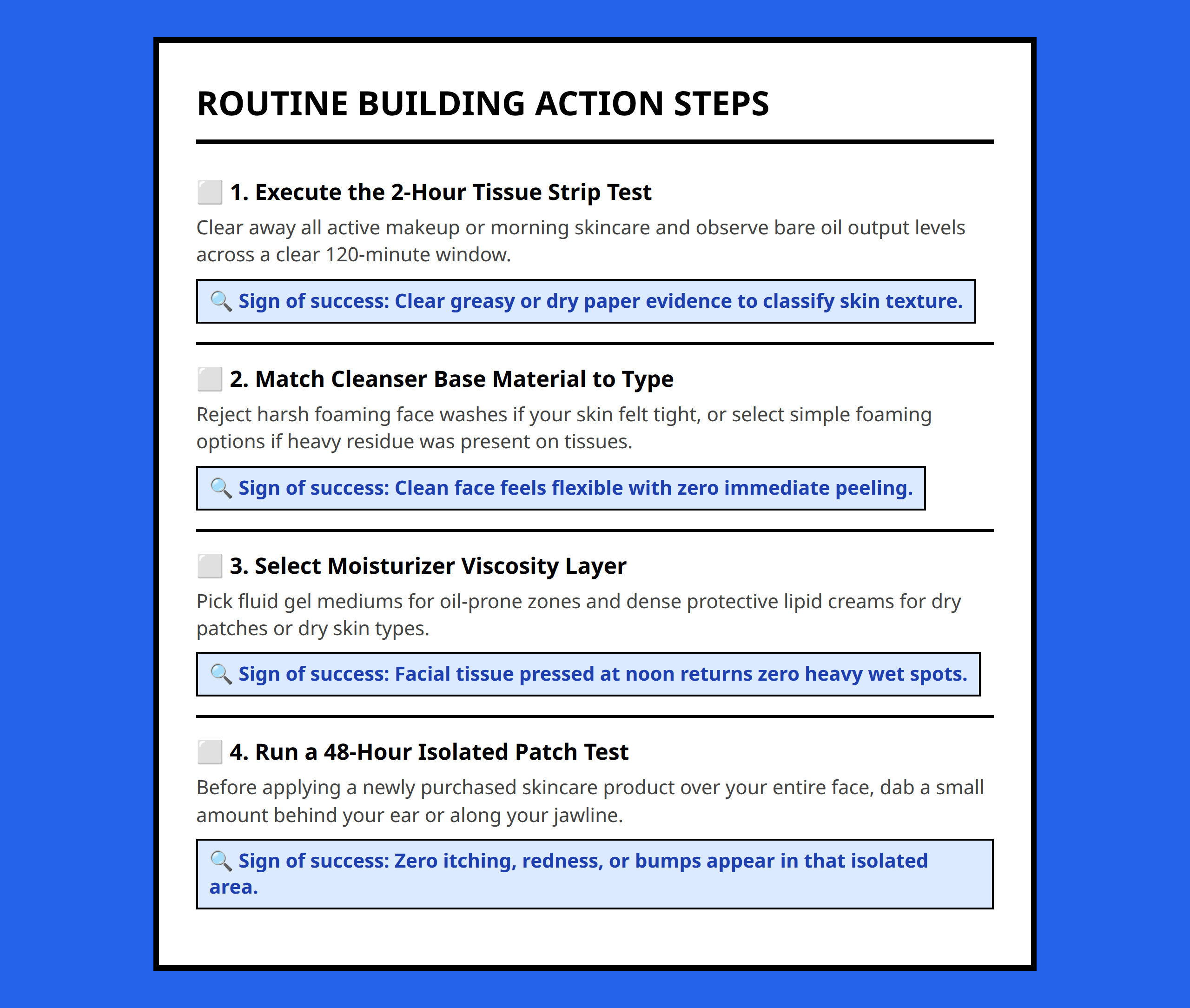
You do not need expensive equipment to identify your skin type. One of the simplest methods uses ordinary tissue paper or paper napkins.
In the morning, before washing your face, gently press separate tissue strips against your forehead, nose, chin, and cheeks.
Afterward, examine the tissues.
- If every strip shows noticeable oil, including the cheeks, you likely have oily skin.
- If the forehead, nose, and chin show oil but the cheeks remain mostly clean, you likely have combination skin.
- If all strips remain clean and free of oil, you likely have dry skin.
I like this approach because it focuses on observation rather than assumptions. Many people believe they have oily skin simply because their forehead gets shiny during the day. The tissue test often reveals a more accurate picture.
How to Recognize Oily Skin Beyond the Test
The tissue test provides a starting point, but there are other signs worth noticing.
Oily skin typically has a shiny appearance, especially across the forehead, nose, and chin. Pores often appear larger and more visible. Blackheads and whiteheads may develop more easily because excess oil mixes with dead skin cells and debris.
Imagine someone who washes their face in the morning and notices visible shine again by lunchtime. Their makeup seems to disappear quickly, and they frequently feel the need to blot their skin. Those are common signs that point toward an oily skin pattern.
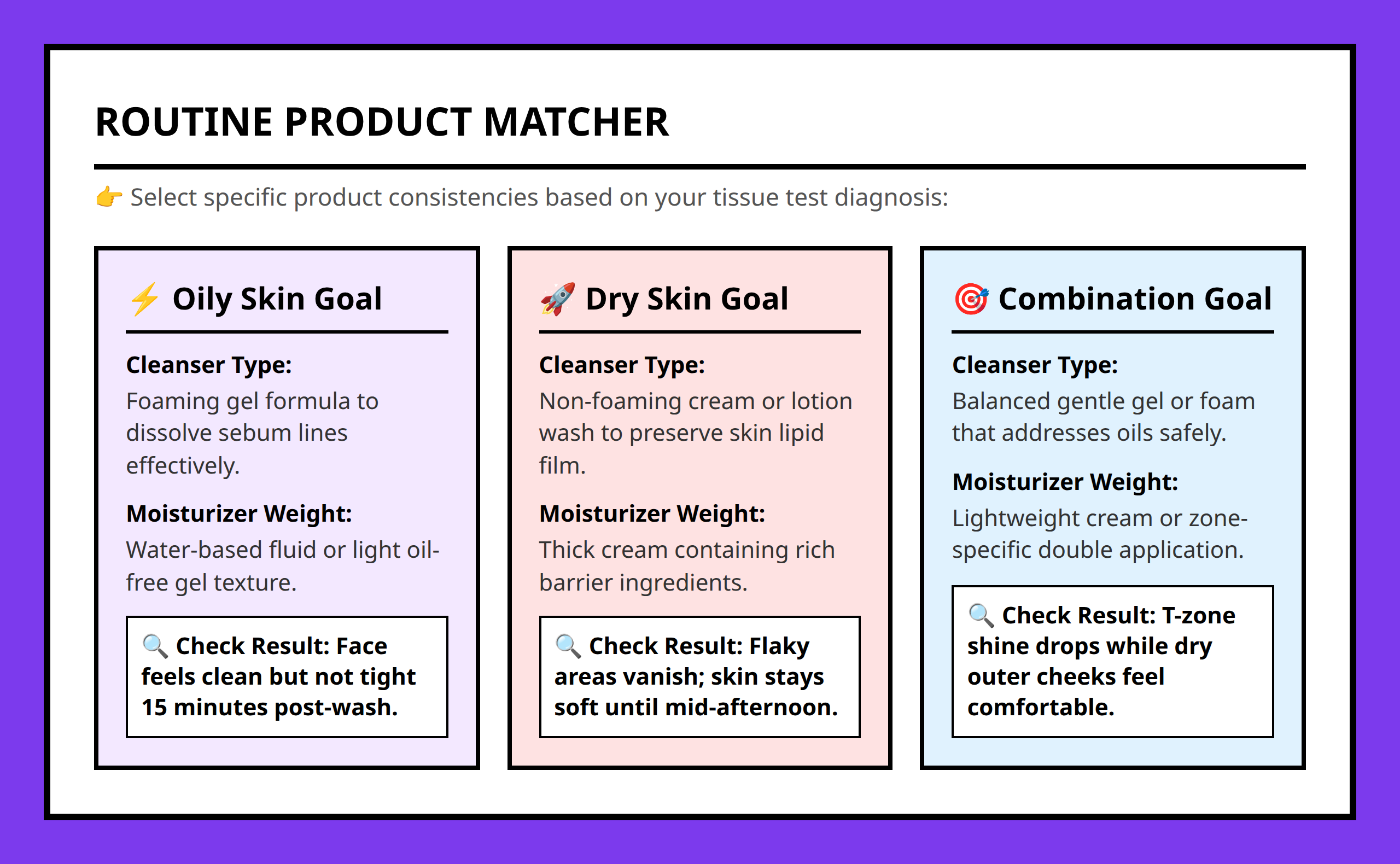
For oily skin, the basic skincare priority is controlling excess oil without stripping the skin completely. Gentle cleansing, lightweight hydration, and products that avoid pore blockage generally make more sense than heavy creams.
How to Recognize Dry Skin
Dry skin often feels very different.
Instead of shine, the skin may feel tight, rough, or uncomfortable after cleansing. Flaky patches can appear, especially during colder months or after exposure to harsh weather conditions. Fine lines may become more noticeable because the skin lacks sufficient moisture or oil.
One detail I pay attention to is how the skin feels rather than how it looks. Someone with dry skin may describe their face as feeling stretched after washing, even if there are no obvious flakes.
For dry skin, the priority shifts toward preserving moisture and supporting hydration. The goal is not oil control. The goal is helping the skin remain comfortable, supple, and protected.
Why Combination Skin Can Be Confusing
Combination skin is often the hardest type for beginners to identify.
The center of the face—the forehead, nose, and chin—usually produces more oil. At the same time, the cheeks or outer areas of the face may feel normal or dry.
This mixed behavior creates confusion. A person may see oil on their nose and assume they have oily skin everywhere. They then choose products designed for full-face oil control and end up drying out their cheeks.
When I think about combination skin, I view it as a balancing problem rather than a single condition. Different parts of the face have different needs, which means skincare decisions often need more flexibility.
What Happens When You Misdiagnose Your Skin Type?
This is where many skincare frustrations begin.
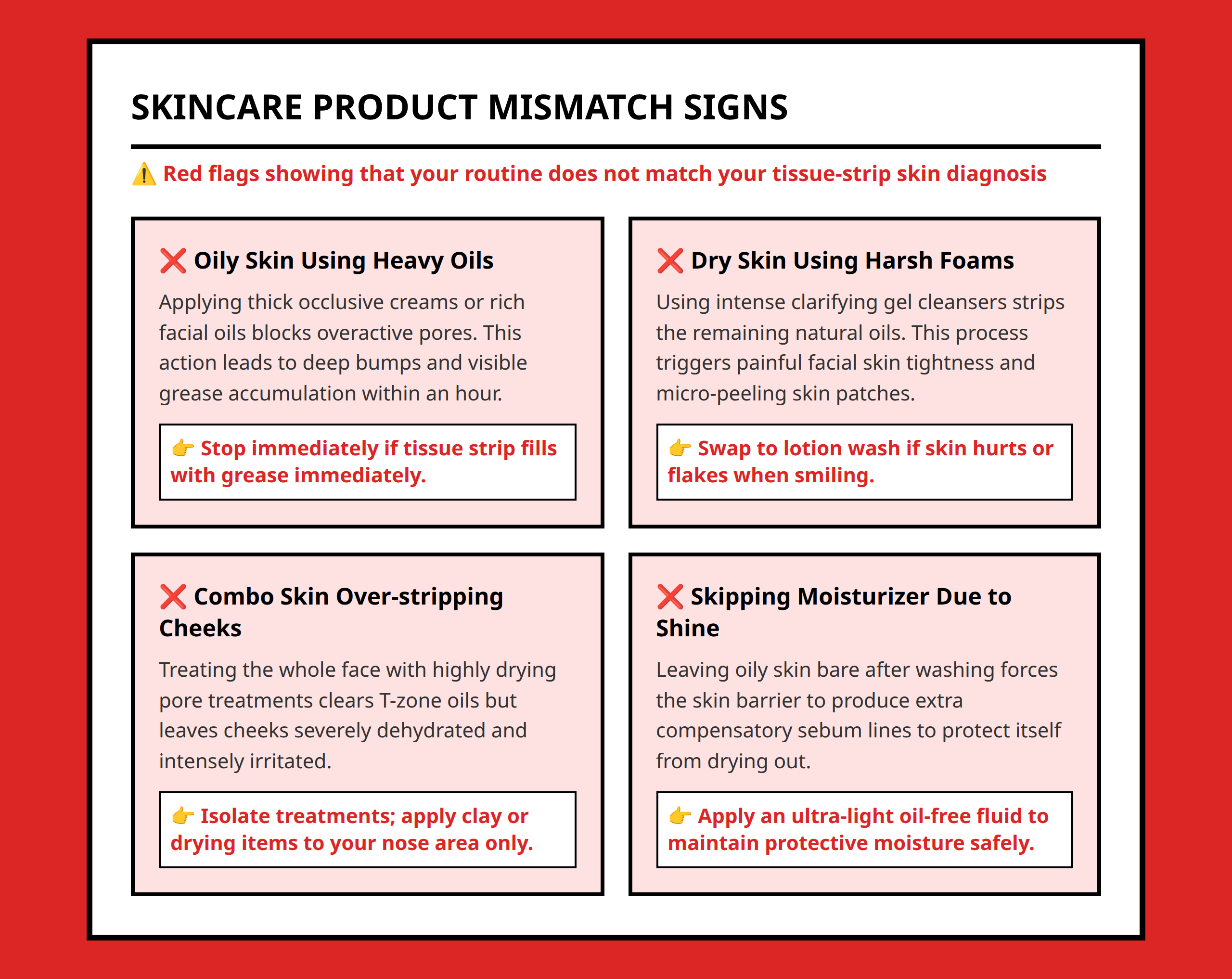
If dry skin is treated like oily skin, excessive cleansing and oil-control products can increase tightness and discomfort. If oily skin is treated like dry skin, heavy products may contribute to clogged pores and increased shine.
A common situation looks like this: someone experiences occasional breakouts, assumes their skin is oily, and starts using strong cleansing products several times a day. A few weeks later, their skin feels irritated, tight, and more difficult to manage than before.
The issue was not necessarily the products themselves. The issue was that the products were chosen for the wrong skin type.
Build Your Routine Around Your Diagnosis
Once you know your skin type, skincare decisions become simpler.
For oily skin, focus on gentle cleansing, non-greasy hydration, and products that do not clog pores.
For dry skin, focus on moisture retention, gentle cleansing, and products that support hydration.
For combination skin, recognize that different areas may require different levels of care rather than treating the entire face exactly the same way.
If I had to give one piece of advice to someone starting skincare today, it would be this: spend more time understanding your skin and less time chasing products. A correct diagnosis creates a foundation that makes every future skincare decision easier and more effective.
- T-zone: The forehead, nose, and chin area of the face, which often produces more oil than other areas.
- Sebaceous glands: Small glands in the skin that produce oil, also called sebum.
- Sebum: The natural oil produced by the skin to help protect and lubricate its surface.
- Combination skin: A skin type that contains both oily and dry areas, usually with oil concentrated in the T-zone.
- Blackheads: Small clogged pores that appear dark because the material inside the pore is exposed to air.
References:
- https://www.youtube.com/watch?v=vic-EMOivpA
- https://www.youtube.com/watch?v=MOM0Hih3qFI
- https://www.youtube.com/watch?v=-LC0bEwABHI
- https://www.cerave.com/skin-smarts/skincare-tips-advice/what-skin-type-do-i-have
- https://theordinary.com/en-us/regimen-builder.html
- https://www.healthline.com/health/beauty-skin-care/skin-types-care
- https://skintypesolutions.com/pages/skin-type-quiz
- https://www.youtube.com/shorts/XOizep7pIaw
- https://www.youtube.com/shorts/45EhALa68xE
- https://douglasj.edu/how-to-build-your-skincare-routine-based-on-your-skin-type/
- https://cnalifestyle.channelnewsasia.com/style-beauty/know-your-skin-type-and-how-care-it-472871
- https://liraclinical.com/blogs/skin-type/how-to-determine-your-skin-type
- https://www.firststatehealth.com/the-hidden-dangers-of-skincare/
- https://www.youtube.com/shorts/v2RNGKqYFBg
